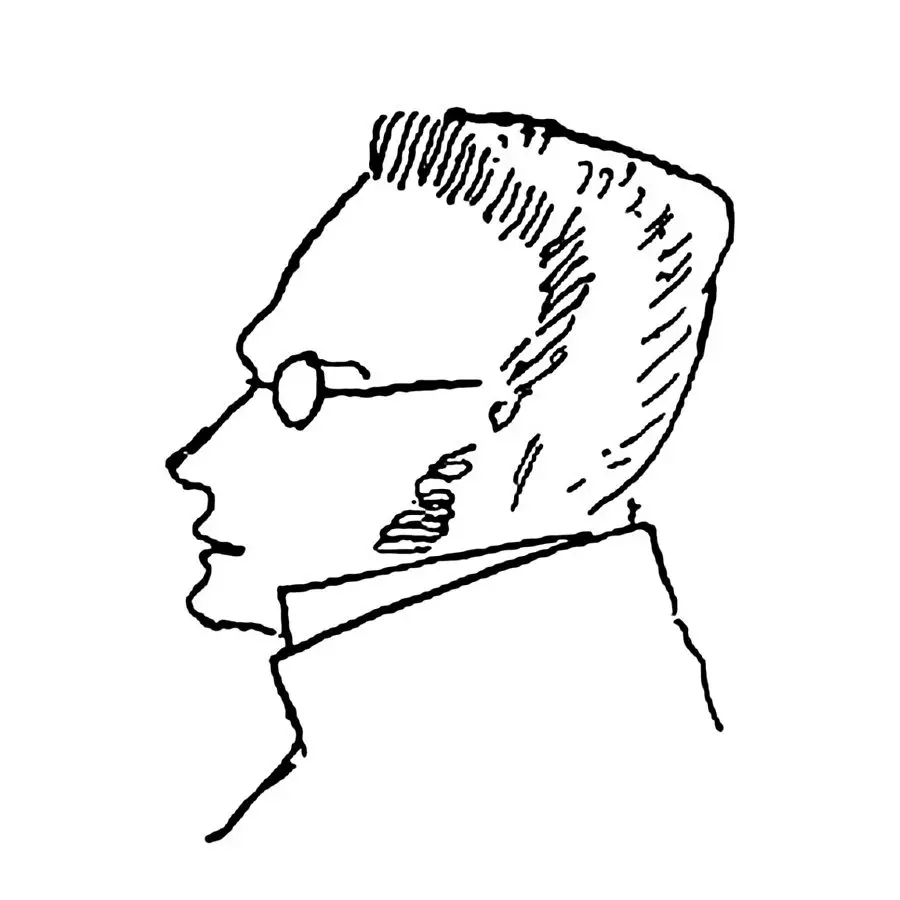
Philosophical perspectives on Occupy Wall Street

Jon asked:

A movement in the name of Occupy Wall Street began in the United States in September, and people around the world, including in Canada, have participated. Discuss how the ideas of at least two ‘thinkers’ can help make sense of these events.

Answer by Martin Jenkins

Post-Modernist: Gilles Deleuze

Influenced by the student events in France, 1968, Deleuze attempted to provide an explanation for their occurrence outside of existing Liberal Democratic and Marxist Theory. These were judged too insensitive to the micro-occurrences of events to provide a convincing account. Upon his earlier re-reading of Spinoza, Deleuze proposed that social reality or social ontology is composed of desires, forces. These are either active or reactive. Reactive forces manifest themselves in macro structures — general, established structures of a society [in his terminology: Molar Lines of Force; Aborescent or Sedentary Lines; Planes of Transcendent Organisation] such as the State and its mechanisms of control. Active forces are fluxes of desires, forces which transgress the established structures in new ways. [In his terminology: Micro lines; Rhizomatics, Planes of Immanence, Nomadic Lines]. Lines divide up and constitute the operation of reality.

Macro lines of established forces operate in a binary manner. It is a matter of either/or. So we have Capital vs. Labour, Ruling-Ruled, Male-Female, Adult-Child, Heterosexual-Homosexual and so on. Active Micro lines are in flight — active lines of flight which deteritorialise [I.e. uncouple the connecting lines] to establish forces in new, unpredictable and novel ways. They can make connections which were previously unthinkable [mechanic assemblages or reterritorialisation] thus evidencing the creative plasticity of active forces.

So in 1968, student demonstrations and uprisings were deemed to be supported by Deleuze’s view. They acted outside the established parameters of Labour-Capitalism, Socialism-Capitalism of orthodox Marxist thought. They were outside of the traditional liberal view of thinking, rational ‘zombie’ who passively votes for change via elections to representative office every five years. This held for feminist, for minority groups, for queer politics, for Identity politics. Moreover, their dynamic was not aborescent [hierarchical, macro-ordered and operating like a tree with foundations, controlling trunk and subordinate branches] but Rhizomatic [effecting new forms of organisation and being, horizontal not hierarchical, Participatory and not subordination].

In some respects, this could apply to the Occupy movement. The established, very sedentary Political apparatus has failed to articulate the grievances of the multitude. Whilst those established political, aborescent structures expect that issues can be raised and settled within those established political, aborescent structures, the Occupy movements call for some other alternative. The Occupy movements have made alliances of new mechanic assemblages with various, previously unconnected forces: veterans against the cuts, Christians, Muslims, ecologists, youth, the unemployed, activist involved in the ‘Arab Spring’, trade unionists — a heterogeneous assemblage which would not otherwise have connected. At the moment, the movement is formless eschewing order, hierarchy, programme, leadership allowing the creative manifestation of plural voices into the new. It is a nomadic machine of various assemblages from various sources deterritorialising the established macro structures and literally, deterritorialising and reterritorialising the space occupied by the reactive forces of finance and ‘politics’. Many commentators speak and write of a new movement occurring as yet undefined. As Deleuze said:

‘Politics is active experimentation, since we cannot know in advance which way a line is going to turn. Draw the line says the accountant [banker? MJ]: but one can in fact draw it anywhere.’ P. 103 Dialogues.

Marxist: Louis Althusser

Whilst Deleuze would emphasise the creative re-working of lines in new, unthematised ways, Marxists would propose that events to which the Occupy movements are responding to are systemic — they are inherent to the very nature of capitalism. In that sense, they are nothing new. Capitalism needs profits to survive, overproduction reduces the level of profits. In this instance, overextension of credit has led to the decline of profits, triggering economic slump. Whilst the Occupy movement might be an alliance of various social groups and forces, all have a commonality in that they are the victims of capitalism — a collective subject shaped by the Object of Capitalism. Young unemployed, anti-capitalist activists, Trade Unionists etc all share common interests. As such, they operate within and are explicable by the concepts and categories of Marxist theory. Although at a certain specific level, each group, each individual has their own issues; these are simultaneously common or universal: the specific is the universal and universal is specific. Again, Marxists following the theorist Louis Althusser would, whilst recognising the diversity, complexity of a society admit that each group faces its own specific tensions with, or specific contradictions with the structures of capitalism. Yet they are not wholly isolated or atomised. They also share a commonality in that a common structure — the economic, or the political, connects them. Each specific contradiction fuses with others to become overdetermined — they fuse into one general contradiction — operating at the macro-level. Revolutionary social change is then possible.

That the traditional ‘labour movement’ has not yet come on side does not exclude it in favour of new social forces. The problem with the Deleuzian analyses is that it emphasises dynamics at the micro-level, the macro-level of Lines are to be deterritorialised then reterritorialised with something new. It is held that movement from below will somehow change, subvert the macro-level through many, mini-revolutions. It is about changing the world without gaining power as John Holloway would say.

Unfortunately, this doesn’t happen. Despite Deleuzian’s and Anarchists criticism that macro-level change merely brings about a new macro-level which will repeat the failings of the previous one, Marxists will conclude that social and revolutionary change qua change has to occur at the macro-level and for that, macro-level organisations such as the labour movement and revolutionary vanguard parties are required. This doesn’t entail the existing, sedentary forces but new, reinvigorated ones but, they will be operating at the macro-level. Without this, there will be no change.

Karl Popper and the creationist debate revisited

Lynsey asked:

Debates between evolutionary biologists and ‘scientific creationists’ have been famously unproductive, with each side employing distinct criteria of judgment. Can the philosophy of science proposed by Karl Popper resolve the impasse for objective rational bystanders, and if so, how?

Answer by Craig Skinner

The short answer is NO. Popper formulated his view more than 70 years ago, the debates and impasse continue.

A longer answer is necessary.

Popper was impressed by the difference between psychoanalysis and Marxism on the one hand, and Einstein’s General Theory of Relativity on the other. Whereas the former systems could accommodate any observations, the latter made surprizing predictions which, if not observed, would refute the theory. So, for example, Adler’s psychoanalysis specified the early experiences allegedly causing an inferiority complex. This ‘explained’ why a person who lacked confidence and let people walk all over him had his inferiority complex. But suppose a person with the same early experiences was confident and forceful – didn’t this refute the theory? No, he had an inferiority complex ‘really’, and his opposite traits were a reaction to this. And so on. The theories could never be refuted.

Einstein, contrariwise, predicted bending of starlight near the sun, differing from what Newton predicted. If Einstein’s prediction was wrong, his theory would be refuted. Famously, he was right. Popper proposed falsifiability as the key criterion for distinguishing science from pseudoscience. It proved a popular suggestion, especially with scientists, who were presented as heroic figures willing to let their cherished theory die at the hands of a single awkward fact, which is not how scientists actually work.

To turn to creation science now, and resolving the ‘impasse’.

There are 2 distinct issues:

1. Is ‘creation science’ (or its modern version ‘intelligent design’) science or religion?

2. Which explanation for biodiversity does the evidence favour – evolution or special creation?

1. Is it science?

This has been the subject of heated US debate. The reason? The US constitution forbids the teaching in schools of any particular religious views as being established. So if creationism is religion it cant be taught, whereas if it’s science it can. If creationists can get their view accepted as science, they win the battle. The constitution allows bad, as well as good, science to be taught, so creationism could be given equal time with evolution. So far the courts have ruled that creationism is religion. They have had to specify the criteria distinguishing science from pseudoscience, and have suggested (i) Explanation by natural law (as opposed to supernatural) (ii) Views held provisionally (alterable by new evidence) (iii) Testability against the empirical world (iv) Falsifiability (able to suggest observations/ experiments which could refute the theory)

Creationists counter that (i) begs the question, that they do hold views provisionally, that their views are testable and falsifiable e.g. that the Earth is 6000 years’, not billions of years’, old; that human ancestry is entirely separate from apes. They have a fair point and maybe evolutionists should accept that creationism is bad science, and let people decide on the evidence.

2. Which explanation does the evidence favour?

I think the evidence in favour of evolution is overwhelming for ‘objective rational bystanders’. But, on the whole, that’s not what people are, especially in the US. Popper’s falsifiability criterion plays its part (countless observations, any of which could have refuted evolutionary theory, have been made).

But science is not in the business of proof. That’s for logic and maths, and doesn’t tell us anything about the world. Science is about giving the most likely explanation for what we observe, given current evidence. Strictly, no theory can be falsified: faced with a contrary finding, rather than giving up the theory we can give up an auxiliary hypothesis eg the observations are wrong, the instruments were faulty etc. And, strictly, no theory can ever be 100% confirmed: for any set of observations, there is always more than one explanation consistent with them – indeed an infinity of explanations. So, no amount of evidence can disprove a hypothesis (Duhem’s problem), no amount of evidence can prove a hypothesis (Hume’s problem), simply emphasizing that science is not in the proof business.

Others, such as Kuhn, Lakatos and Thagard, have proposed alternative demarcation criteria. But the bottom line is that there cannot be a sharp distinction between science and pseudoscience. Judgment and familiarity with how science and scientists work are needed, This is often lacking in US citizens including most current candidates running for Presidential nomination. The latter include creationists, and ‘global warning fears are a conspiracy’ merchants, but nobody with a background in science or philosophy.

Why do women exist?

Nalvaravu asked:

What is the reason for the existence of women on this earth?

Are they just ‘child bearing machines’ and ape what men do? where do they have edge over men?

Answer by Eric George

What is the reason for anything existing? This is one of the most fundamental questions that forms the basis of Philosophical inquiry. Cosmologically, what is Humanities role within this vast Universe – this has much to do with how one would view the origins of our entire species and whether or not subjective to this premise, one could attach anything beyond speciesism. The reason for anything existing to begin with is largely dependent upon the conditions of that thing coming into existence, humanity needs women for the preservation and continuation of our survival.

This does not mean that men are somehow inferior to women, men and women alike need each other in order for our species to survive in a general sense. However, in many primitive societies around the world (take for example many tribal communities within Papua New Guinea), feminine worship and prioritisation takes preeminence exactly for this reason; that they are viewed as an essential biological mechanism within the context of the tribes future existence. Therefore, taking care of them is of the utmost importance i.e. – preserving the existence of the women within the tribe, is actually preserving the existence of the tribe itself.

So to say that women have an edge over men merely because they birth children, would be to say that ones biological capabilities determines ones innate worth – a premise which would not take a liking to I am sure, especially since much of the worlds history has been determined by the decisions of men. On the flip side, if you were to apply the view practically, that women are merely child bearing machines and nothing more, then this again is something which collapses upon itself because it in essence overlooks the implications of the personality, traits, qualities and such therein. It would reduce society and culture from an anthropological standpoint, to a mundane existence of self-worth and dignity being subjective to whether or not you are able to reproduce, thus casting those who are not able to (barren womb, infertility etc.) as worthless and to a great extent obsolete.

Who claimed that forms reside in physical objects?

Jan asked:

Who claimed that forms reside in physical objects?

Answer by Tony Fahey

Hi Jan, it seems to me that the philosopher whose approach to forms best meets your requirements is Aristotle. As you probably know, Plato held that the world we live in is the world of appearances. The ultimate reality is the world of Ideal Forms. Things we experience through the senses derive their reality, he says, from this ultimate world of ideas. Whilst Plato`s approach can be seen as metaphysical, or even ontological, Aristotle`s approach can be said to be scientific. Although taught by Plato, Aristotle rejected his master’s concept of a realm of Ideal Forms removed from that of the physical or material world. Reference to this different approach to can be seen in Rafael’s painting, The School of Athens, in which Plato is shown pointing to the heavens, whilst Aristotle is pointing towards things much closer to hand.

For Aristotle then, the ‘form’, or ‘idea’, is simply a mental image of something we have experienced in the perceptible world. For example, the idea we form of a dog is drawn from our experience of seeing a number of dogs. The idea, says Aristotle, has no existence on its own – it does not exist in a metaphysical realm detached from this physical or material world. For Aristotle the ‘idea’ or ‘form’ of something is made up of that thing’s characteristics. These characteristics define what a thing is – or what species it belongs to. That is, the form or idea of something consists of those characteristics common to all similar things. For example, the form of a cat consists of those characteristics which are common to all cats: it has whiskers, four legs and a tail, and it mews. Aristotle, then, disagrees with Plato when he says that the form comes before the physical entity.

Aristotle’s investigation into the principles of matter (that is, of things physical) leads him to draw an important distinction between form and matter. A classic example that illustrates this distinction is that of a bronze statue: bronze is the matter, whilst the figure of the statue is the form. Neither matter nor form can exist independently – for form is the idea that informs or gives shape to the physical or material thing. Even a crude lump of bronze would have some form, though the form would be less distinctive than that of the statue. Similarly, it would not be possible for form to exist without some physical matter to take on that form.

Thus, although Aristotle agrees with Plato that there are forms, and that these forms are universals, he holds that the concept of universals derives not from the world of Ideal Forms, but from empirical experience. For Aristotle ‘nothing is found in the intellect which was not found first in the senses’ (‘Nihil est in intellectu quin prius fuerit in sensu’).Therefore, while, for Plato the world of Ideas is the ultimate reality, of which everything that we experience in this world is but an inferior copy, for Aristotle, the concept of universals is a posteriori – they derive from our experience with the natural world. In sum, for Plato, things in the physical world are copies of ideas which have their original, or archetypes in the metaphysical realm of Ideal Forms, while for Aristotle, forms are ideas that derive from empirical experience.

Should abortion be legalized?

Giovanni asked:

Should abortion be legalized?

Answer by Eric George

There are a number of factors which come into play when discussing the legalization of the practice of abortion. The most common argument for the against notion, hails from the religious standpoint. The argument itself is based upon mainly the concept of the sanctity of life, that abortion is synonymous with murder ‘thou shall not kill’ etc, because since the fetus (which some view cannot be counted as a ‘human’ yet exactly until born into the external environment) is still technically alive within the mothers womb it somehow has innate worth and purpose (a sense of objective value) whereby exterminating the fetus pre-determines the fate of the fetus to begin with i.e. terminating someone’s potential future life. Ending what could be, by ending what is.

The problem with the advocates of this certain perspective is that they more than oft overlook the severity of cases where the issue of abortion comes into moral consideration. Imagine for example, that a girl falls pregnant but has complications with her own health as time draws near, she is told by the Doctors that if she does not abort the baby her life will be in serious risk most likely death.

According to the argument above, no – she must go through with the birth, despite the fact that the ordeal itself will claim both the mothers and the unborn baby’s lives. A conundrum indeed; one is not ‘murdering’ but then in another sense one cannot prevent both you and your child dying.

Of course that was only a scenario, but one which has undoubtedly taken place around the world countless times already. Even more than that, what about rape cases? Should we force a girl to have a child, when the circumstance in the first place was brought by through violence, abuse and pain? This seems even less humane than defending the sanctity of life, by disregarding the choice of the person giving it.

Most countries have legalized abortion on conditional circumstances such as to save the life of the mother or in cases of incest or rape, which is the best way to attempt to regulate such a controversial practice as abortion.

To understand that everyone deserve a future, but that this right to have a future is unvarying for the living mother as it is for the unborn child. Cases are subjective, and therefore the legal implications of such happenings should be deemed conditional as well.

Answer by Shaun Williamson

I don’t know but I am a man. I think that in every country the answer to this question should be decided by women. Men can have their opinions about this matter but the law should only be decided by women.

Difference between melted cheese and grilled cheese

Shummie asked:

I am writing this question in order to understand the process in which a philosopher would approach such a question. I understand that this question is not academic, however I do think there are deeper implications. This is a question that one of my children asked me when he was about four. He definitely challenged me! Here’s the question: Does grilled cheese have to be burned? As you can see, at first glance, the answer is clearly no, grilled cheese does not have to be burned. As a philosopher, what is the logical process that you would undertake to answer this question?

Answer by Jürgen Lawrenz

Frankly, Shummie, you would be better off asking a scientist such questions. That is: if you wish to have it answered as a question on the physics of transformation by fire. What the ‘deeper implications’ might be, I cannot conceive. But I think you are confusing language use with something else. Or perhaps you are angling for a ‘philosophical’ solution to the problem of differentiating between ‘a little bit burnt’ and ‘a lot burnt’? Then you must ask a chemist. Whereas you and I would judge this issue by the brown and black colour. But how would a blind person define ‘burnt’? By taste, evidently. And much as I regret to say: nothing that your tongue can do has any deep implications whatever.

But I don’t wish to leave you entirely without guidance. I believe that toasters are for sale these days that guarantee perfectly toasted cheese, and the people who make them would obviously be experts on the topic. You must ask them, because plainly you owe your offspring an exact (if not exactly philosophical) explanation.

Answer by Shaun Williamson

Well this is difficult because there is nothing especially philosophical about your question so we have to answer it in the same way as anyone would. It is simply a question of asking does what we, in everyday use, call grilled cheese include the idea of burnt cheese. It doesn’t and recipes for grilled cheese don’t insist that the cheese must be burnt.

So the answer is that to make grilled cheese you have to grill the cheese, at least to its melting point, but you don’t have to burn it – burning is an optional extra.