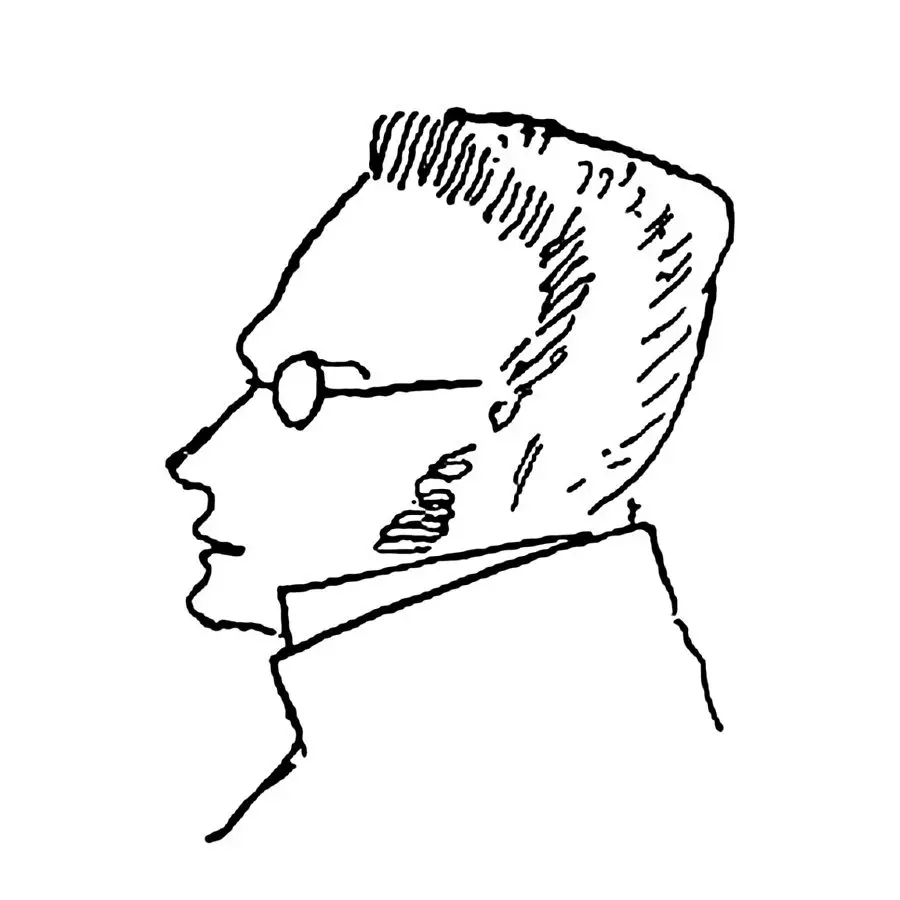
Socrates on virtue and the cosmic order

Steven asked:

Is it true that Socrates was chiefly concerned with ethics?

Answer by Geoffrey Klempner

I was almost not going to answer this because at first sight the question seems so dumb. Saying that Socrates was ‘chiefly concerned with ethics’ is like saying that Einstein was ‘chiefly concerned with science’. Sure, Einstein was concerned with other things too, like world peace, the fate of the Jewish people, etc. But, yes, science was definitely his thing. Duh!

Then I thought, no, this is wrong. Socrates wasn’t concerned with ethics. Not as we understand that term, through the traditions of Judaism, Christianity and Islam. The Greeks had no concept of a duty of loving kindness to the stranger. There is no place for altruism, although central to Greek world view was courageous self-sacrifice in battle: a good death.

It was ‘goodness’ in the sense of doing things well, that the Greeks were after. Aristotle in his Ethics gives a masterful analysis of the moral psychology of living well, as a human being should live, using all one’s powers of reason and judgement, following a well-forged path of habituation in always seeking — without any sense of inner struggle — to make the ‘right’ choice.

The Greek word is arete, which we translate by the wishy-washy term ‘virtue’ but which to the Greeks meant so much more. In Plato’s dialogue Meno, Socrates challenges the young aristocrat Meno to give a definition of ‘arete’. The whole dialogue is about trying and failing to define ‘arete’, and yet, as a demonstration with a slave boy ‘proving’ (with a bit of help) a geometrical theorem shows, we must somehow know what arete is — otherwise, how would we be able to judge that the various proposed definitions are wrong?

What is arete? That’s one question. How do we ‘somehow know’ what it is, even if we can’t confidently say?

The arete of an archer is what gives him or her the ability to reliably hit the bulls eye. If you don’t have arete, your arrows will go all over the place. Similarly (mutatis mutandis) with the swordsman, the potter, the carpenter, and any other skill you can think of. Aristotle likes the simile of the archer, because it vividly calls to mind what we are trying to do when we make an ethical judgement. And we don’t always ‘hit the target’!

The arete of a human being is, simply, to live well. Justice, temperance, courage are all involved, and all, somehow, constitute a ‘unity’ according to Socrates. You can’t have one without the other. But why these? Why is it so great to be just rather than unjust, temperate rather than intemperate, courageous rather than cowardly?

To my knowledge, Plato states the answer explicitly just once in his dialogues, in the Gorgias where Socrates is debating with Callicles, student of the great sophist Gorgias. It’s a powerful answer. His concept is mind-blowing in its immensity:

… wise men tell us, Callicles, that heaven and earth and gods and men are held together by communion and friendship, by orderliness, temperance, and justice; and that is the reason, my friend, why they call the whole of this world by the name of order, not of disorder or dissoluteness. Now you, as it seems to me, do not give proper attention to this, for all your cleverness, but have failed to observe the great power of geometrical equality amongst both gods and men: you hold that self-advantage is what one ought to practice, because you neglect geometry.

Don’t get it? First, you need to remember that Plato often uses allegories, so don’t be confused with all the talk of ‘gods’. This is about the cosmos (Greek word), the order that constitutes the universe, and a human being’s place in this order. There is no way, thought Socrates, to grasp what is ultimately real, that does not lead by a straight path to an understanding of how we should live, as self-moving elements in this universal order.

In simple terms, ethics and grasping the ultimate nature of reality, cannot be separate things. Ethics and metaphysics are one and the same.

And here’s the rub. If you revisit Socrates’ immense idea, with the monotheistic mindset, you get a ‘take’ on metaphysics that turns the whole subject upside down. That take was offered by the 20th century philosopher writing in the phenomenological tradition, Emmanuel Levinas, in his magnum opus Totality and Infinity.

Read that book, and let your mind be blown.

I may be a Brain in a Vat

Moe asks:

What do you think of Putnam’s argument against being a brain in a vat?

Assume we are brains in a vat.

If we are brains in a vat, then ‘brain’ does not refer to brain, and ‘vat’ does not refer to vat.

If ‘brain in a vat’ does not refer to brains in a vat, then ‘we are brains in a vat’ is false.

Thus if we are brains in a vat, then the sentence ‘we are brains in a vat’ is false.

Answer by Craig Skinner

Putnam’s argument is invalid. As indeed the wording of your question shows.

The statement ‘I am a brain in a vat’ is false whether I am a normal human (not a BIV) or a BIV. But I still don’t thereby know which I am.

To clarify:

If I am a normal human, then saying ‘I am a brain in a vat’ is obviously false.

If I am a BIV, then, as you say, my utterance ‘brain’ doesn’t refer to a 3-pound porridgy lump, it refers to a pattern of electrical impulses generated by the computer linked to the envatted brain, let’s call it ‘brain*’. Similarly, ‘vat’ refers to another pattern, call it ‘vat*’. So, when I say ‘I am a brain in a vat’ I mean ‘I am a brain* in a vat*’, which is false because I am not a brain* in a vat*, I am a brain in a vat.

Putnam’s error is to conclude that because ‘I am a brain in a vat’ is false whatever, then I can’t be a brain in a vat. The correct conclusion is that either I am not a brain in a vat or I am not a brain* in a vat*. But I don’t know which false proposition I am expressing.

Incidentally, I doubt it matters to a brain whether it’s in a glass vat connected to a supercomputer or whether (like mine) it’s in a tight-fitting, pitch-dark, bony vat connected to the outside world.

Nozick’s libertarianism and self-ownership

Joshua Asked:

How does self-ownership relate to Nozick’s libertarianism?

Answer by Paul Fagan

In order to answer this question a reading of Robert Nozick’s work from his Anarchy, State and Utopia of 1974 is presented here. It will be ventured that self-ownership is an integral part of Nozick’s libertarianism and that his theorising is also very dependent upon accepting his notion of individuals’ rights.

To understand Nozick’s self-ownership, one must first accept that individuals own their talents absolutely; and such talents must never be considered to be a ‘collective asset’ held by society (p. 228). After this, one may accept that persons are ‘entitled to’ the products of those exercised talents and all of the holdings that subsequently arise (pp. 225-6). Following this, one may consider one’s produce as an extension of oneself, over which one has the full rights of disposal.

With regard to individuals’ rights, Nozick believed that persons should be recognised as ‘ends’ rather than ‘means’ (p. 31), and that individuals may never be used by others (pp. 31-2).    By applying these tenets to the extended self, as described above, then it is akin to a violation of one’s rights to have any of one’s produce expropriated. This recognition of the rights of others should ideally ‘constrain’ one’s own behaviour in one’s daily life (Nozick 1974: 29), as not to violate others’ property, and by doing, respect others’ extended selves. Hence, Nozick’s notion of rights may be interpreted as being a protecting guard for the concept of self-ownership.

At first glance, all of the above may seem both logical and intuitively sensible: people should be allowed to accumulate holdings, and naturally they should enjoy rights that protect their property. However, Nozick’s arrangement has been subjected to some very deep-seated criticisms and examples of arguments that attempt to undermine his theorising will now be provided.

Firstly, communitarians may maintain that before a talented individual may exercise her talents, a supporting society must exist in the first place. It is therefore, illogical to view a talented individual and her produce in isolation. Individuals and their produce are best considered to be an integral part of a community. Although, libertarians may claim that individuals constantly test their surroundings and therefore should not be considered to be cogs in a machine, it is apparent that the continued existence of varying, identifiable cultures would indicate that peoples’ values are strongly influenced by the greater society enveloping them (similar arguments may be found in Will Kymlicka’s Contemporary Political Philosophy (2002, Oxford: OUP), pp. 225-6; although a wider discussion is provided in a section entitled ‘The Unencumbered Self’, pp. 221-8).

Secondly, some may argue that the untalented do not really have rights under Nozick’s arrangement as it effectively licenses starvation for the least talented who do not have enough ability to produce goods or sell their labour (Kymlicka, p. 119). Although Nozick would expect charity to prevail (p. 267), within a stringent regimen of self-ownership, it is a transparent fact that no one could ever be compelled to assist the least talented.

As presented here, self-ownership is at the heart of Nozick’s libertarianism and it is also protected by his notion of individuals’ rights. That said, it should be noted that convincing arguments, which weaken the perceived importance of either self-ownership or individuals’ rights, can threaten to discredit Nozick’s libertarianism.

Locke, Berkeley and Ockham’s Razor

Lisa asked:

How does Berkeley use Ockham’s Razor against John Locke?

Answer by Geoffrey Klempner

Another student assignment. I am going to make this easier for you, Lisa, by telling you what your teacher wants to hear. Then I am going to give my own view which you are totally free to ignore. In which case you don’t need to read past the third paragraph of my answer.

The story goes like this: In his Essay on Human Understanding, Locke gave an account of the origin of our ‘ideas’ — sense impressions and the concepts based on them — in terms of the interaction of our sense organs with material reality. Bishop Berkeley looked at this and thought, ‘Hmm, I can give just as good an account without positing this extra entity, ‘matter’. No-one ever experiences ‘matter’. All we experience are perceptions. On my theory, all statements about so-called ‘material reality’ are just conditional statements about actual and possible experiences.’

This is a classic example of the application of Ockham’s Razor, ‘Do not multiply theoretical posits unnecessarily.’ According to Berkeley, ‘matter’ is a theoretical posit that we can painlessly dispose of. Conditional statements about possible experiences are the ultimate truth about external reality. Job done.

First, a picky point. When physicists talk about Ockham’s Razor, they tend to mean something else than when a philosopher appeals to this principle. In physics, or science generally, not making unnecessary posits is a constitutive part of the task of constructing the most simple or elegant theory. The most elegant theory can still be false. We can get fooled by reality, things can be more complicated than we assumed, but in the long run we are less likely to be fooled if we follow the rule of preferring simple explanations to those that are unnecessarily complex.

In his Tractatus Logico-Philosophicus, Wittgenstein offers a radically different take:

If a sign is useless, it is meaningless. That is the point of Occam’s maxim.
(If everything behaves as if a sign had meaning, then it does have meaning.)
(Para 3.328)

Occam’s maxim is, of course, not an arbitrary rule, not one that is justified by its success in practice: its point is that unnecessary units in a sign-language mean nothing.
Signs that serve one purpose are logically equivalent, and signs that serve none are logically meaningless.
(Para 5.47321)

On Wittgenstein’s reading, what Berkeley is saying is not, ‘I can give a more elegant theory than Locke.’ Just read Berkeley, and you will see how wrong that is. He repeatedly makes the point that ‘matter’ is a meaningless notion, a horrendous invention of philosophers, while it is plain ‘common sense’ that all we know or can ever think about are our own perceptions.

But here’s the rub: the attempt to reduce statements about the external world to ‘conditional statements about actual and possible experiences’ is a catastrophic failure. (If you’re interested in pursuing this, read Chrisopher Peacocke Holistic Explanation: action, space, interpretation 1977.) Briefly, it is impossible to pin down ‘objects’ because every conditional statement refers to many, many more conditional statements. It’s like trying to solve simultaneous equations with too many unknowns.

I don’t think Berkeley thought the matter through to this point. It’s difficult when the only logic you know is the logic of Aristotle. However, what he did realize is that there is something fundamentally wrong with the notion that conditional statements can represent the ultimate truth about anything. A conditional needs a truth maker, a non-conditional fact in virtue of which the conditional statement is true. (If you’re inclined to doubt this, try it for yourself. Imagine that some conditional statement is ‘in fact’ the case, but there is no further non-conditional fact that accounts for its truth.)

Berkeley saw this quite clearly: his response was all our perceptions are ultimately explained by the virtual reality blueprint in the mind of God. My answer has already been long enough, so I won’t explore this aspect of Berkeley further. (Do a search, this is a topic that has come up before on Ask a Philosopher.)

So, we threw out matter and brought in… God?

Ockham’s Razor?!

A little more on Hoyle’s ‘junkyard tornado’ argument

Orlando asks

Is the “junkyard tornado” argument of Sir Fred Hoyle for the existence of God as bad as Richard Dawkins seems to think it is?

Answer by Craig Skinner

Yes, it is.

The argument intends to show that the development of a complex living creature by the random process of natural selection is as likely as the production of a Boeing 707 by the random process of a tornado in a junkyard ie so fantastically unlikely that we can dismiss the idea. Here’s the flaw. The tornado effect is a one-step process. But evolution proceeds by many intermediate steps, each of which is stable and conserved. The difference can be illustrated by the monkey-typing analogy mentioned by Geoffrey Klempner in his answer and used by Dawkins in his writings. The tornado is equivalent to the monkey having to type Hamlet all in one go – if an attempt fails (as it will) he starts again from scratch, and so on it goes, pretty well for ever, without success. Evolution is equivalent to keeping the letters which are correct in any given attempt while starting again with the others: so, if a version produces “T” where it should be, we keep this till  a later version happens to produce an “o” after the “T”, and now we have “To”. Pretty soon we get “To be or” and so on. In this way, and Dawkins quantifies it, Hamlet will not take that long for the monkey to produce.

Incidentally, I am a big fan of Fred Hoyle, his science, popular science books and science fiction. He coined the term “Big Bang” as one of derision (he championed the rival steady state idea which lost out as convincing evidence for the big bang appeared). He should have got the Nobel prize for his work on resonance states of carbon. Maybe his being a blunt, outspoken Yorkshireman outside the “establishment” of his day had something to do with it. He wasnt afraid to go out on a limb with his ideas, and he was more often right than wrong.

On Fred Hoyle’s ‘junkyard tornado’

Orlando asked:

Is the “junkyard tornado” argument of Sir Fred Hoyle for the existence of God as bad as Richard Dawkins seems to think it is?

Geoffrey Klempner

As I recall — from Dawkins’ 1991 televised Royal Society Christmas Lectures, which I sat through, spellbound — Dawkins accepts the ‘steep slope of improbability’ as a challenge which he believes can be met. Improbable as it may seem, computer modelling demonstrates that there is a series of relatively ‘small’ evolutionary steps that lead, e.g. to a fully-formed wing or an eye.

But suppose Dawkins is wrong. I don’t see that it really matters. We can go further and assume that Darwin’s theory of evolution is complete rubbish, just as the creationists say it is.

Imagine that I gave you a typescript of the works of Shakespeare, and told you that it had been typed out, without a single mistake, by my pet chimpanzee. You would have every reason to disbelieve me.

However, we know that there is a finite a priori probability that what I have described might take place — in some possible world. Just work out the total number of actions that a chimpanzee could conceivably perform on a keyboard, including tapping a key, pressing shift or return, etc. then put that number to the power of the number of characters, spaces, paragraphs in Shakespeare’s works.

The result is a very large number. But so what? That doesn’t show that it’s impossible. Only that I must be pulling your leg, by any reasonable standard for belief.

The story of a Boeing 747 being ‘assembled’ by a junkyard tornado out of aeroplane parts is more problematic, because one would first like to see a proof that various stages in the assembly are physically possible, regardless of improbability. For example, inserting rivets requires a riveting gun, otherwise you just don’t have sufficient steady force to do the job. Epoxy glue needs to be heated to the right temperature. And so on.

Well, let’s agree that the formation, say, of DNA from its chemical constituents is as improbable, or even more improbable than the chimpanzee story. The difference is that you and I are here, talking about this, so unless creationism is true in some form or other, we just happen to be extremely lucky. In our possible world — one in a gazillion — things turned out just fine.

Why believe that tall story rather than creationism? The familiar reasons, which I won’t repeat here. The argument I’ve just given isn’t going to convince anyone who is a true believer in the Bible, but it works just fine for any true believer in science who is against creationism on fundamental principle.

My gut feeling is that there’s a lot of work still to do before Darwin’s theory looks like a genuine theory rather than the most plausible conjecture. It’s only on the table because it doesn’t have any real competitor as a naturalistic account. I’m with Fred Hoyle that evolution is not exactly easy to believe.

As an historical digression, the Ancient Greek atomists didn’t have anything so fancy as Darwin’s idea about natural selection to work from. They may well have observed how when wet gravel is shaken in a sieve — as in panning for gold — the heaviest lumps move to the centre. In addition, by the principle of insufficient reason, there must be atoms of every conceivable shape, so when the ‘right’ atoms collide, they stick together like Lego bricks, eventually forming the world as we know it. (Computer model that!)

In other words, with only initial random motion, it is possible to have a physical system whereby entropy is reduced on purely natural principles. That was all the atomists thought they needed.