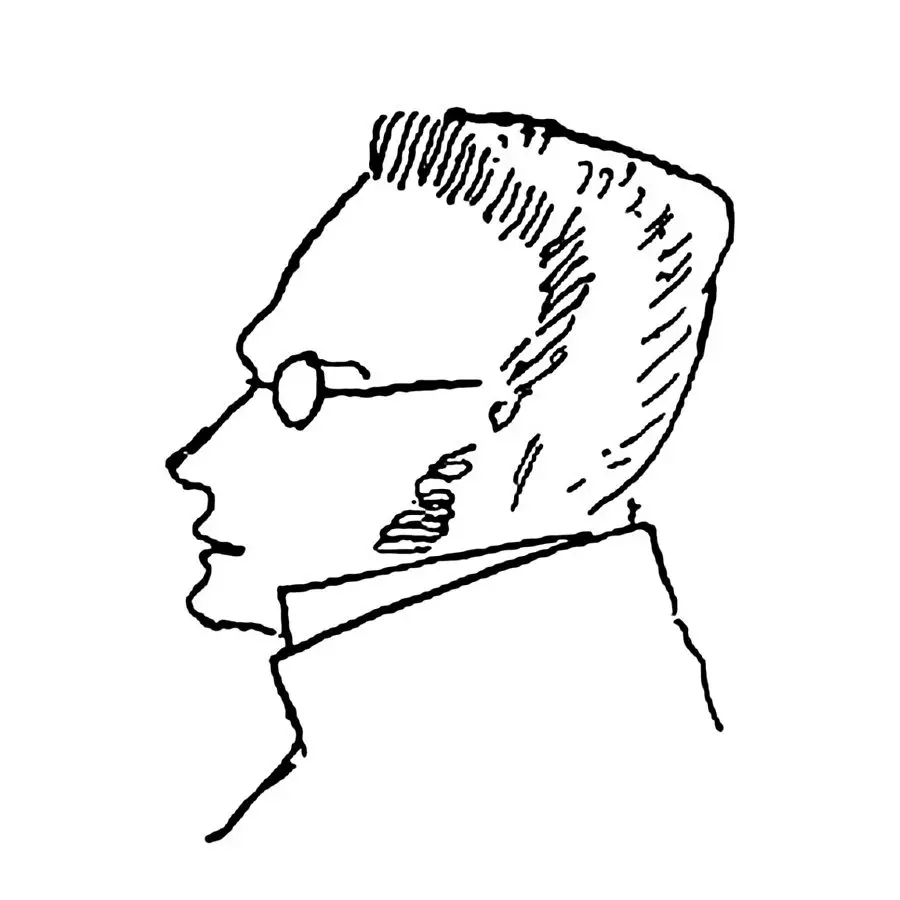
Thinking too much

Howzer asked:

How to stop thinking too much, but feel instead? I need inspiration and courage to do what I want.

Answer by Gideon Smith-Jones

What do you really want?

In the TV series Lucifer https://www.imdb.com/title/tt4052886/ God’s son Lucifer has quit his job presiding over Hell and now owns a night club in Los Angeles. His one super-power (apart from being able to scare people by putting on his ‘devil face’) is asking that question. And when he asks, you can’t resist no matter how hard you try. You just have to blurt out what you really, really want. And some of the answers are pretty embarrassing, to say the least.

We’re in Freud territory, although Sigmund rarely gets a mention in the episodes. Another TV series Westworld https://www.imdb.com/title/tt0475784/ hits the nail on the head. Human beings are not more complicated than ‘hosts’ (artificial humans, androids). On the contrary, they’re much more simple. In a key episode, we learn that a human brain has only ‘a few thousand’ lines of code. All human human behaviour can be explained by reference to just a small number of unalterable basic drives. The rest is just calculation. Or calculation plus two or three millennia of culture if you want to bring in Freud.

I would say that in addition to inspiration and courage (things we all want) you need to trust yourself more. What you call ‘thinking too much’ is basically lying to yourself. For example, pretending that a situation is more complicated or challenging than it really is.

— You know this, don’t you?

Let’s get down to basics. There’s a girl that you really fancy. (I don’t want to be sexist, by all means substitute ‘boy’ if that’s more relevant to your case.) You can spend all night working out what the person in question would say if you said…, or if you said… . Or you can just walk up and start a conversation. Let the inspiration of the moment guide you.

Oh, I forgot, you don’t have inspiration. Or the courage. Well here’s a tip. Ask yourself what a courageous or inspired person would do, and do that. Pretend it isn’t a problem. You might surprise yourself. (I’m only repeating basic advice that you could find on a hundred web sites.)

Leaving aside basic wants that we all share, in various ways, there is something unique to you, that no-one else has. No-one else has lived your life. So in a way, your wants are unique too. Think of it this way: you are an artist and your life is your art. You are free to create anything that pleases you. Free to experiment. Forget the others, this is about you and only you.

You’re right that you need to avoid thinking too much. It isn’t necessary to work out everything in advance. Try something, and if that doesn’t work, try something else. If you keep going and don’t falter, you will get there — wherever it is you ‘really’ want to be.

A hundred years from now, you’ll be dead. And then it will be too late.

Thought and language

William asked:

While written words symbolize spoken words, what do spoken words symbolize?

Answer by Geoffrey Klempner

Imagine the following scenario:

After a long, desperate fight lasting all day and into the evening, the battle has been won.

A messenger is sent out to give the news to the King. He runs all night and all the next day, then collapses and dies from exhaustion before he is able to deliver the message.

If only written language had been invented! The message would have been delivered, whether the messenger lived or died, provided that he arrived at his destination.

But suppose that spoken language had not yet been invented, what then?

The battle has been won. But the only ones who know, are those who fought. And when, eventually, the weary warriors return home, how can they ever describe what they saw with their own eyes, judged with their own hearts and minds — corpses strewn over the battlefield, dismembered arms and legs, decapitated heads, the remaining enemy troops in full flight?

Michael Dummett remarks somewhere (it could have been in ‘What is a Theory of Meaning?’ either I or II) that ‘language increases the range of human perception’. You can look out the window to see that it is raining, or someone else can look out the window and tell you, in words, ‘Hey man, it’s raining!’

And so we are tempted to put forward the following analogy: just as written words reproduce (or ‘symbolize’) spoken words, so spoken words reproduce the language of thought.

When the warriors judge, ‘we have won the battle’, the thought they express, severally and collectively, is expressed in mental language, a language that has no ‘words’ or ‘sentences’ as such, and yet has the power, the capacity, to give meaning to spoken and written language (once it has been invented).

Dummett calls this the ‘encoding/ decoding’ model of language, which he claims is refuted by Wittgenstein’s argument against a ‘private language’ in Philosophical Investigations. (Dummett goes on to make some very questionable deductions from this about the necessity for a ‘theory of meaning’ which we need not go into.)

I endorse the view that language is necessary for thought. Before language (historically, spoken language) was invented, human beings simply did not have the power to ‘think’ the kinds of thoughts that language is able to express, specifically, thoughts about the past or future, or about generality. (This point is made persuasively by Jonathan Bennett in his book Rationality, 1964.)

Then Jerry Fodor came along with his The Language of Thought (1975) and gave the idea of ‘language in the brain’ a new twist. There has to be some ‘structure’ there to begin with for language learning to be possible, something ‘mental’ — although physically embodied in the brain — that is in some way isomorphic to written or spoken words.

However, Bennett’s point still stands. In an analogous way to Darwinian evolution, an individual human brain ‘evolves’ structures over time in response to human interaction and other external circumstances (Daniel Dennett, Consciousness Explained, 1991), and it is plausible to claim that the ‘language of thought’, if there is such a thing, only came into being as spoken (and written) language developed.

What Darwinian evolution gave homo sapiens was the extra plasticity required to build structures in the brain where none had existed before, which then enabled the development of language. As with other evolved structures (a wing, for example) we can hypothesize that some survival benefit was conferred by this extra brain plasticity apart from the capacity to develop language — but that’s just speculation.

What, then, do spoken words symbolize? Written or spoken words represent that something is the case, or is not the case: something that is true if the words represent that something is the case and it is the case, or if the words represent that something is not the case and it is not the case, or false if the words represent that something is the case and it is not the case, or if the words represent that something is not the case and it is the case. — That’s how Aristotle explained the concept of truth.

The technical term that we would now use for this is: ‘truth conditions’. Instead of looking for some ‘thing’ in the brain that is the ultimate bearer of meaning, we describe what meaning does, what it is, in effect. Statements, or judgements, made in written or spoken language, have truth conditions, and that is how they get their ‘meaning’. That is how language is able to work.

You might object to this that nothing has really been explained. Isn’t there still a mystery about how meaning — or the capacity to express thoughts or statements that have truth conditions — can arise at all? There is much that we still do not know. But I am going to leave it there.

Classic texts for the beginning student

Alan asked:

Discussing which philosophers’ original work to read, GK intimated that Spinoza’s ‘Ethics’ would not be a good choice. Is this because you consider him a poor philosopher, or that his philosophy is so self contained it allows little constructive discussion? Or something else completely?

Answer by Geoffrey Klempner

How do you know that Spinoza was a great philosopher who is eminently worth discussing? Because that’s what you were told in some lecture course or in a YouTube video? Maybe the speaker was putting you on. Maybe the whole ‘spinoza’ thing is just a big joke played by philosophers on the non-philosophical world.

Spinoza is difficult to read without a supporting secondary text (or lecture course or YouTube video). That’s why when starting out in philosophy it is better to find a classic text that you don’t need to have explained to you, where you don’t need to be spoonfed.

Locke is one philosopher who has suffered from generations of misinterpretation. Reading texts from the 60s you’d think he was complete dumbass. Just read the unabridged Dover edition of his Essay Concerning Human Understanding in two volumes from start to finish and you’d have a very good and accurate view of Locke. And you only need to read it once — because he goes to such great lengths to explain himself.

Pity the poor students who relied on the ‘expert guidance’ available at the time without taking the opportunity to judge for themselves!

That’s just one example. There are plenty of classic texts that you don’t need to have explained to you, for example you could try some of the texts in Section 3 of the Pathways introductory book list, which I reproduce here without comment:

George Berkeley Three Dialogues Between Hylas and Philonous (1713)

Rene Descartes Meditations on First Philosophy (1641)

David Hume Dialogues Concerning Natural Religion (1779)

Plato Phaedo (around 385 BC)

Ludwig Wittgenstein The Blue and Brown Books (Blackwell)

Kirk, Raven and Schofield The Presocratic Philosophers (2nd Edition CUP)

— You can approach philosophy in the spoonfeeding way or you can see this as an opportunity to learn to think for yourself. The decision you make now will have profound consequences.

[Note added: for more on this topic see my post on the Philosophy Pathways blog On reading.]

Better never to have been

Rene Lopez asks:

Are there any good arguments against David Benatar’s antinatalism?

Answer By Craig Skinner

I dont think so. Benatar’s arguments in his book Better Never To Have Been (OUP 2009) are convincing.

His thesis is that a world without sentient beings (or no world at all) would be better than the actual world.

He has two arguments:

1. The vale of tears argument.
2. The asymmetry argument.

  1. The vale of tears view says that we humans are natural born reproducers and optimists (adaptive evolved traits). We overestimate the joys of life as compared with the sorrows, keep having children and hoping for better things for them, whereas an impartial assessment of how things really are for humans and other sentient creatures, will conclude that, whilst transient joys occur for most of us, and more joy for some of us, overall the balance is suffering.
  2. The asymmetry argument says that a world without sentient beings prevents both suffering and joy, but, whereas avoidance of suffering is a good thing FULL STOP, prevention of joy is not a bad thing because nobody exists to be deprived of it.

Of course, even if it would have been better for me never to have been born, it doesnt follow, now I do exist, that suicide would be best. A nonexistent person has no interests, rights or agenda, whilst an existent one has, and usually wants to live and make the best of it. Hence, Benatar recommends planned extinction of humanity by birth control. I doubt it will ever catch on, but unplanned extinction is a distinct long term possibility.

Meantime, driven by my evolved biases, and aware that although the Grim Reaper isnt quite knocking on my door, he may be lurking in the shrubbery, I best close and get on with living.

Metaphysical necessity

John asks:

Is there ANY notion of ‘metaphysical necessity’ that you consider to be defensible ?

Answer by Craig Skinner

Yes, metaphysical necessity as the strictest or strongest grade of necessity: absolute;  necessity in virtue of the essences of things.

The grades, in increasing strictness, are:

1. Practical

2. Physical

3. Nomological

4. Logical

5. Metaphysical

Practical necessity refers to things we need to do in ordinary life to ensure our plans go smoothly eg before setting off to drive to Italy it’s necessary to check tyres, oil, insurance etc. But we could ignore this need and set off without doing any of it.

Physical necessity refers to something forced on us, not by logic or the laws of nature, but by the limits of our powers eg inability to time travel because we cant make big enough exotic wormholes in space or make a cylinder the mass of a galaxy spinning at half light speed. But maybe one day we will be able to do these things.

Nomological (Greek nomos = law) necessity is forced by the laws of nature eg on Earth a book dropped falls to the ground (law of gravity). But there may be other universes with different laws of nature where such a thing doesnt necessarily happen.

Logical necessity is necessity in virtue of the meaning of words (or symbols) plus the laws of logic eg “all bachelors are unmarried men”, “all red balls are red” are necessarily true. But maybe some other universes are illogical. Indeed, there are some true contradictions in our world eg “This sentence is not true” is both true and untrue.

Metaphysical necessity is absolute necessity, simply must be, no ifs, no buts. Examples are that I am necessarily the child of my specific parents (a child of somebody else couldnt be me); or that water is liquid H2O; or gold is the element with atomic number 79. We can say metaphysical necessity is due to the essences of things (the properties that make a thing the very thing it is). Nothing exists by metaphysical necessity though – any item in the world, or the entire universe itself, might not have existed. Of course we can define God as the being whose existence is his essence, in which case, if God exists, then his existence is metaphysically necessary.

The term “natural necessity” is sometimes used to mean physical, or nomological,  or both these necessities, but is confusing and best avoided.  Likewise “conceptual necessity”, due to definitions or meanings of words, which I include under logical necessity.

Causation and necessary connection

Vipin asked:

How do we define necessary connection essential for a cause-effect relationship? As per David Hume, there is no necessary connection found in matters of fact; but is it true? Can we not find any causal relationship between any two facts in this world?

Answer by Geoffrey Klempner

I was hoping Craig would answer this one. I seem to have different intuitions about cause and effect from most philosophers coming to this topic. So you should take my answer with a big pinch of salt.

Hume saw the basis for the alleged ‘necessary connection’ between cause and effect in the operations of the mind, the tendency of the mind to pass from one ‘idea’ to another associated ‘idea’. He is careful to explain how this psychological process is consistent with a ‘logic’ of causes (see his ‘rules by which to judge of causes and effects’, Treatise of Human Nature Book I, Part III: Section XV). The frequently cited objection that merely noting regularities would fail to distinguish genuine cases of causation from accidental connections would leave him cold.

It’s a good theory, so far as it goes. Carl Hempel developed the idea in his ‘deductive-nomological’ (D-N) model of explanation. Various weird examples have been concocted, which attempt to show how the D-N model sometimes fails to track causation. One I remember from my Birkbeck days is ‘Valberg’s Bomb’, which greatly exercised G.A. Cohen, famous expositor of Marx, when he ventured into what was for him relatively unfamiliar territory of philosophy of science in a lecture series I attended. (I’ve just searched Google, but the only reference I could find to Valberg’s Bomb was an email I wrote back in 2011 https://electronicphilosopher.blogspot.com/2011/12/hempels-deductive-nomological-model-of.html. Jerry Valberg was a colleague of G.A. Cohen at UCL.)

Elizabeth Anscombe, in her essay ‘Causality and Determination’ (E. Sosa, M. Tooley eds., Causation. OUP. pp. 88-104, 1993) challenged the Humean orthodoxy, arguing for a more traditional, pre-Humean notion of a cause as the ‘source’ from which the effect flows. On this account, there need be no universal law under which the cause-effect pair falls.

What is a genuine ‘effect’ of a ’cause’? The cause must be the ‘source’ of the effect. The cause must be the thing from which the effect ‘really comes’. This is something we all believe. But just repeating the belief, or finding some new word to describe it, is no help at all. The examples Anscombe cites in her paper are unpersuasive. In her impressive oeuvre, this essay seems somewhat of an oddity.

I used to be Humean, but I’ve come round, or at least half come round. What I now believe is that causation can be a one-off, just as Anscombe said. She was right. But I also believe in a Humean fashion that, in principle, anything can cause anything. Logically, anything is possible. It is logically possible that I could sneeze and as a result the universe could disappear in the next second. My typing a full stop at the end of the last sentence, could, in principle, have caused a plumber in Delhi to die of a heart attack.

Impossible, you say?

Let’s run the universe again in our total-universe simulator, and see what happens. We can stop Kennedy’s assassination, but only (on the ‘official’ theory) by preventing Lee Harvey Oswald from firing his rifle, or else spoiling his aim. In a similar way, we can try various ways of altering the course of world history, each more or less amusing. But every single time I type that period, Mr Singh’s heart stops. This is no mere accidental connection. We can’t explain it. Nor is there any ground for thinking that an explanation could, in principle, be available. It’s just a fact. Blame the glitch on whoever it was who designed the universe.

That’s my intuition. In practice, just as Hume said, we must always as a methodological principle look for a causal law to explain cause-effect relationships. But there is no guarantee that we will find the law in question, or even that it exists. Many of the things we take to be ‘effects’ of ’causes’ might not be such, and we would never know. Many of the things that we would never in a million years imagine could be ‘effects’ of ’causes’ might indeed be such, and we would never know. (For roughly Kantian reasons, we should add ‘hopefully not too many’.)

I honestly don’t think that was what Anscombe believed, not for one second. But that’s just the way with taking an argument, or an idea, to its logical conclusion.

As Plato said, you have to follow the argument wherever it goes.