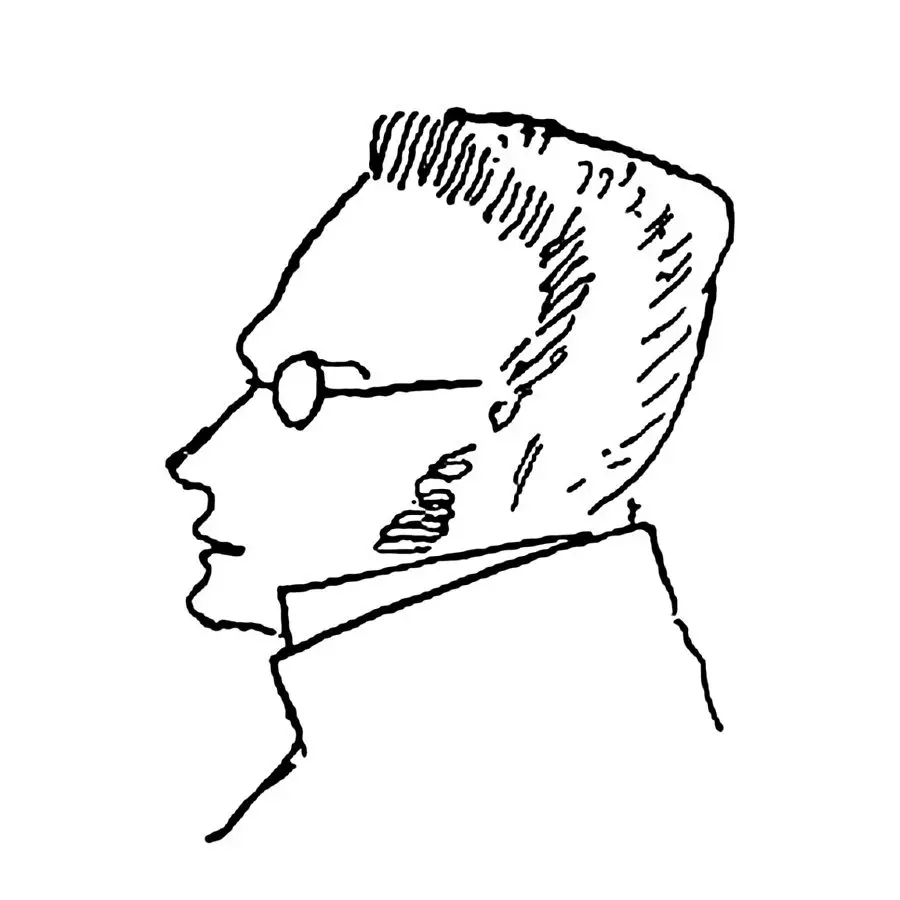
The two godheads

Tung asked:

Can Cartesian dualism successfully account for the existence of consciousness?

Answer by Geoffrey Klempner

This question is deeper than it looks. The question we have to address isn’t how Cartesian dualism compares with other theories of the mind such as material monism, or even whether Cartesian dualism is a defensible theory. Then, what?

Imagine that no-one has ever thought of an alternative to dualism. The very idea of a materialist explanation of consciousness has never occurred to anyone, ever. Cartesian dualism states that there exist two fundamentally different kinds of substance in reality. These two types of substance are identified by their essential properties. The essential property of material substance is that it has mass and occupies space. The essential property of mental substance is that it is presented in consciousness to an ‘I’, a subject of thought and experience.

But why does consciousness exist? Why does material substance exist? Maybe Descartes was wrong about God being the Creator. Maybe, it would not be so bad if we just had to accept contingent existence as the beginning of everything, as in my five-word treatise on Metaphysics:

Something exists.
Deal with it
.

Something exists. It’s just a fact. And what exists, according to the dualist, is two kinds of ‘something’, a material universe in space and time, and a conscious subject, or subjects like you and me.

On this view, ‘accounting’ for the existence of consciousness means exactly what it says: we are taking an account, making an inventory OF reality (as I argued in my book Naive Metaphysics). This isn’t ‘accounting-for’ in the sense of explaining (as in, for example, the deductive-nomological model of explanation proposed by Carl Hempel) but rather just acknowledging what is there. Acknowledging a fact, the fact that consciousness exists.

But this is where things begin to get fuzzy.

I said, ‘the fact that consciousness exists’. Whose consciousness? Yours, maybe? You can take it as read that I am talking about you, whomsoever you are — whoever happens to be reading this — but as far as I am concerned is very far from being a ‘fact’ that you exist at all, let alone your ‘consciousness’. I don’t know you. And even if I did, there’s that worrying epistemological gap between perception of a another person’s speech and behaviour and the supposition, or assumption — or inference? — that there ‘exists’ something ‘inside’ that accounts for these outward physical manifestations.

No, I am talking about myself. Just as Descartes did. I know that I exist. I know my consciousness, or, at least, I know it now, at this very moment in time (maybe my memory systematically deceives me, maybe I have only existed for these few seconds, maybe…).

I know that I exist now. What kind of knowledge is that? Knowing that I exist now, at this moment, I also know that this ‘existence’ is not necessary but contingent. I might not have existed now, at this moment. And what then? One possibility is that the author of this post was never born. There was no individual called ‘GK’. My parents’ only son was called Simon Klempner, and he became a successful City of London banker.

But it is the other possibility that troubles me: that GK was born, sixty-nine years ago give or take a few days, studied Philosophy, got his doctorate, ended up here, on a high and very bare plateau of his own creation, posting his lonely thoughts on the Internet. But that GK, be he ever-so much like me, is not I. Because I never existed:

I might not have existed but someone exactly like me might have existed in my place.

Obviously — duh! — Cartesian dualism cannot account for there being I, because it can’t explain why I exist rather than someone exactly like me who is not I. My existence or non-existence is not to be ‘accounted for’ on the basis of the existence or non-existence of some substance, as Descartes thought. The metaphysical theory of substance, which he derived from the great Aristotle, is simply inadequate to account for what is.

What is, is that there is a world, and there is I. Or, in the words of Ludwig Wittgenstein in his 1914-16 Notebooks:

“There are two godheads: the world and my independent I.”

Later, in his Tractatus Logico-Philosophicus, Wittgenstein pulled back from this momentous claim, realizing that according to his own theory of language and meaning, the thing he wanted to say simply could not be said, or even ‘thought’. Wittgenstein’s contemporary, the redoubtable Frank Ramsay alluding to his teacher’s fondness for playing the recorder quipped, ‘What you can’t say you can’t say, and you can’t whistle it either.’

— I will leave the question there, because I don’t know what else there is to say.

Dialectical materialism – brief explanation

Mia asked:

Hello, I am a student in middle school, and due to my unfortunate intellectual immaturity, I’m have trouble understanding dialectical materialism. I have two questions on the subject:

If you ever to look at, for example, Darwin’s theory of evolution, through a dialectical materialism thought process, how would your opinion on the subject change?

Why was dialectical materialism created? Did it support a certain political perspective?

Hope to hear from you soon.

 Answer by Jürgen Lawrenz

I’m impressed that as a middle school student you seem ready to tackle socio-philosophical issues! But I will keep things radically simple. It is more important to have an overall grasp; the details can follow later.

Dialectical materialism involves a conception of society as an economy, i.e. producer and consumer of commodities (goods and services). Its basis is, that every citizen in any society has needs that must be fulfilled for them to live a decent life. Therefore they have to work and be paid for it, so as to be able to go out and buy what they need. But this issue has always been a huge problem for mankind. Throughout history, societies have been stratified into “classes” — the rich, the middling and the poor. Most of the time this does not reflect the deserving of the people who make up these classes. Rather it is the case that some people enjoy privileges based on birth right, i.e. nobility, large property ownership, industrialism, fame as entertainers etc. The poor, on the other hand, are often denied the opportunity to crawl out of poverty on their own merit.

This was Marx’s perspective when he founded the Communist Movement. His dialectical materialism served for the analysis of what has to change in society for everyone to get an adequate share of what is called in England, the “common wealth”. It is dialectical in that it comprises a pattern of examinations in form of a disputation, where (e.g.) two conflicting social situations A and B are to be reconciled in a synthesis C, which ought to benefit both parties. Thereafter the enquiry continues with C and D and so on. The word ‘materialism’ indicates that it is goods and services that are under debate, not merely theoretical principles.

Ideally, a civil society should ensure that all the benefits are equally distributed, or at least in the form of merit that reflects the quality and quantity of individual input. Whether any communist state has ever achieved this, may be doubted, but that’s the ideology behind dialectical materialism.

Where does Darwinism fit into this? Basically not at all. Its catch phrase “survival of the fittest” tells you by implications that it emerged from the mercantile environment of England, where the fittest are invariably those who know how to play the game of capitalism to their advantage. So this ideology (when transferred to politics) is merely another form of generating privilege. Bear in mind now that Marx worked in England, the home of evolution theory and of capitalism, and that his life span overlapped partially with Darwin. It explains something. But irrespective of this accidental coincidence, Darwinism and Marxism are absolutely incompatible.

Free will and creative reverie

Alan asked:

Is the essential freedom proposed by Sartre contradicted by all types of determinism?

Answer by Geoffrey Klempner

This is a question about which I have changed my mind. I had a view — quite a strong view — about this, but I now realize I was wrong.

This is what I used to think: that everything that Sartre says about ‘free will’ and ‘bad faith’ can be fully taken on board by a ‘compatibilist’ — someone who believes that free will is compatible with determinism. What exactly is the debate over compatibilism?

The debate got going with a thought famously expressed by David Hume in his Enquiry Concerning Human Understanding:

“Actions are, by their very nature, temporary and perishing; and where they proceed not from some cause in the character and disposition of the person who performed them, they can neither redound to his honour, if good; nor infamy, if evil.”

In unit 2 of The Possible World Machine, I offer the following gloss on Hume’s remark, put into the mouth of my fictional student ‘Derek’:

“What it means… is that if your idea of free will is not being determined to do whatever it is that you’re going to do next by your own unique character and innate dispositions, then you’re no better, in effect, than a roulette wheel. The action you ‘freely’ choose to do, according the this idea, is just the accidental result of whatever number in the roulette wheel in your head happens to come up. That’s not anything anyone would recognise as freedom.”

If Derek’s claim were true, then in order to have good Sartrean ‘free will’ we would want determinism to be true. The actions I do in good faith, or avoiding bad faith, proceed from my ‘unique character and dispositions’. They are caused by me, the kind of person, the agent that I am. Actions that are not the product of my character are actions that I can take no credit for. They are not ‘mine’ in any meaningful sense. Ergo, someone who believes in Sartrean free will ought to believe in determinism, or at least hope that determinism is true.

Schopenhauer makes a similar point when he argues against a conception of free will conceived as the ‘freedom of indifference’. If my free actions are only those that occur in cases where my character and motivations are not sufficient to decide one way or the other, then they are of no interest. What interests us, as moral agents, are those actions that we have a reason and a motivation to do, the actions we choose, for reasons.

This is just plain wrong!

If there is one thing we know about the philosophy of Jean-Paul Sartre, absolutely and for sure, is that he is adamant that determinism cannot be true. He doesn’t merely express the hope that determinism is false. He knows that it is false. He knows that he is radically free. But, in that case, how does he escape Hume’s dilemma?

There is a way to avoid the dilemma. But in order to see it we have to rid our minds of the kinds of example that are normally put forward in discussions of free will. (It was Wittgenstein who remarked, ‘A main cause of philosophical disease — a one-sided diet: one nourishes one’s thinking with only one kind of example’ Philosophical Investigations para. 593.) We imagine cases where there are reasons for doing A and also reasons for doing B. We balance the reasons for A and B against one another and decide that A is, all things considered, stronger than B. So we do A.

It is true that we do sometimes balance two incompatible courses of action against one another and decide which to opt for. But far more commonly, we find ourselves in a situation were we don’t know what to do. There are lots of possibilities, not just two. And thinking ahead, through the various things that could happen, more and more possibilities branch off.

I would argue that it is far closer to the human decision-making process to see it as a kind of creative reverie. We indulge in this kind of reverie even when we are not required to make any decision. The thought comes into my head, ‘Suppose that such-and-such were to happen.’ It might be extremely unlikely that such-and-such could ever happen in any possible world that I was remotely connected to, but such considerations are irrelevant in pure reverie. In reverie, I can travel the universe, or become Pope, or machine gun my enemies to death.

When creative reverie is put to use, on the other hand, we find ourselves at the apex of multiple story lines, any one of which could actually come to pass, but at most only one of them will. But here’s the thing: The story lines have to occur to me. I entertain them in my mind, let them in to my consciousness. They crowd round. Which one should I choose first? It is true that at this precise point my freedom is indeed the ‘freedom of indifference’ as Schopenhauer calls it. My thoughts go one way when they could just as well have gone another. Nevertheless, I take responsibility for that choice. The thoughts are indeed mine.

Though I could hardly see myself committing murder in the real world, the thought of what I would do to so-and-so with my machine gun really did happen, I cannot deny it. And now suppose that by some incredible sequence of events my enemy stands before me, and I just happen to have a fully-working machine gun in my hands…

It is in this sense, and for these reasons, that I can imagine that I might not have existed but someone exactly like me might have existed in my place, who ten minutes ago when I started composing this answer decided to watch the TV news instead. With the result that this answer was never written.

Writing this answer today was an act of free will, an event that could not have been predicted by a Laplacian Super-Mind on the basis of the way the Big Bang banged because a possible world not just similar to but exactly like the actual world, up to ten minutes ago exists, with someone exactly like me in it, who happened to wonder what Boris was up to today and decided to put on the TV news.

Transcendental wake-up call

Charles asked:

Why did Kant say Hume woke him up from his dogmatic slumber? How did he address the challenge Hume posed in respect of the problem of causality? In what sense does this response constitute a basis for Kant’s metaphysics?

Answer by Martin Jenkins

Hume

After his reading of David Hume, the problems raised by the latter’s Empiricism found a resonance in Kant.

Issues such as causality, necessary connection, personal identity were explored by Hume. In his ‘Inquiry Concerning Human Understanding’, Hume had concluded that Causality is not a definite, determinate event observed by the senses, it was the constant conjunction of two events enforced by custom and habit. The latter was found to be the basis of so called necessary connection. That a thrown stone may break glass, that the sun will rise tomorrow, that in the morning, the world will appear the same way it was on the previous night do not demonstrate any necessity. As such it is perfectly reasonable that what has always been in the past, may not be so in the future…

Regarding personal identity or the self, this too cannot be perceived. There are at most an association of ideas. Mustn’t there be some thing which associates the ideas, a ‘self’. Hume contends that the ‘self’ is itself, never encountered.

Transcendental Idealism

For Kant, the epistemological issues raised by Hume posed the question of the certainty of human knowledge. It seemed that Empiricism could not provide any certainty and left matters open to scepticism.

Kant’s response was to examine human experience and deduce that there were indeed, structures common to and which mediated human experience. As you mention, causality is one such structure. We do indeed perceive objects displaying succession in Time and in Space. The structures themselves are not experienced but are the very conditions of the possibility of human knowledge.

The structures or Transcendental Categories are a-priori inherent to the human intellect. They synthesise with intuitions gained through the senses to create synthetic a-priori judgements and consequently, knowledge. Accompanying this process is the Ego with its Synthetic Unity of Transcendental Apperception. Kant expounds how this happens in his Critique of Pure Reason (1781/7). The Transcendental Categories furnish apodeictic certainty thereby giving human understanding an indubitable grounding.; this contrary to the fortuitous nature of empirical contingency.

So, for human beings, neither a-posterior empiricism nor the pure, a-priori reasoning characteristic of Metaphysics can provide knowledge nor, what this knowledge precisely is. Transcendental Idealism can – according to Kant.

Kant’s dogmatic slumbers

Charles asked:

Why did Kant say Hume woke him up from his dogmatic slumber? How did he address the challenge Hume posed in respect of the problem of causality? In what sense does this response constitute a basis for Kant’s metaphysics?

Answer by Jürgen Lawrenz

To start with, ‘slumbers’ was a bit of an exaggeration; and today’s reader has to be made aware that the word ‘dogmatic’ did not then have the same pejorative connotations it has for us. Many if not most people were still comfortable with the idea that church dogma was simply the truth of their religious beliefs.

The difference here is the somewhat more shaky philosophical-cosmological dogma which rested on the Newtonian conception of science. Its doctrinal mainstay was that observation paired with logic would in principle suffice to achieve certainty of knowledge, given its rigorous methodology. But at the centre of this ‘dogma’ we find the theory of causality that came under fire in Hume’s skepticism. He claimed that observation of any event A triggering event B is by no means an incontestable chain of events; in fact the link between them (the ’cause’) is unobservable and in too many cases nothing other than a “constant conjunction” of those events. Hence it remains a logical possibility that this constancy will one day stop: Science cannot go beyond its inductive methodology and fasten its pronouncements on intrinsically contingent features of the world to its mast, as if they were pennants of eternal truths. Indeed, science cannot prove the necessary connection that must prevail in cause-and-effect scenarios, therefore the theory of causality is deficient in just this respect.

On the other hand, Kant saw the obvious too, that in the absence of a theory of causality, we would have to give up on our striving for certainty of knowledge. It was a difficult, thorny and contentious road, of which I can obviously give no more than a nutshell account. He began with his realisation that we humans are not passive recipients of messages from the world — we are participants in this information circuit, and this results immediately in a changed perspective on the matter. Namely., that our perceptions reveal phenomena bearing attributes that must conform to the structure of our perceptive capacities. This is a necessary precondition, for an object can only be an object for us; there are no ‘neutral’ objects, i.e. Dinge an sich, making their way into our consciousness. (I give you ultraviolet radiation as an example — we know of its existence only because we invented instruments which can penetrate more deeply into the colour spectrum than our eyes).

Now this one change, from being mere recipients to participants, changed all the rules. We are now in a position of examining our own ‘equipment’ and make deductions on all-important features of participation, namely (a) that we can know indubitably and before the event that objects must have a phenomenology that we are able to experience; (b) that all such objects and occurrences are compresent with us and situated in a location that is part of the 3D space we share; (c) that their causal interactions impinge on our understanding even in default of any theoretical scaffolding we might intellectually deduce. So these three points comprise the foundations of real knowledge on the basis of an intentional aspect of life that has a mandate to constitute it.

The upshot is, in the first instance, the rebuttal of our vain craving for empirical certainty and ‘eternal’ truths. It is not possible for finite creatures to take aim at the infinite. Hence the same criteria affect metaphysics as well — the latter understood as the theological partition of philosophy. The basic criterion is that the facts of the world are apperceived and then transformed into concepts by our faculties. Yet we can also form concepts about matters that are not derived from experience, but from teaching, stories, art and common beliefs. So there are two types of concepts, those which refer to phenomena and those which refer to other concepts. The latter, however, lacking an experiential component, must be noumena, “creatures of reason”. Which entails that they cannot be shown to exist and must accordingly be withdrawn from the list of items that are subjects of knowledge. Evidently this finding threw a spanner in the works of theology; even though Kant rebutted critics who accused him of destroying religion, whereas the opposite was the case: “I have delineated knowledge so as to make room for faith.” These words encapsulate what his readers did not wish to hear (including today): That religion is indeed one of those matters which (in Wittgenstein’s words) “we cannot speak about”, as it mere delusion to suppose that (if indeed there are gods, angels, original sin, salvation etc.), we can satisfy our longing for them by rational argumentation. These things are not transcendental, which is the basis of Kantian knowledge acquisition — they are transcendent, “beyond” our capacity for ratiocination.

I hope this will do for an initial orientation. For more information, including heaps of academic disputation, there is an abundant secondary literature, reported to amount to 17,000 items on a recent count!

‘Two souls, alas, in my breast’

Goran asked:

Hi, I wonder if the constant inner monologue I have in my self-conscious mind suggests that there is only one part of myself. When I ask myself if I should grab a beer in the fridge, and I hear one voice saying “yes, nice, you deserve it” and another “no, go to the gym and work on your belly instead”, and then there is a will inside me that decides to either close the fridge and go to gym, or open the beer, are these voices and this will just one single unit of myself, or are there two or even three parts of my self-conscious self? One reason I am asking is that I wonder if Plato’s tripartite soul may be at work here: the appetitive (have a beer), the rational (go to gym) and the spirited (will to decide either). Or is this just amateurish hairsplitting?

Answer by Jürgen Lawrenz

That’s a good question, Göran; and the fact that you quote Plato highlights the historical fact that it has always bothered thinkers. But let me start on a ‘down-putting’ note, so that we can keep to level ground for a few moments. The symptoms you describe would also be familiar to handlers of animals, who know that dogs, horses, dolphins, apes etc. can have their moment of whimsy. So it’s not unique to mankind. I’m sure you also know the riddle of ‘Buridan’s Ass’, whose logic falters on the very spontaneity that characterises animal behaviour.

Spontaneity is indeed the key. It breaks the bicameral symmetry.

Whereas the idea that more than one voice impels us from time to time to take divergent paths cannot be taken literally. In a general sense, we can get away with emphasising the “two souls in my breast” of which Goethe spoke, i.e. that we exhibit a propensity for binary choices, which is confirmed every time we get confused by having more than two choices to consider. But unless you suffer from split personality, this is merely our self-reflectivity making it possible for us to toss an argument back and forth as if there were two selves tugging at our inner self (the latter therefore a third silent partner??).

But now consider that we humans are bundles of constantly conflicting emotions. Our psychology is more complex than that of animals, due to our self-reflecting intelligence. There is in us, as Schopenhauer revealed long before Freud, a ‘will’ striving against reason, and this will makes itself heard in all situations where our animal estate has cause for complaint. This is not perhaps the simple decision between a beer and a stint at the gym, although it can explain why your choice depends on circumstances like the weather, the degree of tiredness, laziness and innumerable other factors. In a word, the will frequently exerts itself against our better judgement, and especially often against our bad judgement. I guess I need not remind you that erotic desires are so powerful that a chance of fulfilling them can override the strongest moral reasoning against!

But I cannot go further with this topic, which is after all inexhaustible. Instead, let me suggest something a little off the beaten track in regard to two (or more) voices urging you to pursue or refrain from a course of action. We tend to think of an “I” as an all-controlling conscious faculty. This is more than dubious. It seems rather more likely that consciousness is a kind of mental bubble with only a tiny input into the brain in average, quotidian circumstances, though it may from time to time be upgraded in situations of emergency or heavy-going choice scenarios. Mostly however, the brain makes its own decisions, based on the ceaseless data flow from the whole organism. Our mistake re ‘being in charge’ is forgivable to the extent that neurophysiological education is not practised very widely. But let me say in a rough and ready way: by the time you make your 100th decision on any random day, your neuronal ensemble is likely to have made 100 million of which you know nothing. This is not even considering the many things we do by rote; e.g. you never have to stop and think, shall I go down the stairs with my right or left foot first?

Maybe it turns out one day, that conscious awareness is a cunningly contrived epiphenomenon to enable long-term plans and more general decisions about how we wish to live in our social environment. It wouldn’t surprise David Hume, who wrote over 200 years ago (quoting ad libitum): Whenever I introspect, I come upon thoughts, desires, feelings, plans, worries etc., but I never alight upon a self. There you have the result of his ‘duologue’; and I feel sure that if you were to examine your own, the result would be pretty much the same.