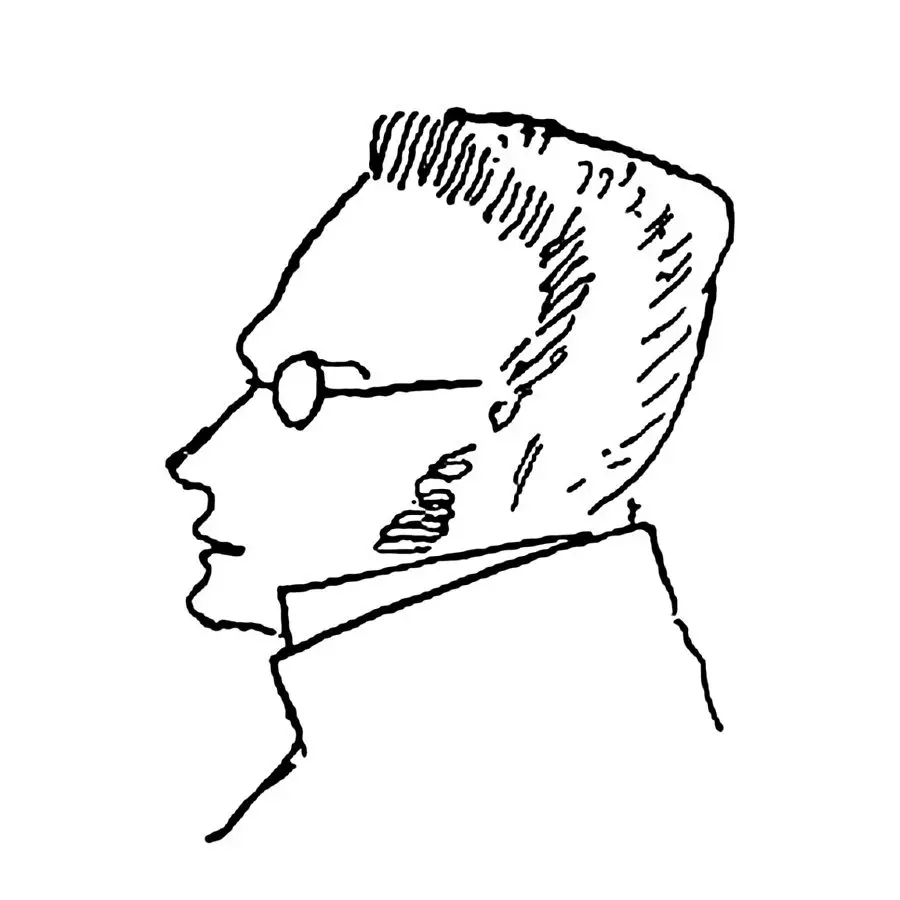
Was Hegel a scientologist?

Bob asked:

Should Hegel be removed from all formal academic philosophical course of study? Hegel was just ‘signing for his supper’; i.e. making up theories he could not prove or even observe. Hegel’s ‘Weltgeist is effected in history through the mediation of various Volksgeister (‘Folk Spirits’)’. That’s speculation, and out of the boundaries of philosophy. In conclusion, Hegel has the same philosophical credibility as L. Ron Hubbard, the founder of Scientology. Hubbard has theories about spirits too, just like Hegel. What are your thoughts?

Answer by Jürgen Lawrenz

By golly, Bob, I think you’ve made a major discovery here! Suddenly I realise that, together with many Hegel readers over two centuries, I’ve been hoodwinked. Fancy you finding out about the Volksgeister – astonishing! You’re so right that this is beyond the pall of philosophy. In fact, when you think about it, it’s an insult to philosophy. It is one reason, I’m sorry I have to admit it, why I never read Hubbard. I don’t believe in ghosts – ooops, ‘spirits’. Now I’m really keen now to read your detailed commentary on the ‘Phenomenology’ where you demonstrate with your impeccable logic how Hegel, in his embarrassment with the Volksgeister, kept improvising from chapter to chapter until the whole things became the incredible Geisterphantasmagoria we now have and which the professors are silly enough to think is worth reading. And I hope you’ve got a publisher ready for your paper. The world has waited long enough for someone to stand up to Hegel and call a spade a spade!


Defining informational content

Jonathan asked:

A piece of information (a message, a story, a recipe, a formula) can be encoded in a great number of different media and symbolic systems. It can for example be written in different languages, or in morse or binary code, or numerical symbols; written on paper, stored on a disk drive, or carved in stone. In each representation, the same meaning is conveyed. So my question is, what is it that stays the same, and what changes?

Answer by Helier Robinson

A concept is a combination of word and the meaning of that word. In you question the word is changing and the meaning is remaining the same. Note that the meaning of ‘meaning’ is debatable: some philosophers claim that some meanings are abstract ideas, while others deny the possibility of abstract ideas. I suspect that some people can discover abstract ideas introspectively (mathematicians, for example) and others cannot; hence the debate. Note also that a statement (which is a grammatically correct sentence which is either true or false) is a similar combination: this time of sentence and proposition; and a proposition is a compound meaning.


Answer by Geoffrey Klempner

There are cases where there is a clear 1-1 correlation, defined by a rule, between a piece of information ‘encoded in different media’, as you put it. Wittgenstein in Tractatus 4.04 gives the example of a piece of music, where the sound waves, grooves in the gramophone record, and notes on the page have a common musical content. But even looking at this simple case raises problems. In what way does a CD capture the ‘same’ information as vinyl? Collectors of old 33 LP records will tell you that something is ‘lost’ in the translation to digital.

In this context one might also consider W.V.O. Quine’s famous scepticism about the analytic-synthetic distinction in his essay ‘Two Dogmas of Empiricism’. Whether two propositions ‘mean’ the same thing isn’t something isn’t something we just ‘know’ a priori by some mystical intuition. It is always an empirical question whether two words or sentences ‘mean’ the same thing. The only exception being where we explicitly stipulate the meaning of a term – but even here there is a defeasible claim to the effect that the term in question really has a meaning (think of ‘phlogiston’ or ‘witch’).


What is a philosopher?

Joshua asked:

Good day philosophers! These are the questions that I long to seek answers to, for I am concerned of how somebody can stand up and say without any impediments that he is a philosopher regardless of social opinions that his ideas will influence someone or be recognized someday!

What is the path way of being a philosopher? Is it only through an academe? It is for sure that the goal of studying in universities is different to that of an individual’s search for philosophic questions, the academe and the individual who pursues have different natures in terms of philosophical studies and questioning which may be said incomplete by anybody if the view is one sided, that formal studies is required or in the other philosophy cannot be taught, well those I can see are two distinct natures of philosophical studies, so can anyone choose either of this nature as a pathway of becoming a philosopher? not exclusive only to one.

Who above all would consider somebody a philosopher, most importantly, is it him or his society? Is it him who makes philosophical ideas after which names himself as a philosopher, or is it the society that is the only source of recognition such that if all men aside from him doesn’t know him and he says he is a philosopher, and none of this society believes, then he is not, though he considers himself, because the society set their own standards. So in other words what is most important basis of considering a philosopher the personal or social recognition?

Is fame necessary for a philosopher? All of the discipline of philosophy knows for sure of Hume, Kant, Leibniz, etc, however, can somebody be an ‘honored’ philosopher in such sense that his self proclamation of being a philosopher is treated in formal essence and can be said equal to the pedestals of the known philosophers even if he is the only one who knows of his intellect or few knows of him being such?

Answer by Jürgen Lawrenz

Good day, Joshua! This is one mountain of a question, and I feel certain that you will receive many responses. I will keep mine very simple, because after a couple of preliminaries I propose to tell you a story and let you draw the consequences yourself.

First: a private philosophy is well and good for that person; but in the end it’s the same as saying, ‘I’m a great movie star’ without ever having played in a film. There is only one judge: yourself – plainly not acceptable.

Second: There are ‘professional’ philosophers and there are ‘vocational’ philosophers. The pro’s are usually teachers, whose function is to instruct their students in the work and importance of the great thinkers. From what I can see, few of them have a philosophy of their own, and they don’t usually teach their own, but other people’s philosophy. Much the same as your math or history teacher. It might end up as a case resembling the difference between Leo Tolstoi and Jackie Collins, who are both ‘novelists’.

Third: Some very great and important philosophers were never associated with an institution, e.g. Spinoza, Hobbes, Locke, Leibniz, Schopenhauer, Nietzsche a.o. (not to mention Socrates!). It was part of the bourgeoise craving for institutionalised legitimacy that made philosophers accountable to administrators – the same as in science, the arts and elsewhere. I don’t have to spell out the perils to you, but you might consider ‘funding’ and contrast its effect on intellectual freedom.

And so to the story: Sometime around 1794, Johann Fichte was a young professor at an insignificant Swiss university. He already had a reputation and influential friends. But when his mentor retired and recommended him for the post of professor at Jena – Goethe’s university! – he was in a pickle and took the unprecedented step of writing back: Could the university possibly defer his appointment for 6 months? As of now, he said, I am still writing my philosophy, and until I’m finished with my book, I have no philosophy to profess.

So you see, there was a time when it was clearly understood that a philosopher is a person who has a philosophy to profess.


Existence of the external world

Preston asked:

If all of which I am directly aware are my own thoughts and perceptions, how can I be certain that there is a physical reality that exists independently of me?

Answer by Craig Skinner

Your question states nicely what is called philosophical scepticism about the external world. The short answer is that you can’t be certain that there is a stand-alone physical reality.

Scepticism, as a philosophical method, was famously used by Descartes, notably in his Meditations. He begins by doubting everything except one thing that can’t be doubted, namely,

* because he is doubting, he is thinking, and so must exist (‘I think therefore I am’, in Latin ‘Cogito ergo sum’).

He hopes to argue his way back to most of his former beliefs by sound reasoning from this single, clear and distinct, indubitable belief, thereby establishing a ‘firm and permanent structure in the sciences’.

First, he doubts everything learned through the senses (empirical or a posteriori knowledge as we would say). For the senses can deceive, and also, at any given moment, he can’t be certain he is not dreaming, or that his mind is not controlled by a ‘evil genius’ which deceives him about everything.

Secondly, he doubts all truths of reason (rational or a priori knowledge). He feels that, even if dreaming he knows that 2+3 = 5, but considers that an evil genius could deceive him even about mathematical truths, interfering in his thought every time he adds 2 and 3 so that he is sure (wrongly) that the sum is 5.

His arguments back from the cogito to belief in the physical world of concrete things, other people and his own body, are widely considered unsound or invalid. The upshot is that one of his main legacies is scepticism rather than its resolution, and strong philosophical scepticism (about matter, the external world, causation and selves) later emerges, for example in the views of Berkeley and Hume.

To return now to your question:

Things clearly seem or appear a certain way to you (you speak of ‘ my own… perceptions’)

So the philosophical (metaphysical) question is ‘what accounts for these appearances?’

The possibilities include:

1. Everything (universe and contents including other people and your own body) is just ideas in your mind which is all that exists (Solipsism).

2. An external world exists, but is made of ideas. All that exists is ideas and minds, including God’s and those of other finite beings such as you and me (Subjective Idealism, as advocated by Berkeley).

3. An external world exists, and you are in it, but not experiencing it as you imagine. You are a body in a pod (as in the Matrix) or a brain in a vat, in the real world but utterly unaware of it, being stimulated by mad scientists to experience things just as if they were really happening to you.

4. An external world exists, but you are not in it. You and everybody/everything else constitute a simulated world. You are a virtual being. This assumes that very sophisticated computer programs could produce virtual beings that are conscious (I don’t see why not). The simulation of which you are a part might be being run by, say, 26th century humans, or by superior, non-human intelligences.

5. There is a stand-alone physical reality.

I’ve never had any enthusiasm for (1), I don’t believe in gods, so (2) is out, I can’t imagine why anybody would want to systematically deceive a brain for years, and so discount (3). That I am a simulation (4) is a distinct possibility. Of course those doing the simulation are in the real world. But there is only one real world, whereas there could be vast numbers of simulations running in that world. Hence, statistically, any given person, say you or me, is more likely to be in a simulation than in the real world. Still, all we can do is try to lead our virtual lives so that the simulation controller stays interested and doesn’t delete us or switch the whole thing off.

On the whole, I go for (5). Of course matter gets less material with every advance in physics. Once, it seemed substantial, composed of many tiny, hard, atoms. Now, it seems, ultimate things (if indeed ultimate) such as electrons, quarks, photons, are reduced to vibrations of immaterial fields, or to information. And, none of these fundamental constituents of matter seems to have any size at all, which of course explains how everything in the universe could have been present in a point-like singularity before the Big Bang. Maybe the real world is just as much a computer program as any simulation, except it’s one with no designer which runs itself.

These sceptical thoughts serve to remind us how little (if anything) we can know for certain. But we manage to live just fine without certainty. Descartes didn’t really doubt that there is a a world out there, or that he had a body. His scepticism was a ploy (methodological scepticism) to try to put his views on a rational footing. And, while Hume encourages us to doubt that we can KNOW there is an external world, or a connection between cause and effect, or a connection (a self) uniting all those thoughts and perceptions of yours (he was an epistemological sceptic), my reading of him (not everybody’s) is that he never really doubted the EXISTENCE of an external world, a cause-effect connection, or selves (he was not a metaphysical sceptic).


Geniuses versus idiots

Robert asked:

Schopenhauer said that 5/6ths of people were ‘worthy of contempt’. Plato called them ‘beasts’. Einstein said ‘the stupid majority are invincible and always will be’. I feel pseudo-trapped in a kind of monkey dystopia full of stupid beasts worthy of contempt. They coat the land as far as the eye can see. All the gods have gone back to Olympus. Oracles are pariahs. What am I to do about this minor inconvenience?

Answer by Jürgen Lawrenz

It depends in part on where you place yourself. If you happen to be among the 1/6th approved of by Schopenhauer, then the minor inconvenience should not be a problem for you. But another perspective on the matter is, that without the other 5/6th, you would be incognisant of your great merit. So there are benefits to being part of this immense blanket of jelly blubber on whom some optimist once bestowed the flattering title ‘homo sapiens’.

However, on the off chance that Schopenhauer, Plato or Einstein et al were inclined to toss you into the crowd of invincible stupidos, compensation is after all not very far away. The latter are the ones who grow the food, build the houses, deliver the mail, give you headache pills, entertain you with song and acting, issue driver’s licences and generally do their best to organise the country into a semblance of order. Einstein couldn’t tie his own shoelaces; he believed in God; and after 1915 never made another worthwhile contribution to science. Schopenhauer wrote his great book at age 26; after that his creative juices dried up and he became an eating and excreting machine like the rest of us. As for Plato, the nincompoops in Sicily who failed to grasp his political philosophy can be excused on the argument that the nourishment of the soul is secondary to the nourishment of your bones and muscles and reproductive equipment – as Brecht said, it is impossible to philosophise on an empty stomach, and this is something Plato had no experience of.

So these grandiose imprecations which seem to bother you are not really worth the bother. I’ve heard members of the 5/6th brigade make similar comments. Most people think they are smarter than they are. The real problem, the underlying problem, is quite different. The idea of the value of a human life is at stake. Einstein’s theory knows nothing of it; therefore it is dispensable. Schopenhauer reduced it to a mechanism he called ‘the will’, as a surrogate for the gods who retired to Olympus; while Plato confused the intellectual emaciation of his philosopher kings with the operation of a cosmic harmony to which, however, cobblers and coopers, bears and beans, fair and foul weather are equally important. All three were ignorant of ‘what life is’. It is a predicament many of us share with them; but this only means that an agenda exists which thus far only the religions have tackled, though they consistently grabbed the wrong end of the stick.

Let me put it into a dirty little nutshell and say my goodbye: The 1/6th has responsibility for the 5/6th; it is their only justification for inhabiting their select company. Contempt up there is contemptible; it presumes too much. For the measure of a life is not one book, one law nor one theory – it is three-score and ten. If the 5/6th are needed to applaud, adopt and understand (take note of the word ‘understand’!) Plato et al, then the situation is at least grossly exaggerated. Yes, we like to look up and aspire; but that does not license anyone to exploit the gaze directed upward at them for their own self-aggrandisement.


Can there be certainty outside my currently observed world?

Jim asked:

I am a 16 year old and I have been asking myself the same question for a very long time but only recently was able to finally word the question. Isn’t it true that there can not be a certainty of anything outside a person’s current observed world?

It still sounds very weird but if I am sitting in a room in a building that I walked into myself, I saw all of my surrounding as I entered the building and the room. The door is closed and there is no way for me to observe anything on the outside of the room. I can say that I know exactly what is outside that door because I saw it as I came in the room, but in reality I have zero way of being completely certain of anything I can’t see or hear outside the room. I could, potentially, be in a room floating in space and have no way of knowing, given there isn’t any obvservable evidence of my location.

It may sound strange, but I believe it could be related to particle physics, etc. The fact is that I have no certainty of anything outside my personal observed ‘picture’: the surroundings in my field of vision and what I can hear around me.

Answer by Helier Robinson

You are quite right. The only certainty is what I perceive now. We all have perception substitutes: namely, memory, expectation, and belief, but all are fallible. This is the conclusion that Descartes came to with his cogito ergo sum, which translates literally to ‘I think therefore I am’. What Descartes meant was that he was conscious and therefore he existed; because all the contents of consciousness have to exist in order to be within consciousness, and he was conscious of himself, as perceiving subject. And it is possible that all that you are conscious of now is the totality of existence: all your memories, expectations, and beliefs (that is, all those that you are conscious of now) are false.

This is known as solipsism, from sole ipse, meaning alone I am. Many philosophers in the past have tried to prove that solipsism is false, without success, in my opinion. In principle, there are two ways to prove it false: one is to show that it is self-contradictory, and the other is to prove that something exists outside of your consciousness, now.


Answer by Geoffrey Klempner

My take on this would be that the best that one can achieve in attacking solipsism is to reduce the solipsist to silence. Many would take that as a conclusive refutation, but I wouldn’t go quite that far.

The solipsist still believes something. We need to show that what the solipsist believes can’t be possible if solipsism is assumed. What the solpist believes is that there is such a thing as truth. Otherwise it would make no sense to say, ‘Solipsism is true’, or ‘Every theory is false except for solipsism’.

Wittgenstein, in his argument against a ‘private language’ (in the Philosophical Investigations) showed that the notion of truth, as something that minimally involves the notions of ‘right’ and ‘wrong’ only makes sense against a backdrop of intersubjectivity – individual subjects in a world communicating with one another in a ‘public language’.

If solipsism is assumed, there can be no other subjects. No-one exists apart from myself. It follows from Wittgenstein’s argument against a private language that one cannot meaningfully assert (even to oneself) that ‘solipsism is true’ or ‘I believe in solipsism’. All you can do, to indicate the thing you ‘see’ (or seem to see), is to gesture wordlessly, or endlessly repeat the words, ‘I mean THIS!’