Questions on the philosophy of time

Terrence asked:

What is the smallest point in time if such a thing exist? Or Is time infinitely divisible dose time have a frame (an instant or event that is truly distinct) or is all of time continuous? or is time an illusion that is just a property of matter and only exists with the realm of this existence?

Karan asked:

What is ‘real time’ or time according to philosophy? Is it a dimension or is it a continuous ‘fabric’ of the universe with all events ordered in it without any classification as ‘past’, ‘present’ or the ‘future’? Or is the relative concept of time the only reality?

Answer by Jürgen Lawrenz

If you put the various prejudices about the objective existence of time aside the answer is very simple.

Time is what living creatures experience as the periodicity of natural phenomena.

We do not experience time as itself. Time for us is the impression conveyed by cyclic events like the daily sunrise and sunset, the way we articulate our days into activities, then also the lunar and solar cycles and the seasons.

Accordingly the smallest possible increment of time depends on the perceptions of which any creature is capable. The time experience of a fly will accordingly differ from that of a human being. For example there are one-day flies who cram the experience of a lifetime into one day. Therefore the sensation that they might have of one second would be a very much longer sensation than for you.

But you may now object that we human sense time as a continuum. It is not a problematic difference when you allow for the fact that human perceptions are more subtle than those of flies. But to illustrate this, let me point out to you that an old-fashioned movie on a strip of film holds a long series of stills. Plainly there is no time in each of the stills. But when the projector moves the film at the rate of 24 frames per second, you receive the impression of ‘time flowing’ because of the smooth motions of the scenes. Behind this technique is the simple realisation that a human eye working in consort with the mind connects these frames. The smoothness is a sort of ‘illusion’, because you already know that the motion depicted by the film is a cheat. But the point is that real life experience is not much different. Our nerves are living fibres; they cannot take up a continuous impingement of the radiant energy of light. Each takes up a certain quantity and then needs a rest period. So they work as a team, overlapping their sensations, and then leave it to the mind to stitch these impressions together.

Strictly speaking, therefore, the answer to your first question is: The shortest point in time for us humans is the gap between the frames of a film. I’m sure it has been measured, probably in terms of milliseconds. But whatever the number happens to be (which doesn’t tell you much anyway), this interval is the shortest that is meaningful to human beings. But a different, smaller number would apply to fleas. Indeed science works with an altogether different spectrum of times – physics in increments too small for any human to conceive of them, and astronomy with increments too large.

But the point in each of these examples is that time does not exist independently. Time for you, for flies, for physicists and for astronomers is in each case the intelligible uptake of the motion of objects and processes. We simply select from among them a handful to serve us as a standard. A day is an idealised stretch of time between two sunrises. You know this varies every day, yet we measure our hours, minutes and seconds by this phantom length. Similarly a second is standardised arbitrarily physicists who have determined on our behalf that 900 billion vibrations of a caesium atom is equivalent to one second. But this is a simple circular argument, as you will surely perceive.

In a word: There is no shortest point in time, the question has no object. Every answer must ineluctably refer to some object or process in motion that is being observed. Those observation facilitate an arbitrary incrementation of ‘time’. Accordingly every answer to such a question is necessarily also arbitrary.


Are some acts morally obligatory regardless of consequences?

Lina asked:

Are some acts morally obligatory regardless of the consequences for human benefit or harm?

Reply by Stuart Burns

The answer to your question depends entirely on just how you choose to think about ‘morality’.

According to many different surveys, most of the people on this planet self-describe themselves as ‘religious’ to some extent or other. What this means is that most people would self-describe themselves as adhering to a religious notion of morality – otherwise known as Authoritative Rule morality. And what that means, in turn, is that they supposedly think (or perhaps, more accurately, they want other people to think they think) that what determines whether some action (or inaction ) is moral or immoral is the dictates of some Authority figure. For example, for those avowing adherence to the Judeo-Christian-Islamic religious tradition, that Authority figure would be God – with His dictates revealed in the sacred books of those faiths. There are lots of other religions in the world, and many quasi-religions. An example of the latter would be traditional Communism whose Authority figures include Marx, Engels, Lenin, and Mao (and perhaps Che Guevara).

The point of this initial focus on Authoritative Rule morality, is that most people, most of the time, think of the notion of morality in religious terms. And the thing is that all Authoritative Rule morality is couched in terms of absolute commandments – You must to this, you must not do that. The obvious example is the Ten Commandments – ‘Thou Shalt Not Kill!!’ – No if, ands, or buts!!. No allowance for circumstances. If this is the way that you think of morality, then the answer to your question is ‘Yes!’ Authoritative Rule (Religious) morality is not consequentialist. And it does not allow a choice. All moral acts are obligatory regardless of consequences – good or bad.

On the other hand, regardless of what people say they believe, most people do not in fact actually adhere to the strict commandments of their religious notions of morality. In other words, most people most of the time actually behave as if they believed in a much less dogmatic notion of morality. And now we get into the possibility of a consequentialist notion of morality.

There are any number of different consequentialist notions of morality to choose from, if you wish to investigate and choose one that suits you. But all of them, by their very nature, consider the benefits and harm that actions might do to people. What separates the various members of the consequentialist group of moral theories, is the kind of things that are considered benefits and harm, and the scope of people for whom consideration is morally required.

Consider Utilitarianism, as one famous example. There are a number of different flavours of Utilitarianism available to choose from, but the ‘traditional’ version, due to Bentham and Mill, determines the moral worth of actions according to the extent to which they deliver the ‘greatest happiness to the greatest number’. In any situation, therefore, the obligatory moral action is the alternative that you expect to deliver the net greatest happiness – over all time, and over all people. Different flavours of Utilitarianism modify this criteria by changing ‘happiness’ to some other notion like ‘economic welfare’, or ‘flourishing’, and so forth. They also sometime change the time and population scopes to reduce the computation to more manageable levels.

Regardless of the details, if you choose to think of ‘morality’ along consequentialist lines, then the answer to your question is ‘No!’. Consequentialist notions of morality make the beneficial and harmful consequences of actions of paramount importance in judging their moral worth. No single action, divorced from context, is obligatory. What is obligatory is the effort to find the most consequentially approved alternative in any circumstance, and to follow that alternative.

Unfortunately, all consequentialist notions of morality put a strong moral emphasis on knowledge and thinking. You have to learn enough about the workings of the world to both be able to recognize what alternatives for action (or inaction) you have available in any circumstance, and be able to predict with reasonable accuracy the consequences of those alternatives. And, of course, you have to pay attention to your circumstances, and think (hard) about those possible consequences. A consequentialist notion of morality is not for the lazy. But look around you and you will see that when it comes to morality, most people are willfully lazy. They would much rather have someone else do their moral thinking for them.

So if you don’t like the consequences-be-damned absoluteness of an Authoritative Rule morality, and you don’t fancy the effort demanded by a Consequentialist morality, there is an alternative. Its called ‘Cultural Relativism’. The basic idea here is that what identifies actions as moral or immoral is the subjective opinion of a population. Morality is what a population says it is. This is a very popular notion of morality amongst people who call themselves ‘social liberals’. If a population thinks that a particular act is morally obligatory regardless of the consequences, then it is. So if you think of ‘morality’ in a Cultural Relativist way, then the answer to your question is ‘Maybe!’ It depends on which population you wish to poll for their opinion. Of course, you are faced with the problem of choosing which population you are going to let set your moral standards. You can go all the way from ‘all human beings’ down to ‘myself alone’. And you are faced with the problem of determining the opinion of the population you choose on the moral issue at hand. But there is no moral principle that will let you decide where you ‘should’ draw the line. It’s all subjective opinion anyway.

So there you have it. The answer to your question is either ‘Yes!’, ‘No!’, or ‘Maybe!’ depending on how you choose to think about morality.

There are other notions of morality out there apart from the Authoritative Rule, Consequentialist, and Cultural Relativist notions I have mentioned here. But this response is getting too long as it is, and these other alternatives are somewhat obscure. I am sure that Google will provide you with answers, should you be interested in following up. Or you can check out this essay: http://www3.sympatico.ca/saburns/pg0405.htm.


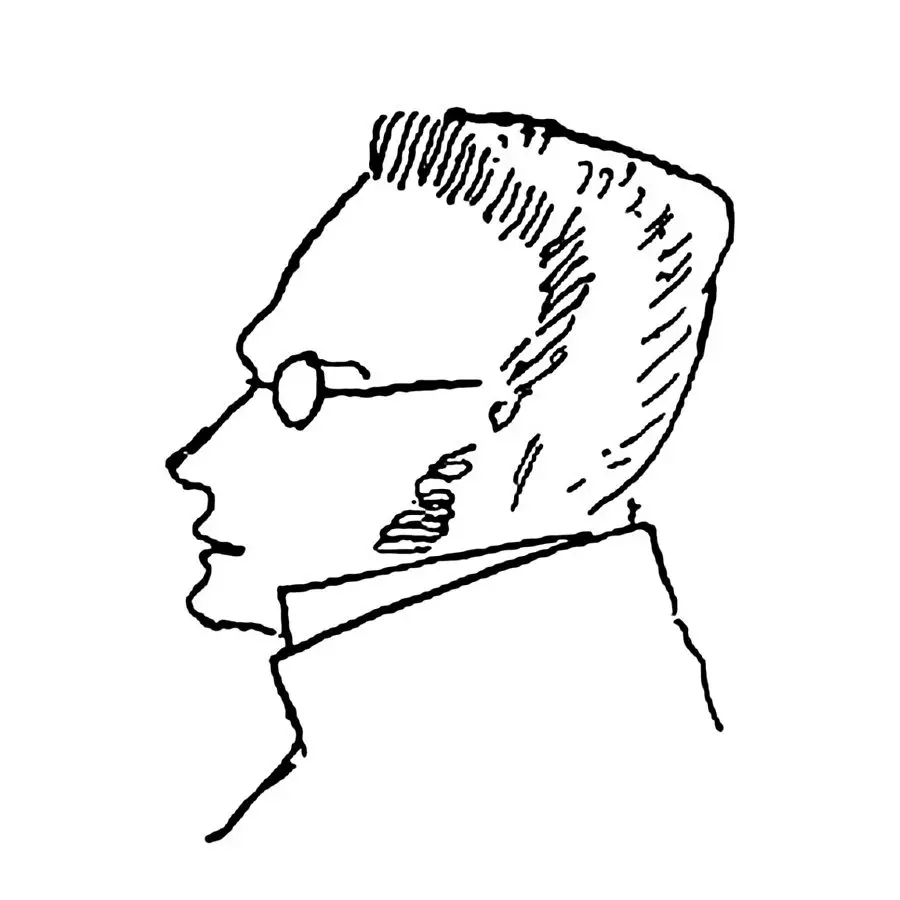
Nietzsche on pity and the death of God

Christopher asked:

Nietzsche is famous for stating that ‘God is dead.’ After reading Zarathustra I felt that what he meant by this statement is that because of the progress of science and the fact that more and more church ‘dogma’ was being disproved he felt that belief in god was no longer needed and that Zarathustra’s primary purpose was to give a basis for morality in a godless world. However, he talks about god dying because of his pity for humans. What does he mean by that? Also, does he consider pity a ‘sin’ because in expresses a level of stature in that the person pitying is perceived as being ‘better than’ the person being pitied, or because pity only makes the person being pitied become more ‘pitiful?’

Answer by Martin Jenkins

Nietzsche evaluates Christian and ‘Modern Ideas’ as symptomatic of physiological decline of the peoples of Europe. Their drives – which are instantiations of will to power – are in chaos. Each drive wants to rule. This inner physiological storm makes people weary, exhausted-literally world weary. According to Nietzsche, priestly theology blames this sickness on sin. It is punishment for not following the strictures of the priests. Nietzsche obviously does not believe in sin but he understands it as a Priestly device that attempts to account for the suffering of the slave masses. The natural drives are to be condemned, as is this worldly life in preference of another super sensible world – the afterlife.

Part of the theological world outlook is pity. As this life is so unfair, so hard, so terrible, we should pity ourselves. Nietzsche opposes pity on the grounds that it is a depressive, it makes people worse. Instead of trying to combat their sickness with affirmative, earthly values, people accept it by applying pity. Pity augments their unfortunate situation. ‘Never mind, this world is awful, let’s gnash our teeth and wail but the next will be better’. It reinforces a negative, world negating view. Pessimistic fatalism is hegemonic over life-affirmation. Nietzsche would prefer a world affirming ethos that follows from his ‘revaluation of all values.’

A further aspect of pity according to Nietzsche, is that it actually conserves the sick contrary to the laws of evolution and natural selection [Anti-Christian #7] The sick ought to perish but, Pity keeps them alive. So according to Nietzsche, Pity is anti-life.

‘Let me repeat, this depressing and contagious instinct stands against all those instincts which work for the preservation and enhancement of life. In the role of the protector of the miserable, it is a prime agent in the promotion of decadence-pity persuades to extinction… Of course, one doesn’t say ‘extinction’, one says ‘the other world’, or ‘God’ or ‘Nirvana’ salvation, blessedness.’ [Anti-Christian ibid]

Transference Theory of God

Also in The Anti-Christian, Nietzsche analyses the different conceptions of God, gods, a people has at different times in its history. For example, an earlier conception of God was that of power, joy, hopes, of victory. This corresponded to the success the Jewish people were enjoying at the time. Hence a naturalistic conception of God existed expressing the affirmativity of the will to power of the people: expressive of national egoism as Nietzsche terms it.

When society started to experience setbacks this was interpreted by the Priests, as punishment by God for the failure of the people to obey His will. He becomes the judgemental, wrathful and vengeful God.

With the triumph of the slave revolt in morality, God becomes the god of the world weary slaves and Priests. The physiological decline of a people which is also a decline in their will to power is transferred and represented in their conception of God. He becomes the God of the physiologically degraded, the sick or as they term themselves – the ‘good’.

‘How can we be so tolerant of the naivete of Christian Theologians as to join in their doctrine that the evolution of the concept God from ‘the god of Israel’, the god of a people, to the Christian god, the essence of all goodness, is to be described as ‘progress’?… When everything necessary to an ascending life, when all that is strong, courageous, masterful and proud has been eliminated from the concept ‘God’: when he sunk step by step to a staff for the weary, a sheet anchor for the drowning: when he becomes the poor man’s god, the sinner’s god, the invalid god par excellence and the attribute of ‘saviour’ or ‘redeemer’ remains as one of the essential attributes of Divinity-just what is the significance of such a metamorphosis? What does the reduction of the god-head imply?’

This is a ‘transference theory’ conception of God as espoused famously by Ludwig Feuerbach. Here, ‘God’ is the representation of transferred human desires, fears, characteristics. Hence, following the successful revaluation of values by the Priest led slave masses, their conception of God expresses their values. And if their God practices their pity, he would be persuaded that life is not worth living; that his creations-human beings-are such an unpleasant spectacle. He shares their pity, pities them and the logic of this contagion kills him.


Plato’s allegory of the cave

Marissa asked:

What does each figure in the Allegory of the Cave represent?

Answer by Helier Robinson

If Plato were writing today the prisoners in the cave would be couch potatoes watching television. The television pictures are images of daily life. If the prisoners in the cave are released they perceive the origin of their images, the slaves carrying objects that throw the shadows on the wall; the couch potatoes, released from their lifelong-to-date television watching, would discover that the television pictures were images of daily life.

The point, for Plato, is that daily life is itself a series of images: images of the forms, which can be known by those who achieve wisdom. Plato claimed that there are two worlds: the sensible world of daily life, and the ideal world of the forms. The sensible world represents the world of the forms by means of images, and is largely illusory.

You get a better idea what all this is about from the metaphor of the divided line. The bottom half of the line consists of daily life, and below that, images of daily life such as soap operas. And this bottom half is itself an image of the top half. The top half consists of the world of the forms, and below it an image of it in the form of mathematics and logical thought.

The more we know this image of the world of forms the more we discover the forms themselves, and so gain wisdom. The word wisdom (sophia) has been so debased over time (think of wise-crack and wise-guy) that a better way of thinking of all this is to treat the bottom half of the line as irrational, the lower part of the top half as rational, and the top portion as supra-rational. Wisdom is supra-rational.


Answer by Geoffrey Klempner

I would like to know a bit more about the couch potatoes, the people who pander to them and also the ‘slaves’ who work in the couch-potato-pandering industry, otherwise known as television.

The couch potatoes know that the images are taken from daily life: the question is what the images tell them about that life. The TV image is a fantasy re-creation of the actual world, epitomized in soap operas no doubt, but also and more subversivly in things we take to be factual like the TV news.

This isn’t about alleged bias of news programs. The BBC or CBS do a good job. The problem is in the process of consuming – being invited to consume – information from a passive perspective, when one is disconnected from any sense of relationship to the events in the world outside, or indeed any sense of responsibility for those events.

Plato wouldn’t refuse to watch television. He would say that it’s fine to get our entertainment or information this way. But we need a corrective. The panderers cannot supply the necessary corrective. For that, you need philosophers.


Philosophy of mathematics and the nature of numbers

Bill asked:

How do you put this argument in standard form:

One thing we can all agree on is that a statement like 17 is prime is true, and that we know it to be true. But this simple fact gives rise to an irresolvable puzzle. If its a normal subject/ predicate sentence, we can’t explain how we know it to be true. For if its that sort of sentence, then there must be some object, the one we call ’17’, and it has to have the property of primeness. But if there is such an object, it is outside space and time, and so a mystery how we come to know anything about it. Could it be some other sort of claim, then, besides a normal subject/predicate sentence? I suppose, but then we have a different mystery. It’s utterly mysterious what other sorts of sentences there are.

Answer by Craig Skinner

Your analysis is pretty sound. We just need to take it a bit further.

’17 is prime’ is indeed a subject/predicate sentence. There are other sorts of sentences, such as commands, questions, expressions of attitudes, but we needn’t pursue this.

Standard semantics requires that for ’17 is prime’ to be true, 17 must exist. We want it to be true because we feel that 17 just IS prime (it’s a necessary, apriori truth) whatever the metaphysicians and language philosophers say.

But if we hold that 17 is an abstract object (Platonism), outside space and time as you put it, we have the ‘access’ problem, as you say – how can we know about it, how can it influence us? Some talk of knowing numbers by ‘mathematical intuition’ (Godel was big on this), but it remains mysterious. Note, though, that if you say abstract objects dont exist, you have to find some other mode of existence for other alleged abstract objects, such as propositions. But let’s go with no abstract objects for now.

To make the sentence true, we must either give up or get round standard semantics, or find some other plausible mode of existence for numbers.

Let us deal with each.

1. Give up standard semantics.

This was Meinong’s approach. In his ‘Theory of Objects’, he complained that our metaphysics was sadly deficient because we only considered existing entities, leaving out the vast realm of nonexistent entities. A key feature of his theory was that even though an object is nonexistent, it can still have properties. So, no problem with 17 being prime even though 17 doesn’t exist, or with Santa having a red suit. This whole idea was dismissed as nonsensical by Russell and Quine, but I dont think it is. However, I do think that we can get the advantages of nonexistent objects, and none of the problems, if we regard numbers (and Santa, and Sherlock Holmes) as fictional entities rather than nonexistent ones (see below).

2. Get round standard semantics.

I think this is weaselly. It’s called Paraphrase Nominalism. It holds that when people say ’17 is prime’ they really mean ‘If numbers existed then 17 would be prime’. I dont think they do mean that. I dont. I mean 17 IS prime.

3. Modes of existence.

(a) physical. John Stuart Mill thought numbers were physical, existing only as 3 trees, 19 eggs etc, and that 2+3 =5 was an empirical discovery, revealed to us when we put, say, two twigs alongside three twigs and find five. Everybody else thinks that three twigs is just an instance of the number ‘3’ just as the ’17’s in the present text are instances (numerals), not 17 itself.

(b) mental. Very implausible. Unless right now somebody is thinking of that very number, the third prime number after 27 quadrillion doesn’t exist. Or is anybody thinking of the quintillionth digit of Pi right now?

(c) abstract. We’ve said we’re unhappy with this.

(d) fictional. Here the sentence ’17 is prime’ is prefixed by the Fictional Operator ie ‘ F [’17 is prime’]’. Or, ‘In the story of mathematics, 17 is prime’. Just as ‘In the stories of Conan Doyle, Holmes plays the violin’

I favour fictionalism as an account of mathematical truth. Mathematics is a human construction, comprising axioms; and entities such as numbers, reducible to sets, in turn all derivable from the empty set; and proceeding by logical deduction to yield a vast number of theorems, many surprising, and often found indispensable to physics.

So, in summary, let us keep standard semantics, and say that ’17 is prime’ is true in the story of mathematics because that is where 17 exists as a fictional object.


More on Mill’s understanding of higher and lower pleasures

Marisol asked:

How is Mill’s understanding of higher pleasures related to questions of beneficence, self-sacrifice and social reform?

Answer by Geoffrey Klempner

This is a continuation of a question which I answered last week, from Jessica who asked Why dissatisfied Socrates is better than a satisfied pig.

Let’s assume that Mill is right in drawing a distinction between higher and lower pleasures within a utilitarian theory that seeks to maximise happiness. Last time, I considered the problem of quantifying the difference in value between different pleasures. But let’s assume that isn’t a problem. We are not looking for a quantifiable decision theory but just a guide to making the right moral choices in a particular situation.

In utilitarianism, of whatever flavour, every moral act is an act of self-sacrifice, insofar as I, the agent, consider my needs, interests and desires as counting for one and no more than one in the overall calculation. Very few people would think like this, but that is what utilitarianism requires when strictly followed through. Given the millions and millions of potential recipients of my beneficence, my needs and interests don’t get much attention.

On the other hand, a utilitarian could make the case that if I don’t look after myself, and see that I need the basic things to keep me happy, then I am not going to be very good at promoting the happiness of others. So let’s waive this point.

What is beneficence? I love philosophy. I think it’s a wonderful thing. So, naturally, I would like others to like it too. But let’s say you prefer getting drunk and partying all night. All you ask from me is money for beer. You are most upset that I will only give money to pay for your self-improvement by taking a course in philosophy. This is one of the fracture points of consequentialist ethics. R.M. Hare takes the view, for example, that it is ‘fanatical’ to impose one’s likes and dislikes on others, and that includes beliefs about which pleasures are ‘higher’ or ‘lower’. If money for beer is what you desire, then I should give you money for beer.

(Just as an aside, in terms of beer money, it occurs to me that the cost of a Pathways Program taken over 30 weeks, is equivalent to one bottle of beer a day. Not such a good example, then!)

So the thing with beneficence in relation to the higher and lower pleasures is that one is faced with the old problem, do you give people what they want, or what you think would make them better, lead them to experience the higher pleasures?

With the distinction between higher and lower pleasures there arise new opportunities for self-sacrifice. If you lack the intelligence to take a course in philosophy, then it seems that according to Mill you are morally bound to support those who can, even at the cost of denying yourself the lower pleasures.

I’m not going to discuss social reform, because I think you can probably work this out for yourself, from what I’ve said.

Good luck with your essay.