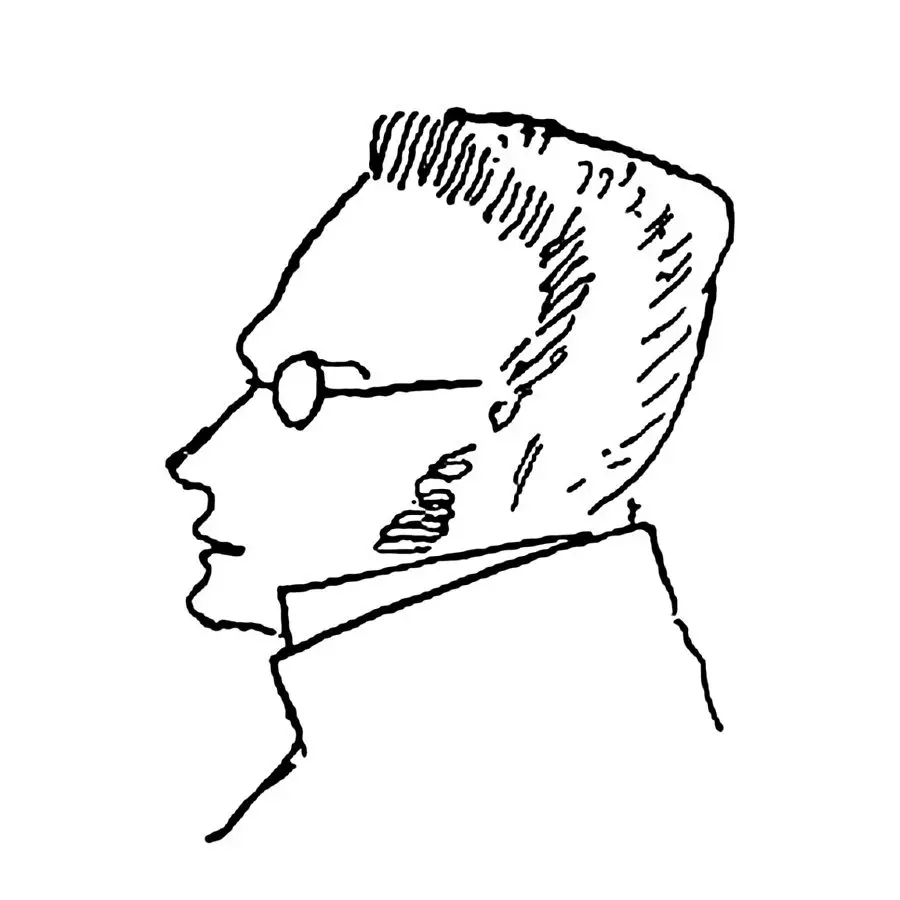
Is Nietzsche an ethical egoist?

Julia asked:

Explain why Nietzsche’s philosophy could be considered a version of ethical egoism, where ethical egoism is the belief that a moral act is one that furthers ones own goals and desires.

Answer by Martin Jenkins

Julia, I suppose Nietzsche’s writings could, to a degree, be described as a variant of ethical egoism. This insofar as he is not writing to address social classes, masses or nations but, individuals. This is reinforced when he disparages collectivism in the guise of ‘the herd’, is dismissive of modern ideas of democracy, equal rights and socialism. Sovereign individuality appears to be what Nietzsche favours when for example, he writes in Thus Spoke Zarathustra that ‘he who does not obey himself, will be commanded. This is the nature of living things’. In other words, know oneself and legislate for oneself accordingly — which is similar to themes in ethical egoism.

However, the second part of the passage where he writes about ‘living things’ is revealing and, I think, moves significantly away from ethical egoism, understood as a liberal, libertarian philosophy operating within the paradigm of human subjectivity, humanism (modernity), to an ontological one. That is, Nietzsche’s philosophy — with its concentration on individuals understood as Ubermensch, Free-Spirits, New Experimenter/philosophers, is not so much concerned with the freedom of the individual but with the nature and fate of human life as bound up with what her termed its ‘higher types’. It moves way from ethical egoism if indeed, it was ever concerned with it.

This is evidenced in #287 of The Will to Power:

‘My philosophy aims at an ordering of rank: not at individualistic morality.’

I consider this text to be a secondary, supporting text. It is not wholeheartedly reliable. Yet what is written in it can sometimes find explicit verification in the published, authorised Nietzsche texts. In Beyond Good & Evil we find Nietzsche’s belief that normal, healthy society is aristocratic. [#259] In Twilight of the Idols, egoism is mentioned and classed as either ascending or descending. With the former, their value is found in that ‘the whole of life advances through them..’ [Expeditions #33] Through them, the human species is enhanced, developed, changed. Precisely how, is not that clear with Nietzsche. What is clear is that he found existing western values to be epiphenomena of a diseased physiology and a corresponding decline of will to power. New attempters/ experimenters/ philosophers would be the source of the revaluation and refutation of such modern values. They would embody strength, health and ordered, comprehensive drives of will to power. Goethe, Napoleon are the examples Nietzsche provides that point towards the type of the New Attempter etc. Beneath the New Experimenters, society would naturally become hierarchical due to the innate difference between people in terms of the degree of will to power that constitutes them.

So Nietzsche’s theory is based on biological grounds in that ultimately, will to power underpins a healthy physiology and this underpins affirmative life valuations. The New attempter-aristocrats are the embodiment of this and they will naturally rule and create. Aristocracy, hierarchy and biologism which are central themes of Nietzsche’s philosophy, are antithetical to ethical egoism as the value of the individual is thereby predetermined by innate predisposition, corresponding social position and ultimately, the caprice of the aristocratic new attempters. Such prescription and restriction is alien to the freedom essential to ethical egoism. So Julia, I don’t think Nietzsche’s philosophy can be considered a variant of ethical egoism.


Can a perfect being create something imperfect?

Christopher asked:

Can a perfect being create something imperfect? Think about it in religious terms. I think that everyone’s conception of god, regardless of specific religion (excluding religions of the ancient world, of course), is in a word that god is perfect, yet everyone views themselves as being imperfect. If god is perfect and created us then shouldn’t we and everything else god created be perfect as well? Maybe the answer just requires a good definition of ‘perfect.’ I’m not sure, but if my proposition is true then the implications of this would require either a change in the concept of god, or of ourselves.

Answer by Jürgen Lawrenz

You fell right into the linguistic trap that lies in waiting for all who think that concept language can solve our philosophical (and other) problems.

Think very carefully about what you understand by a ‘perfect’ being. Keep trying for a while to account for everything that might be embraced by the word ‘perfection’. You might proceed in line with the medieval scholastics, who kept enumerating human qualities and found all of them ‘imperfect’, therefore God would obviously exhibit superior qualities and attributes. But soon you’re going to run out of attributes, there aren’t that many! In addition, you would find that these attributes all have some relation to human attributes. What we don’t know, we can’t talk about: So – what is a ‘perfect’ existent? If such a one existed, we could know nothing about it! It would have a plethora of attributes utterly beyond our puny understanding of perfection.

There is an anthropological explanation for this, if you feel like pursuing it (e.g. Feuerbach, Essence of Christianity). But this does not validate your conclusion. In fact, your conclusion begs all the questions. ‘God’ is a theological (theoretical and metaphysical) conception. Take ‘him’ out of theory and into the world and you no longer have a ‘God’. You end up like Spinoza, who took this line of thinking to its only logical conclusion, that God is the world, and the world is God, and none of us really exist (empirically). Alternatively you have a household god with whom you can hold a conversation once a day, like with a wise old man.

This is not even mentioning that part where you speak of ‘creating’. Pure prejudice. What makes you state this assumption as if it was self-understood? Why should ‘God’ create anything? Isn’t the essence of perfection to be self-sufficient? Erigena taught that God created the world as a material counterpart in order to mirror himself in the myriad of prototypes which he created by actualising himself. But this is already Step 1 towards ‘imperfection’, as you can surely see.

I hope I’ve given you something to think about in earnest. The best thing for you is to stop using the word ‘perfect’ in arguments of this kind, because it is a word without a denotation – except in such limited environments as a ‘perfectly machined ball bearing’ or a ‘perfect (100%) score’ etc. Now you will also see that ‘perfection’ implies totality, which is ipso facto complete, therefore sterile and therefore uncreative.

So if your ‘God’ was truly perfect, ‘he’ would be a self-contradiction. The only creative act possible to ‘him’ would be to make another exactly like himself. You can see that, can’t you?


Answer by Craig Skinner

The concept you speak of is of an absolutely perfect being (omnipotent, omniscient, eternal, infinite, all-loving). But not even such a being can do the logically impossible. And that is why any creation must be imperfect.

The argument is best set out by Leibniz:

It is logically impossible for a perfect being to create something wholly perfect other than itself; for, by the principle of the identity of indiscernibles (if X and Y are exactly identical in all respects they are one and the same thing), a being that was wholly and completely perfect would just be (identical with) god. So, if god and creation are to be genuinely distinct, they must be ‘discernible’ ie creation can’t have all the perfections of god. Elements of creation may be perfect in some respects, but the fact that they can’t be in all respects is already a departure from absolute perfection.

Part of god’s perfection is infinite creativity. A spiritual world of angels, say, is first created. Although eternal and not subject to decay, they are finite beings, and show moral imperfection (witness Satan).

God’s creativity continues. A physical world is created. But this is necessarily subject to entropic decay. And we, being physical, are part of this process; we are mortal, subject to degeneration and all the accidents of an imperfect world.

The only alternative to an imperfect world is for god not to create a world at all.

In short, the presence of evil in the world, far from being an intractable problem for belief in an absolutely perfect god, is entailed by that very belief.

Leibniz’s view as to the metaphysical necessity of evil was famously lampooned by Voltaire in his short novel ‘Candide’ in which the hero witnesses and experiences horrors and suffering but is constantly reassured by the philosopher, Dr Pangloss, that we live in the best of all possible worlds. Dawkins and other militant atheists continue the tradition of blaming God for the evils in the world, but without endorsing as preferable the only alternative, namely no world at all. Dawkins in particular comes across as being angry with god for not existing, wanting him to come out from under that nonexistence cloak and face the music for all the evils of the world for which he is responsible.

So, evil and suffering are inevitable in any world, whether it arises supernaturally or naturally.

Finally, when talking of the religious conception of god, you exclude ‘religions of the ancient world, of course’. How old do they have to be to fall in this category ? Judaism is some 3000 years old, even Christianity is 2000 years old! Mind you, there are no modern worldwide religions. I wonder if there ever will be a new one in this category.


How a good empiricist gets to grips with gravity

Jack asked:

Aristotle, Newton and Einstein proposed radically different explanations of gravity. And yet, according to Hume, they associated their sense experiences together by using the same patterns. According to both Descartes and Hume, they accepted the same fundamental principles of logic. If Hume and Descartes are correct, why did Aristotle, Newton and Einstein disagree about gravity? Is there simply no foundation one can use to determine whether or not Aristotle, Newton or Einstein was correct?

Answer by Craig Skinner

What a very good question, bringing in key issues in both general philosophy and philosophy of science.

The short answer is that the foundation one can use is the scientific method of conjecture and testing. Put simply, we formulate a hypothesis (conjecture) as to how things work, and test it against the world by observation/experiment looking for confirmation (findings support the hypothesis, we can run with it meantime) or refutation (findings rule out the hypothesis, we must amend or replace it).

To deal first with the three hypotheses.

Aristotle

Hypothesis: things move to their natural place.

His conceptual framework was Earth as centre of the world surrounded by moon, sun, planets and stars going round it. He conjectured that things moved to their natural place. A stone, composed of the element earth, fell to Earth; a flame, composed of fire, moved up to the (fiery) heavens. He had no notion of gravity. If we ask why doesn’t the moon fall to Earth, he might say that it isn’t composed of earth (the moon wasn’t known to be a rock then), or that, like the planets/sun/stars, it is constrained in its orbit by a crystalline sphere. Why don’t we see the latter? Ah, it’s invisible. You can already see that the account is made resistant to refutation by what we think of as ad hoc auxiliary hypotheses such as crystalline spheres. And it appeals to purpose (things go to natural places) rather than mechanism. So it’s not a scientific hypothesis.

Newton

Hypothesis: things move under the influence of the force of gravity.

His conceptual framework was heliocentric. He saw that the movement of apples, stones, moons, planets, sun, Earth, comets and cannonballs alike could all be explained in the same way, namely as masses moving (as described by his laws of motion) under the influence of a single force (gravity). It was a wonderful synthesis of all motion, on Earth and in the heavens, and its empirical success assured its acceptance. It predicted the exact times of future eclipses and of cometary returns, and in due course Newtonian calculations were good enough to get men to the moon and back. This success rather silenced it’s philosophical critics.

Leibniz complained that, whereas Descartes proposed things stayed in orbit by being caught up in vortices, at least a coherent notion, Newton was as bad as Aristotle, proposing a force mysteriously acting at huge distances. Put simply, how could the moon know that the Earth is there, being 250,000 miles away, and so go round it. If the Earth was snatched away, how could this affect the moon – would it still go round the void where Earth had been? Newton was acutely aware of this “spooky action at a distance” criticism, and made clear he was only describing (modelling we would say these days) reality, and as regards what the force of gravity actually WAS, “framed no hypothesis (“hypothesis non fingo”). Neither did anybody else for 200 years.

So, despite the philosophical conundrum, this account is a good (excellent) scientific hypothesis, and all observations were supportive, save for anomalies in Mercury’s motion, which were just ignored.

Einstein

Hypothesis: things move freely, acted on by no force, through curved space.

His conceptual framework was the same as Newton’s. In addition, he formulated the Principle of Equivalence: me, standing on Earth subject to downward gravity and feeling upward pressure on my soles is equivalent to me in outer space being accelerated by a force acting up through my soles. Similarly, me falling freely to Earth from a balloon is equivalent to me at rest in outer space – I feel no force. So, in his theory of gravity, a body falling to Earth is subject to no force. It falls freely BUT its trajectory depends on the curvature of space itself, and this depends on mass in that neighbourhood. – mass tells space how to curve, space tells mass how to move, as we can put it.

Einstein’s and Newton’s theories made different predictions as to Mercury’s orbit and as to stellar appearances at the time of a solar eclipse. Observations confirmed Einstein’s view. And no observation contrary to the theory has so far been made. And, a practical note, although Newtonian calculations get us to the moon safely, they are not good enough for accurate satnav location in city streets, the software is Einsteinian.

So, a better theory than Newton’s (which was already an excellent one), and no problem with action-at-a-distance (there is no force so acting), although one worries about whether space curving is philosophically squeaky clean.

But not the last word. Quantum mechanics is equally well established, and the two theories are incompatible at the ultra-micro level. So, much current effort in physics goes into looking for a quantum gravity theory (string theory and loop quantum gravity are contenders).

So, to summarize, the scientific method replaced Aristotle’s view with a better one (Newton’s), the latter has been replaced by an even better one (Einstein’s), and it is likely that a quantum gravity theory will replace that. No theory can ever be PROVEN to be correct (although probably many are).

To deal now with the cognitive part of your question – how come different people, using the same logic (Descartes, Hume), seeing the same things and associating their perceptions using the same patterns (Hume), come up with different explanations of, say, gravity.

Many everyday truths are manifest, such as now it’s autumn, I’m drinking a glass of wine as I type this, etc. But many truths about the world are hidden, not manifest, such as what makes the moon go round the Earth. So we must grope our way towards them by conjecture and testing, and new conjectures can occur by association/ connection of ideas that nobody thought of before. Let’s accept the Humean story that we associate ideas by contiguity, by similarity (resemblance), by cause-and-effect. Newton saw a similarity that nobody had thought of. He saw that the moon and an apple SIMILARLY fall to Earth. In the apple case, the trajectory hits Earth. In the moon case, although forever falling to Earth, this is counterbalanced by its inertial movement tending to carry it off into space, so that it orbits rather than hits the Earth.

Another famous new connection of ideas by similarity was Darwin’s. Everybody knew that plants/animals could be changed by selective breeding (artificial selection), Darwin saw that nature SIMILARLY worked by selective breeding (natural selection). Finally, Einstein’s realization that falling freely to Earth is SIMILAR to being at rest in outer space (Principle of Equivalence) helped him formulate his theory of gravity. In short new links can be made between different conceptual maps, and cognitive neuroscience has gone some way to clarifying the physical (neuronal) basis of this.


Answer by Helier Robinson

Aristotle, Newton, and Einstein were doing philosophy of nature, which later came to be called empirical science. And empirical science is an excellent foundation one can use to determine which was correct. Aristotle was weak on physics (but strong on biology); he thought gravity was simply the desire of things to reach their own place. Newton had the advantage of knowing Galileo’s principle that thins always move in a straight line unless acted upon by an outside force (he made it his first law) and of knowing Kepler’s laws of planetary motion. Also, Galileo had pointed out that the book of nature was written in the language of mathematics; and Newton was one of the greatest mathematicians who ever lived, while Aristotle disliked mathematics.

Notice that Newton did not have an explanation of gravity: he explained motion and forces, velocities and accelerations. His physics is very good for everyday purposes; it fails only under extreme conditions that he could not have known about in his day, such as very high velocity. Einstein improved on Newton, and also explained gravity as being due to the curvature of space-time. The main difference between all three is the amount of known science they had available to them.


The science and the philosophy of colours

Ashley asked:

First of all, thank you for this! My question is regarding the philosophy of colours. What is the use of having a philosophical account of colours if science already has an explanation to the nature of colours, or explanation as to why we experience them? Also, why is it important that in any philosophical account of colours, we must preserve the common sense view of colours (common sense reflection tells us that objects ARE coloured, objects have colour). Why is this so important? Couldn’t we just say that our common sense views can sometimes be wrong? I mean isn’t it known in the philosophical landscape that some common sense views are deceiving?

Answer by Jürgen Lawrenz

Too many presuppositions for such a short question! What makes you say that science ‘already’ has an explanation of colours and why we experience them? It has no such thing. Whatever you read (providing you understood it) must have led you up a garden path. But I think you probably misread, because any proper science text would tell you that colours do not exist. Therefore the question does not concern colours as such, but why we humans see colours when (objectively) there are none.

So now that we have cleared this up, we can start with a differentiation such as you seem to be asking for. Philosophy sought an answer to this dilemma centuries before there was any science. For instance Th. Hobbes said exactly the same thing as I just did about 400 years ago. What science achieved was basically the knowledge that our colour vision formed itself on the basis of certain radiant energy emanating from the Sun which is was important for humans to understand. Since everything we see involves the reflection of sunlight, it was a survival advantage for us to be able to see certain phenomena in a certain way, that is, in colours. Essentially therefore colours inform us about objects in the world which we would otherwise have great difficulty discerning properly. This is neither deception nor illusion: it is survival necessity. Hence it not ‘common sense’ to dismiss colour vision, but plain nonsense.

When you prick your finger with a needle you have a pain. No arguments. But the pain also does not exist, any more than colour does. It is merely another species of energy travelling up a nerve. So you need to put your dismissive tone of voice away, because as a human being, you need colour vision just as you need a pain sense. To be a human being means that you need some means of orienting yourself in the world to avoid becoming extinct; and colour vision as well as pain are pretty good techniques to help us along!

Philosophy comes in where science cannot make sense of things at all. Namely: why we feel pleasure or displeasure seeing certain colour combinations. This also has something to do with survival values, although it goes back so many generations that we’ve basically lost track of it. But if you take as an example that some berries have colours that act as a warning of poison, whereas others have inviting colours, making you want to eat them, you would be on the right track. It is suggestive to think that therefore our ancestors used ‘friendly’ colours to adorn themselves and their homes, and painted their enemies (human and animal) in ‘unfriendly’ colours. All art thrives on deep-seated instincts of this kind.

But the proof of the pudding is in the eating. I suggest you start wearing colour-eliminating glasses, so that you see everything in black and white. Black and white is plain sailing: either there is light or there is none. See how far you get without bumping into things, mistaking hundreds of things for what they really are. It’s as good a cure I can think of for all those people who harbour the illusion that colours are intrinsically deception! Good luck with your experiment!


One day all human life will be extinguished – so why are we here?

Dennis asked:

I’m not sure if this is for you, a physicist or a priest. But here goes. Mankind is roughly 3.5 million years old but eventually (to my knowledge) the sun will die in 5 billion years. Before that all water will boil away in 1 billion years. Is that the end of human life and if so why are we here? I realize interplanetary flight is severely limited by distance and even 1 billion years is an ‘eternity’ BUT that day will come. Do you have any views? Kind regards.

Answer by Craig Skinner

Your question is one for everybody – philosophers, physicists, priests and others, alike.

You link what I think are two separate questions:

1. Is the sun’s death the end of human life?

2. Why are we here?

I will give you my views on each.

1. The end of human life

First, human life is already reduced to a single species (H. sapiens, appearing 150,000 years ago), all twenty two other Homo species having gone extinct, the last being H. neanderthalensis about 30,000 years ago. And it is unlikely that H. sapiens will split into new species here on Earth, given that we are an interbreeding global species sharing essentially the same habitat. Of course if groups of us ended up on different planets, divergent evolution could occur.

Secondly, we may go extinct long before the sun dies. It’s unclear whether our occupancy of the cognitive niche in the biosphere is stable long term. We may make such a mess of things, one way or another, as to go extinct.

Thirdly, all life on Earth will indeed die when (or before) the Earth is destroyed by changes in the sun. The only hope for our distant descendants, or for the then dominant intelligent kind, whether biological or artificial, is to find alternative accommodation. This may be easier for AI life forms who don’t need water, oxygen, food or gravity, although of course all life needs energy. One really suitable planet not too far (!) away would give us another billion years or so, and it’s quite likely that one will be found and reached in the time available. It is possible that our distant descendants, or the superintelligent AI life forms that replace us after the ‘singularity’, will have colonized the galaxy long before the sun dies.

2. Why are we here?

I take it you ask life’s meaning or purpose, rather than an account of how evolution by natural selection produced us.

My view is that we can have only the meanings and purposes we set for ourselves. And this is so whether we live for a day or a billion years.

Many think that the existence of a benevolent, omnipotent creator gives our lives meaning. But it seems to me this just moves the question up a level. For we can now ask what is the meaning or purpose of God’s life. On the Judaeo-Christian tradition, God doesn’t even enjoy a social life among equals, as humans can; indeed he doesn’t recognize other gods as equals (‘no other gods before me’ etc). The point of his life appears to be love. But this seems to me to be a good point. We humans can do likewise whether or not gods exist. The 20th Century philosopher

John Macmurray felt that Descartes set us off in the wrong direction with ‘I think therefore I am’, and that humans are essentially agents so that ‘I act therefore I am’ is a better starting point for philosophy. He goes on to say that ‘all philosophy is for the sake of action, all action for the sake of love’. If this includes love of truth, beauty and humour as well as of fellow humans, it seems a fair basis for living out the rather absurd situation we find ourselves in by existing.


Answer by Geoffrey Klempner

Even if as Craig says there is a chance that human beings could ‘colonize the galaxy’ before life on Earth is extinguished, it is considered probable that the universe itself has a sell-by date defined in terms of entropy, the so-called ‘heat death’ theory. That’s a very long way away, but adding noughts doesn’t make any essential difference to Dennis’s point. Which is that somehow, we feel that if life has any real point or value, it must go on forever.

I won’t debate this factual claim, which is a major element in religions that preach the existence of an ‘after life’. My query concerns how this could possibly solve the problem of the meaning of life. All we seem to be asking for is ‘more of the same’, without end.

That’s why more thoughtful interpretations of religious doctrine speak of the ‘eternal’ as something essentially different from the numerically infinite. My own view as an atheist is sceptical. However, supposing we were, or had the capacity to become, eternal, like God, wouldn’t that mean that we are not essentially finite beings? And, if not finite, how would one make a distinction between ourselves and the kind of being that we take God to be?

A finite being that merely ‘lives forever’ remains dependent on its creator. It continues to exist, or ceases to continue, as God decides. To exist eternally is to exist beyond any such relationship of dependency.


Explaining Kant’s ‘transcendental unity of apperception’

Phil asked:

I’m having a difficult time grasping what exactly is Kant’s ‘Transcendental Unity of Apperception,’ and the role it plays in regaining objectivity in the world since according to him, the only world we can know is one that our minds construct through sensibility, understanding, and judgements.

Answer by Geoffrey Klempner

I’m going to try to give a simple account of Kant’s notion of the Transcendental Unity of Apperception and the role it plays in his philosophy. You are right to be suspicious about the kind of ‘objectivity’ that this theory can account for.

Let’s start with the question: what is the difference between one self and two selves: me and you, for example? Well, you have your thoughts and feelings, and I have mine. You have your body and I have mine. However, it would be logically possible for me to have your body as well as my own, your thoughts and feelings as well as my own. Then we would be looking at the individual, Phil-GK who only appears to others as two separate people.

Or one could consider the possibility that I suffer from a radical form of multiple personality disorder. In which case there would be two individuals, GK1 and GK2 ‘sharing’ my body.

In either case, there are various ways in which one could empirically verify that Phil and GK had ‘fused’ to become Phil-GK, or that the individual known as ‘GK’ is in fact two people, GK1 and GK2.

Science fiction possibilities aside, the point here is that it is in some sense a given, and hence ‘a priori’, or known prior to any empirical verification, that the self is a unity. Even Hume, with his ‘bundle theory’ of the self accepts that at any given time, if ‘ideas’ x and y are in the same bundle, and ideas y and z are in the same bundle, then x and z are in the same bundle.

So what? Descartes famously drew the conclusion that the self is a thinking substance. That’s what it’s identity consists in. This is a fallacy, according to Kant. (He goes to great lengths in showing this in the section of the Critique entitled, ‘Paralogisms of Transcendental Psychology’.) Briefly, the upshot is that the substance theory explains everything and nothing. Maybe GK is two thinking substances, or a hundred thinking substances, and I would never know. Or maybe my thinking substance changes its identity every second, each substance transferring its states to the next substance when it ‘dies’ like a line of colliding pool balls.

Now comes the brilliant part. We want the idea of unity to do some work, otherwise it is just free-wheeling, ‘a knob which turns, although nothing turns with it’ as Wittgenstein says about a similar matter in Philosophical Investigations.

Kant realized that the only way to give a meaningful role for the identity of the self is as a logical constraint on the kinds of experience that are possible. A Cartesian thinking substance can have any kind of ‘experience’, because for Descartes all experience basically is is a series of perceptions spread out in time. But our experience isn’t like this. It is ‘as of’ a world of objects in space.

What if, Kant thought, we simultaneously construct a story of the self and its progress through the world, and a story of the world and the objects in it? The ‘Transcendental Unity of Apperception’ now becomes a logical constraint on what kinds of experience are possible. The dramatic conclusion, which Kant took as to be an answer to the scepticism expressed in Descartes’ First Meditation’, is that experience is only possible if it is experience ‘as of’ a world of objects in space.

The story of a world of objects in space and a self which traces a path through that world is a theory. Raw experience (or ‘intuition’) is evidence for that theory. If it isn’t, then it is not ‘experience’ in any meaningful sense. If I know that I exist, as a subject with an identity, then I know that there exists a world of objects in space (‘Refutation of Idealism’, 2nd. edition).

But what has Kant proved, really? The ‘world’ is a theory. It is my theory. Everything I will ever experience relates to the experience of being a subject in the world. But all this could be true if all that existed, in ultimate reality, was raw experience together with a mysterious power of melding it together into a ‘story of a world’. In other words, you can be a fully fledged solipsist and accept everything Kant says about the necessary existence of an external world.