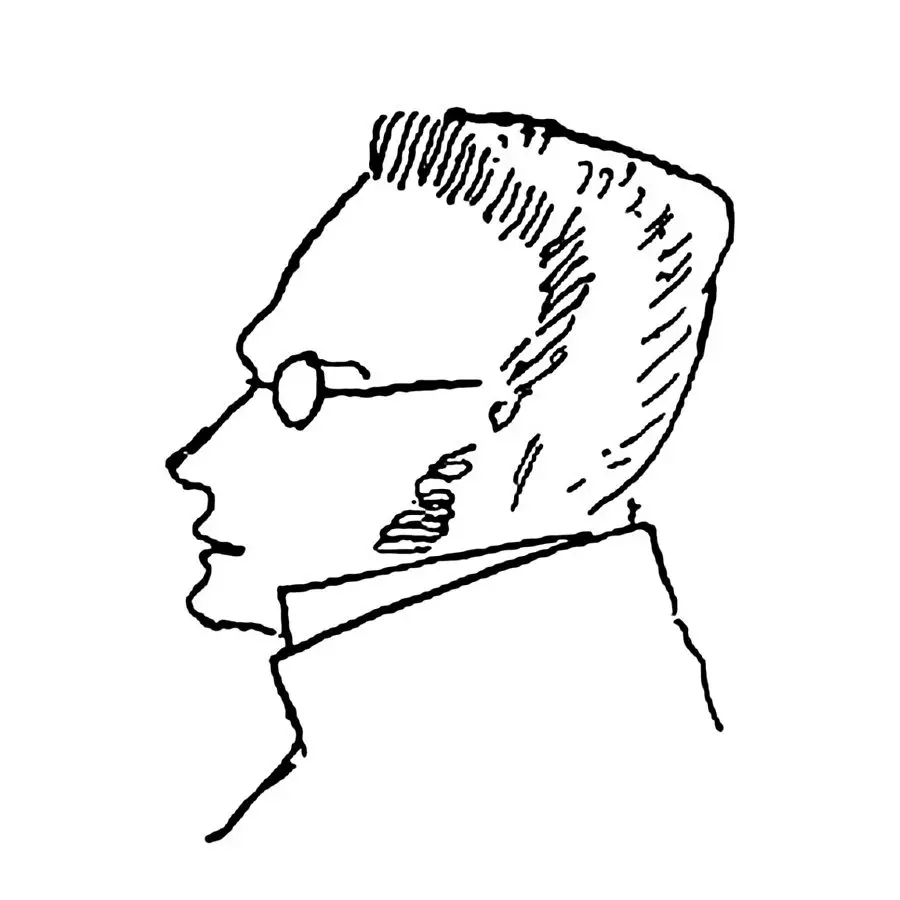
Buddhist philosophy of mind and self

Armando asked:

I find in the questions and answers that I have reviewed that there would be clearer understanding of what is the mind and personality (self), of objective reality and freedom, and other problems of perception with an application of the Buddhist philosophy of the mind and the self.

I believe Descartes expressed the idea incorrectly in saying ‘I think therefore I am’ in that thoughts come and go in the mind, but what perceives the thought as such, and is constant, is the quality of awareness, or that which knows (Buddha meaning the one who knows). Thinking is part of the physical functioning brain (an organic computer) not indifferent from the movement of the body and perception of feelings. That which moves the computer and the body is the awareness (consciousness). Therefore more properly it should be said ‘I know therefore I am’, or better, according to Wittgenstein and Buddhism, nothing can be said because the knower is prior to words and thinking.

The person (soul, personal identity, self) is only a creation of the awareness as it interacts with the physical universe since birth. Therefore it is said that there is no self in Buddhism. The true self, the true essence (the original mind in Buddhism), or consciousness, cannot be observed directly because it is the subject. The awareness is however that which gives everything its reality. As result the physical universe exists only in the knowing minds. We sense the physical world through the 5 senses and the braincomputer organizes the information but it becomes real only by its contact with awareness. So there is a physical world but it is only reflected in the mind (an accurate reflection) but it can never be directly known (thus the uncertainty principle and Schrodinger’s cat).

There is only true freedom when one understands that the physical world, the feelings, the thoughts and the personal identity are not the true self but only a creation of our awareness. The original mind, awareness, is obvious and is everything but is prior to thought, and it is what we are.

Answer by Jürgen Lawrenz

Thank you for a very well thought out and interesting question! In order to do justice to it I must, however, first remove some of your unstated presuppositions. I am mindful of the possibility that you may have acquired these from your reading and/or learning, but you will (I hope) agree that one cannot approach the matters in your question with assumptions already in place that really need to be part of the question!

In this case, you have put forward assumptions on the nature of thinking and on what kind of thing a brain is, that are widely broadcast in the scientific media, but not proved, and can therefore only be accepted as metaphors. You have also put forward some ideas drawn from Buddhism, which are widely believed to be the ‘truth’ about soul, self and consciousness, but they are not demonstrable and therefore at least debatable.

I begin with your statement that ‘Thinking is part of the physical functioning of the brain’ and your follow-up in calling the brain an ‘organic computer’. This is a twofold error, based on trust in the terminology used in theoretical research and writing, where such ‘objective’ language is necessary. But this vocabulary cannot imported into common speech without gross distortion of meaning, as if it unambiguously denoted the objects and processes under discussion. To conform with the thrust of your discourse, this assumption should have been put into the interrogative! Accordingly we must retrace our steps and put both of them as questions first!

And now it transpires that (a) The brain is not a computer of any kind, and (b) thinking is not a function.

To explain this, you must look at brains and neurons the same way as you look at flowers, fish and fowl and determine how they differ from plastic flowers, fish and fowl. Then it will not escape you that the former do something by themselves and for themselves that their plastic counterparts cannot do – namely grow, feed and reproduce and many other things as well, for which the word ‘function’ is out of place and must be replaced by the word ‘work’.

To understand the workings of a brain, it is frequently better to observe a beehive than to stick your nose into a computer. What you see in the beehive bears a closer resemblance to what the removal of a human skullcap reveals. I mean: you see a lot deliberate activity among the bees, and likewise a lot of deliberate activity among the colonies of neurons in the brain.

So the work going on in the brain is guided by a form of intentionality that is qualitatively an exact analogue of both the beehive and what you might call your own intentional being. Putting ‘function’ into the picture erases and/or obscures this fundamental insight.

Further, the brain is an organ, which like all living things is engaged on evaluating information. Computers don’t evaluate, nor do they exhibit intentionality: they are just hugely ramified mechanical cash registers. Leibniz over 300 years ago said that his calculating machine was ‘smarter’ than a peasant, and in like manner we today fall readily into the trap of attributing ‘sophistication’ to computers, which one second’s worth of thinking properly will reveal as the designer’s sophistication. Moreover the brain’s modus operandi is parallel processing and therefore utterly incompatible with the serial data processing of machines.

So your language on brains and thinking is inappropriate and inapplicable.
Once you’ve thought about it and distanced yourself a little from the mechanical prejudices of scientific literature, you can approach anew the question of whether Descartes or Siddartha has a more relevant take on the problems posed by our search for an understanding of the human mind, soul, self and consciousness.

Apropos Descartes, it transpires that his point of view yields more than the one perspective which you allow. Your presuppositions are again over-informed by the aforesaid mechanistic doctrine, and curiously it emanated in the first place from Descartes himself. But to insist on it without taking his purpose on board means you will miss two of the more fundamental points of his exercise. The first concerns the possibility of ‘proving’ existence, and the other the possibility of ascertaining the truth (or objective factuality) of our observations of nature. In this context it was appropriate for Descartes to translate the teeming complexity of organic life into simple cause and effect models, which must be understood on the basis of almost zero neurophysiological knowledge. Therefore his research agenda radiated inward from the myriad forms of existence to the one and only form that has the capacity of pronouncing on existence. The fact that he called this form of existence ‘thinking’ must not be allowed to constrict your appreciation of what he is trying to establish: namely that only ‘thinking’ can validate existence, and only ideas in a mind capable of logical performances have a chance of being actually true. What ‘thinking’ actually is, we still don’t know.

Since you appear to be involved with Buddhist conceptions, I expect you will not argue with the need for putting an intentional agent into centre court. You basically said it yourself: The existence of the world is a meaningless supposition unless an intelligence exists that can certify both its own existence and that of other existents. This is precisely where science is out of its depth, as none of these issues are amenable to being weighed, measured and detected; they can only be inferred from observation. But now you might look into the Hindu philosophy of intellectual monism and the total ensoulment of the universe which the Buddha does not deny. It is a nice talking point, but nothing more! It is not accessible to human knowing (and rather more to imagination than understanding). It remains on the philosophical, religious and spiritualistic agenda, because the mystery of it all intrigues us endlessly; but as for certainty, no amount of arguing or dogmatising can settle the point.

This is where your attempt to correct Descartes fails. You cannot say ‘I know’ unless you are a knower. A computer is not a knower. In a limited way, however, every living thing is a knower, in the sense that survival strategy is unquestionably a form of intentional behaviour (e.g. the extraction of survival information from the habitat). On the other hand, in respect of the advanced form of this which is our human attribute–human consciousness, our ‘soul estate’, knowledge of self–it seems at least arguable whether there are, or have been, humans who know nothing other than what they have been brainwashed to believe. It is more than debatable, in fact almost certain, that there have been humans without the ability to self-reflect, who would not therefore be in possession of a self. It can fairly easily be demonstrated from historical and anthropological information about hominids that self-reflexive thinking is a recently evolved trait of H. sapiens and not in evidence earlier than his appearance on Earth.

Therefore consciousness as your ‘true essence’ of the ‘true self’ is a self-contradictory assumption. A worm has consciousness without claiming to be a self. The same must, with very high probability, be said of archaic humans. A self is a quite sophisticated attainment, which we constantly underestimate. A very common error is the attempt to the ‘reduce’ it, which plainly erases the distinction between an instantiated consciousness of individuality and a ‘general’ consciousness which is nothing other than life itself.

It is true, as you say, that consciousness cannot be observed; but not true that this is because consciousness is the subject. It is unobservable because it is not an existent, but an intentional characteristic. Hence inference is our only avenue. This perspective should also correct your over-optimistic equation of the world with its reflection in the mind. Which mind? Your’s or the worm’s? Or maybe the neuron’s? If you keep asking more such questions you will also come to see that Schrodinger’s cat has absolutely nothing to do with it. You simply misunderstood the gist of that metaphor.

I suspect you might benefit from a better compartmentalisation of your thoughts. Desist from using mechanochemical models for living organs. Avoid confusion between work and function, between the living and the dead. Try not to mix up consciousness with mind, since self-evidently one is prior to the other. Don’t lump metaphysical authorities into the same basket with scientific authorities. And try to sort out the differences between knowing what and knowing how; between knowledge, intuition and understanding; between facts and principles. Don’t assume that searching for answers and giving answers is the same thing. And finally, don’t assume or accept that any one person, or any group, has final answers.

At the risk of sounding dogmatic myself, I propose to you that no doctrine whatever on spiritual issues has ever settled those issues with finality, except by means of dogma. The world of humankind has suffered from innumerable dogmatisms for as long as the arm of our historical knowledge reaches into past; and it is an unsightly spectre that has impeded us from understanding ourselves. I think you might be willing to agree that ‘knowing what it is to be a human being’ is the foundation of all thinking; but until this problem has been sorted out, every kind of assertion of finality has only the right of being wrong.


A syllogism named Celaront

Kyana asked:

Is the syllogism EAO-1 valid and if not what rule does it break?

Answer by Helier Robinson

It is valid. The major premise is MeP, in which both terms are distributed; the minor premise is SaM, in which S is distributed and M is undistributed; and the conclusion is SoP, in which S is undistributed and P is distributed. So no rules are broken: M is distributed at least once, neither illicit major nor illicit minor occur, and the number of negative conclusions, 1, is equal to the number of negative premises.

An example of EAO-1 is:

No mammals are fish
All sheep are mammals
Therefore some sheep are not fish

In modern logic this would be:

(x)(Mx -> ~Fx)
(x)(Sx -> Mx)
Therefore (Ex)(Sx & ~Fx)

and this is invalid.

The reason for the discrepancy between traditional and modern logic in this case is what is called ‘existentional presupposition’: in traditional logic it is assumed that universal propositions (‘All S are P’ and ‘No S are P’) the subject and predicate classes (S and P) have members; in modern logic such existence of members is not assumed but has to be stated explicitly with existential quantifiers. The two logics agree if the existential presupposition is stated explicitly in traditional logic.


Descartes and the principle of egocentricity

May asked:

After reading the ‘Discourse on Method’ text, I had this one question in my head, Why did Descartes prefer self-observation or ‘learning by himself’, to studying/ travelling?

Answer by Geoffrey Klempner

We know that Descartes studied and travelled extensively. Why weren’t these enough? What did he hope to learn by self-observation?

This might seem a rather naive question, as we are so used to the idea of philosophers sitting alone in their studies (Descartes preferred the warm comfort of his bed) exploring the contents of their own minds, but Descartes wasn’t merely mulling over all the things he’d learned and experienced. By self-observation he hoped to discover new knowledge.

The idea of using the mind rather than the senses as a source of knowledge goes right back to the Ancient Greeks and the Presocratic philosopher Parmenides. The idea of examining ourselves and becoming self-aware was first given powerful expression by the Presocratic philosopher Heraclitus, who in a vision saw that the soul of a human being was one and the same as the principle that governs the universe, the fiery Logos. It was Heraclitus’ successor Socrates who proposed ‘Know thyself’ as the basis for all philosophical inquiry.

Descartes was fully aware of these precedents. Nor was he the first to write in the way he did. The confessional or self-observational style of thinking and philosophizing had been pioneered by Montaigne. Yet Descartes was also aware that he was doing something radically new. By looking inside his own mind and describing what he found there, he hoped to discover a new basis for metaphysics or ‘first philosophy’ (Aristotle’s term for the inquiry that subsequently came to be known as metaphysics).

Hence the title of Descartes’ major work: ‘Meditations on the First Philosophy in which the existence of God and the real distinction between the soul and the body of man are demonstrated.’

I happen to think that this was, possibly, the most important event in the history of philosophy.

I see the principle of egocentricity as central to metaphysical inquiry. This isn’t about Descartes’ claim, his theory of mind-body dualism and the notion of the mind as a ‘mental substance’, but rather the question that Descartes raised.

Of contemporary philosophers, Thomas Nagel comes closest to grappling with this in The View From Nowhere where he discusses the proposition ‘I am TN’.

My take would be this. What distinguishes metaphysics from science or empirical inquiry – or all the knowledge that you can get by studying or travelling or etc. – is that I am asking the question. Obviously, when I say ‘I’, I also mean you, or whoever happens to be reading this. You are the one asking the question. That is to say, You, your very existence, or the fact that you are asking a question is part of that question, not something that can be discounted or factored out in the way that we do with every other form of human knowledge.

To this day no philosopher has succeeded in completing the search that Descartes initiated. Sure, lots of ‘metaphysics’ has been done since the time of Descartes, but none of the theories put forward, and I include the great traditions of idealism and existentialism, has succeeded in capturing the evanescent intuition that I, my very existence – not just anyone or the ‘self’ in general – is an essential part of the puzzle of reality.


Does objectivity exist?

Christopher asked:

Does objectivity exist? I agreed with what I read in ‘A View from Nowhere,’ but isn’t math still objective? I mean how is 2+2=4 subjective? I guess the argument could be made that 2+2=4 is subjective because I didn’t write it II+II=IV, but that’s just using different symbols to represent the same thing. It still has the same objective value and meaning.

Answer by Craig Skinner

Yes, objectivity exists.

We can usefully distinguish 5 notions of objectivity:

* physical
* metaphysical
* mathematical
* dispositional
* evaluative

I shall briefly deal with each, then show how an example (moral objectivity) fares on each notion.

Physical: something is physically objective if it is part of the fabric and furniture of the physical world, such as a plant, planet, chair or table. And this existence is independent of our thought. If all life went extinct, Mars would still orbit the Sun, waves lap on Earth’s shores.

Metaphysical: paradigmatic example is Plato’s forms. But few now believe in a transcendental reality separate from the everyday, sensible, world. Some consider them abstract objects, although I think it is hard to rigorously distinguish abstract, fictional and non-existent objects.

Mathematical: such truths, as you say, are objective. They are a priori, necessary, same for all of us, independent of our wishes. Whether mathematical objects (such as numbers) exist (and whether best construed as physical, mental, abstract, fictional or nonexistent ?) is more controversial, but this doesn’t affect the objectivity of maths.

Dispositional: whereas primary qualities, such as size or shape, are physically objective, secondary qualities can be seen as dispositional. For example, redness in a postbox is an objective disposition to cause a normal human, viewing it in good light, to see redly and declare the box red. In this sense, then, grass is objectively green, the daytime, cloudless sky blue.

Evaluative: we draw up standards for everything from judging vegetables to playing bridge. And we make objective judgments (evaluations) according to these standards. So, to award the trophy to the golfer who went round in the least number of strokes is an objectively just evaluation based on publically agreed standards.

Let us see how moral objectivity fares.

Physical: we could account for descriptive ethics in terms of the evolved facts of human nature (innate, hard-wired moral sense, in turn reducible to physical brain states), but this, if successful, explains rather than justifies, and normative ethics is unaccounted for (‘no ought from is’).

Metaphysical: for the Platonist, moral objectivity is guaranteed by the Form of the Good. But most people, these days, would say such transcendental moral facts are ‘queer entities’ (as Mackie calls them), never mind how we could access them or be motivated by them.

Mathematical: nobody thinks moral facts are mathematical, but some moral philosophers (e.g. Kant, Ross) liken moral to mathematical truths (timeless, necessary etc). But, sadly, whereas everybody agrees as regards maths truths, the alleged moral intuition doesn’t yield agreement: what was self-evidently morally right to Moore was not so to Ross and vice versa.

Dispositional: more promising, and is work in progress. An objectively moral fact is seen as a disposition of a state of affairs to arouse approval/disapproval (approbation/disapprobation) in a normal human observer e.g. a cat’s being set alight for fun would be objectively wrong, disposing to arousal of intense disapproval in an onlooker. The account relies on the notion of an ethically normal observer, or ‘ideal’ observer, or, as you suggest, on the impartial view or ‘view from nowhere’, or on imaginary consensus reached behind a ‘veil of ignorance’.

Evaluative: normative ethics is clearly objective in the evaluative sense (an act is right if it fits the society’s agreed standards for rightness). But, as a sole account, it is unsatisfactory, because then the moral rules have no more standing than those of chess or etiquette, save that they deal with weightier matters.

So, in summary, normative ethical objectivity can’t plausibly be seen as physical, metaphysical or mathematical. Dispositional objectivity is more promising, whilst evaluative objectivity is trivially true but fails to give more than truth by convention.

I avoid the slippery terms ‘mind (in)dependence’ and ‘subjectivity’. Some physically objective things are clearly completely independent of any (non-divine) minds. But if the mental includes theories, concepts, sentences, abstract objects, and human conventions, it is hard to find a serious ethical stance that doesn’t include the mind in some way. For instances, in utilitarianism ‘happiness’ is clearly a mental phenomenon; ‘willing’ in Kantianism is a mental activity; reaching consensus in contractarianism is mental activity, and so on.


Answer by Jürgen Lawrenz

As far as my understanding reaches, ‘objectivity’ is a word with a well-defined dictionary meaning. I have never come across an argument for its actual existence, so there is a first time for everything! But I can’t see objectivity existing. In which way? As a thing? As a law of nature or science? As a wave, a particle, residual energy, what? I think the ‘no’s’ have it. Objectivity plainly refers back to the human being and that creature’s intellectual understanding. So it is a concept; and concepts don’t exist as such, because they are ideas. As far as I can see they are all of human manufacture and 100% mental.

Your little game with numbers doesn’t change anything. Although it is true that any 2 items added to any two other items always come out at 4 items, and 2+2 in the abstract is always 4, this is an objective fact only to the extent that the underlying notion is of a perfectly law-abiding mechanism, i.e. a thoughtless, soulless, inanimate ‘object’. I hope you get the gist of this. Delete intellect from the world and ‘objectivity’ is deleted along with it. If computers survive us and keep ‘objectively’ performing their algorithms, what can be called ‘objective’ about it? Nothing. You need a consciousness capable of discerning that objectivity and distinguishing it from the ‘subjective’ aspects of the same rational (i.e. human) intelligence.


Descartes on imagination and intellect

Jackie asked:

I am reading the book ‘Meditations on First Philosophy’ by Renee Descartes. I have some questions about it.

Why and how does Descartes distinguish between imagination and intellection? Is it because imagination is sensory and deals with concrete ideas and intellection is knowing and deals with abstract ideas? Could you give me an example of an abstract idea and a concrete idea. Is it because Descartes wants to prove that only intellect is needed to exist because you can understand stuff you can’t imagine?

Does Descartes claim himself to be an intellect in the 6th Meditation? If so, what was the nature?

Last question, what special classes of ideas poses a problem that motivates the proof of dualism? To my understanding, Dualism is that only matter and thinking things and their ideas exist. Please correct me if I am wrong.

Thank you so much! Sorry for asking so many questions.

Answer by Craig Skinner

Don’t apologize for asking too many questions, asking too few is worse.

You touch on an aspect of Descartes’ thinking less often discussed than his scepticism and his dualism: his recognition that there are features of humans not referable to body or mind alone, but essentially involving both, such as sensation, emotions (passions) and, maybe, imagination.

Descartes thinks the world consists of two types of substance, thinking stuff or mind (res cogitans) and extended stuff or matter (res extensa). The physical world (including animals) consists of matter. God and angels consist of mind. Humans are essentially mind (‘I think therefore I am’) but also also have material bodies.

Matter has its properties, such as size, shape, weight.

Mind has its property namely thinking (doubting, understanding, affirming and denying, all part of reason or intellect; and willing).

But there is an immediate problem with this neat division.

For what about sensation and emotion? These are not features of matter alone or mind alone, but are hybrid faculties, involving body and mind in intimate union (‘intermingled’ as Descartes puts it). Thus, sensation requires sensory organs, which are material; emotion includes racing pulse, faster breathing and muscle trembling, all bodily features. Also imagination, regarded as having a mental image of something, is rather like sensation, except the image is not of something before our eyes but something we conjure up in our mind’s eye.

So emotion, sensation and imagination don’t fit into Descartes’ dualistic framework.

Sensation, emotion and imagining require body. So, God and the angels, being immaterial, can’t have these. They only have thinking (intellect and will).

Hence, for Descartes, intellection, understood as thinking without emotion, sensation or imagination, must be superior to imagination, to ensure God always has superior understanding to we humans.

So, we can, as you say, intellect or understand stuff we can’t imagine. Descartes’ example is a regular 1000-sided figure (chiliagon). I can form an image in my mind’s eye of, say, a pentagon, even an octagon, but it gets increasingly hard with more sides. Try to form an image of a chiliagon and I have a vague, almost circular image, but no way can I be sure that it has 1000, rather than say 994, or even 2000, sides. But I can easily intellect a chiliagon: it’s a regular polygon with 1000 sides, just as squares have 4 and hexagons have 6, right!

Descartes also recognized that animals have emotions and sensations. But he denied that they had minds or souls (they didn’t intellect). He realized that this cut across his mind/body dualism – if they had no res cogitans, only res extensa, how come they could feel? He struggled in his later years in Conversation with Burman, in Passions of the Soul, and in correspondence with his famous, very bright, distance student, Princess Elizabeth of Bohemia, to give an account of human feelings and sensations, of how body stuff and mind stuff could possibly interact, and of how soulless animals could feel, but never resolved the issues.

Yes, Descartes does claim to be an intellect (thinking thing). But he also realizes he is an embodied creature with some properties attributable to the mind/body union and not to mind or body alone.

Descartes’ dualism is substance dualism. This view has few adherents these days (the interaction problem is still the killer). But property dualism has its fans. Here, something can have both physical and mental properties. Thus, a collection of brain cells has a particular activity pattern (physical property) and also a mental property (feels like something to the subject whose brain it is).

Finally, I don’t think concrete and abstract IDEAS exist, only concrete and (maybe) abstract THINGS or particulars. Thus, a chair is a concrete, physical thing; a thought is a concrete mental thing. Abstract things, if they exist, include numbers and propositions, do not exist in time or space or causally interact with us.

Descartes scholars can say a lot more about these matters (and they do), such as the influence of Aristotle and medieval philosophy, and the special meaning of some of the terms used, but I give my view as a non-expert reader, and admirer, of Descartes.


Fatalism and knowledge of the future

Christopher asked:

Can’t you have knowledge of the future? For example, I know that I am going to work at 8am tomorrow. In this way isn’t truth ‘made’ rather than existing a priori? Therefore, truth would be mutable and have a subjective quality to it. Or can knowledge not be attained through inductive reasoning? I’m thinking of knowledge as justified true belief. I also realize that there is the possibility that I will not go to work tomorrow at 8am, but isn’t there always a chance that you’re wrong.

Answer by Martin Jenkins

To state on Sunday that ‘I am going to work at 08:00 tomorrow’ is either true or false.

If at 08:00 on Monday I am at work then the earlier statement made on Sunday would be true. If it is true on Monday that I am at work and that what was said on Sunday was also true then it cannot be true that I would not be a work on Monday at 08:00. Therefore, out of necessity, I could not not have gone to work on Monday at 08:00. Necessarily, I will be at work at 08:00 on Monday. A version of determinism (fatalism) follows.

This could be denied by saying, ‘Well, neither ‘I will go to work nor ‘I will not go to work’ are true.’ As this denies the principle of bivalence – the ‘truth’ of ‘Either true or false’ regarding the statement – it becomes nonsensical. Nothing and everything can be known or predicted. Anything goes according to chance and caprice. Indeterminism follows and no statement could be made concerning work at 08:00 on Monday.

So, we sit on the horns of a dilemma. Either we adopt the scenario of Necessity – that I necessarily will be at work at 08:00 on Monday and everything that occurs, occurs by necessity: determinism or; adopt the scenario that nothing can be known or predicted and anything could happen – a reliance upon chance and contingency: indeterminism.

That the statement concerning 08:00 on Monday was made on the prior Sunday entails that the actuality of Monday at 08:00 is/was not yet known. There is a temporal gap between the time of the statement and the truth of what it states. It is not therefore, subject to the judgements of either true or false. For the statement that ‘I am going to work’ includes the word ‘going’: implying an intention, an action, not a conclusion affording an immediate a priori judgement, true or false. Its truth or falsity remains ‘up for grabs’.

Such a proposition as ‘I am going to work at 08:00 tomorrow’ is a future proposition. Future propositions are neither true or false at the time of utterance, they may at most be supported by inductive probability but they can only be verified at the time or subsequently. Only then do they become knowledge. Prior to this, they are neither true or false.

If I am at work 08:00 Monday, then I can conclude that necessarily, I am at work. It is true that I am at work and false that I am not at work. However, I cannot conclude that therefore of necessity, I had to be at work at 08:00 and yesterday’s statement was true; for at the time of Sunday’s statement, it was logically possible that I would not be at work at 08:00 on Monday morning.

I hope this is useful Christopher.