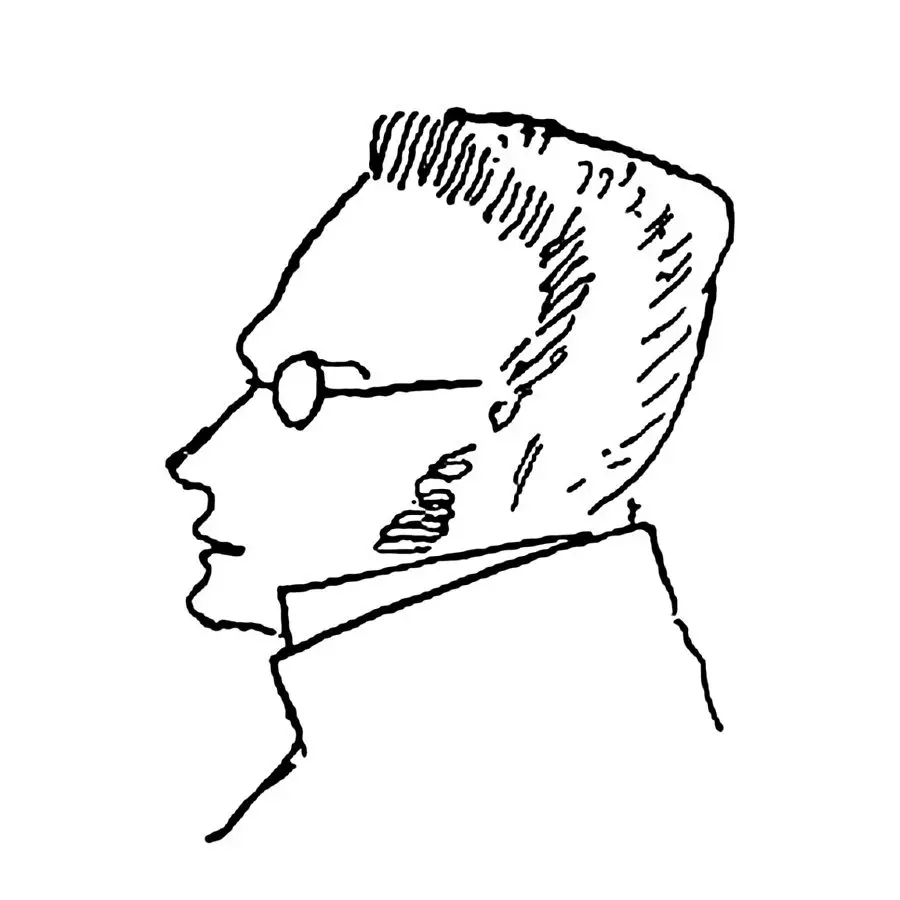
Philosophical pecking order

Tiberius asked:

I have developed a point system for philosophers where I give them points for insight varying from 100 to 5000. It is subjective and arbitrary, but it has produced a top ten philosopher list. Confucious, Democratus, Nietzsche, Tzu and Aristotle have all scored well. My highest point getter is Jean Jacques Rousseau by far. I would like Mr. Lawrenz’s opinion of this great man.

This request must pass the ‘moderator’ who throws away 95 per cent of my work. Aristotle said older minds become envious and ‘contemptuous of opinons’. A tottering pride can set in as well. Wrinkles on the face also end up on the mind. The mind reaches it’s prime at 49 according to Aristotle. I am 50 now.

Answer by Jürgen Lawrenz

Well, Tiberius, seeing that you ask my opinion, I will not duck your question. In fact, I welcome it, because I’ve often been asked by people who are understandably confused by the fact that there seem to be 10,000 philosophers around today, yet we always go back into history to study writings from 200 to 2000 years old!

Now you didn’t even give me a sample of the insights which determine the ranking order on your list. That makes things difficult. I recall I used to do something much the same when I was young; but over the course of my life I came to understand that my own insight into insights kept changing – let me be bold and claim that it became deeper as I added more years to my enthusiastic beginnings. This suggests that ‘insights’ may be a very unstable basis for judging philosophers when you turn them into point values. But by no means irrelevant; and, incidentally, the same basis one could use to differentiate between great, good and trash novels, poems, dramas, pictures, music etc.

In good time I came around to the understanding that this analogy is not far from the mark – i.e. great art and great philosophy share something (namely insight) despite their incompatible ways of communicating it. Moreover, if you pursue this line further, another analogy comes forward, which could be called authenticity. Once again unstable connotations, yet relevant again because we humans have the capacity of spontaneous recognition. Without this spontaneity, the word itself would have no meaning.

Authenticity is not much different from original creativity, an innovative frame of mind, an inner drive for exploration, and an obsession with the truth about human nature. If I may dwell on this for a moment: A novel by Dostoyevsky is a testament of human truth (insight!), whereas the novel you pick up at the train station is likely to offer nothing other than temporary entertainment, something to while the time away, without the least challenge to your intellect or deeper emotions.

A third criterion arises out of these two. Which is that, in this stringent sense, philosophers are creators of coherent thought systems in the same way as a great novelist offers a coherent image of people and society in their totality of being. Hence the basis of any judgement of depth, relevance, greatness can only be the insight, authenticity and creativity of their work.

As mentioned, these are criteria which appeal to our spontaneous recognition. There is no way of methodically or scientifically adjudging such a performance. Almost the only reliable way we have, is to examine either the degree of creative revelation (which is essentially a synonym for insight) or their impact on society.

Now this brings me to your favourite Rousseau. He did have a huge impact on the world; and some of the brainiest people of his time (Kant!) admired him. But in the long run, one cannot escape the fact that his thinking was very much trapped in his own time and place. Once you get past his purple patches and scrutinise the actual solutions he offers, you soon discover that he promoted the kind of tyrannical systems of which fascism and communism were to be the ultimate expression. But this argues for very little insight into human and social conditions; and when you see that his medicine involves repression, deprivation and compulsion, one’s respect suffers a huge dent!

This is incompatible with an authentically humane, happy, creative life and the freedom that is fundamental to such pursuits.

Now I see Confucius and Aristotle among your top ten. No argument, but contrast their teachings with that of Rousseau! The cornerstone of both their philosophies is precisely the freedom to authenticity that is missing from Rousseau. Freedom entails responsibility (Confucius) and a happy, prosperous life requires the consistent pursuit of excellence in everything you do (Aristotle). So individuals add up to the foundations for the prosperity of his/her society. A healthy society is a collective whose members strive always for the best and seek voluntarily to curtail those aspects of life which are part of our animal estate.

In a word: Confucius and Aristotle ask you to lift up your head and be a full-fledged human being in command of all your best faculties. This is hard, but not unachievable. Rousseau demands we put our head down and cop punishment, with or without crime! This is not compatible with great or deep philosophical thinking!

I obviously cannot go through your list, nor offer an alternative. But you should make yourself aware that well-meaning philosophies, written in inflammable prose, can easily influence society to go off the rails. Consider Marx, who would probably be shocked out of his mind if he knew that his doctrines of a workers’ paradise ended up creating a workers’ hell, as bad as they suffered before Soviet communism was established. Consider in contrast John Locke, who made only small waves, but is the intellectual godfather of western liberal democracies. So we end up having to admit that quality of insight which excludes foresight is not worth much. The kind of foresight I’m speaking of here is nothing other than the hindsight gained from historical precedents, because socially and politically nothing is new under the Sun.

Altogether then, ‘insight’ is a quality, or attribute, that cannot be judged without adding the word deep to it. I offer you a test case: Plato. Many critics over 2 millennia have professed to abhor his ideal society, sometimes for the same reasons I used in castigating Rousseau. But they usually miss the clue at the heart of his thinking. Plato himself admits that his social structure is an unapproachable ideal and recommends that societies should be content with implementing only those of his recommendations that are appropriate to their way of life, customs, traditions etc. However, they should aspire to be better, more humane, more just and fair than they are. And now the crucial issue is, that he wrote about 30 books in examination of a multitude of profound human issues like love, beauty, justice, modesty, temperance etc., with such deep truthfulness that readers are rattled into a profound insight into their own natures.

So if I were to judge philosopher according to your numerical criterion, I would be forced to say: Plato had 30 deep insights into the human condition, Rousseau just one. And then similar criteria would apply to Aristotle, Kant, Hegel, Confucius, Augustinus and a few others, in an wholly analogous way to our appreciation of Leonardo, Michelangelo, Shakespeare, Goethe, Beethoven and so on. On the face of it, this seems ridiculous; but I’m playing the game along with you and I’m hopeful that you will see now that your numbers game has to be played with the rules modified to reflect a more relevant set of criteria.


Are all questions philosophical?

Charity asked:

Are all questions philosophical?

Answer by Peter Jones

Hi Charity,

I would say yes. This is for reasons given by Russell. He notes that all our sentences take the form ‘There is an x such that…’ In other words, our sentences require the reification of their subjects. Any such reification is a metaphysical conjecture. It is very difficult to avoid such a reification and it may be impossible. Is London the capital of England? Only if Solipsism is false or we are not being tricked by a demon.

It is the inevitability of the philosophical claims made by even our most prosaic statements that allows Lao Tsu to state ‘True words seem paradoxical’ without the addition of provisos. None are needed, since every statement would be a philosophical claim when analysed in depth.

Many of our questions are not supposed to be philosophical, and in the spirit that they are asked perhaps they are not. But our intention in asking them would not be the point. A philosopher will always be able to be read any question as pertaining to philosophy. Indeed, this is quite often what people find so annoying about them.


Is the world all there is?

Emma asked:

Hiya, I’m Emma.

Well basically at school, we’re doing about philosophy, and I’ve got to study some people’s views on the world? I was wondering if someone could give me their response in answer to the question, ‘Is this world all there is?’

I just want your opinion, that’s all. If you could help me it would be great.

Thanks, Emma

Answer by Jürgen Lawrenz

Unwittingly, it seems to me, you’ve come up with a question that has exercised thinkers ever since there has been philosophy. But I will answer your question as simply as you wish.

You have to start with a subsidiary question: ‘What is the world?’

When you’ve done this, you can resolve it easily by taking note of some features of the world that can be weighed and measured, like all the objects of science and technology. This would include your shoes, the rain, the trees in the forests, the stars and galaxies, and the atoms and particles of physics. It is the material world.

Many people hold the opinion that this is all there is, and they would describe such other contents of the world as God, angels, saints, spirits, demons, ghosts etc. as figments of the imagination. Of course one could always contradict this opinion by saying: They exist in people’s mind, so they are definitely contents of the universe. Accordingly this is described by many people as the spiritual world.

The people who believe exclusively in one or the other very often do not understand each other. Mainly because the spiritual seems not to actually exist. But this might boil down to the basic problem that ideas cannot be weighed or measured. Yet even those materialists who deny their existence have ideas, so perhaps they are living in self-contradiction?

There are many more things in the universe. Perhaps only on earth? I’m not sure. But where human beings live, there are colors and sensations like pain and pleasure. There are feelings like grief and happiness. The are concepts like beauty and justice. And so on. All these definitely exist. You know it and I know it.

So what you should understand by this is that the most intelligent people who have thought about this problem, have not found an answer. So the answer to your question is: No-one knows; there are only opinions. And none of these opinions can be proved or disproved.

To say the word ‘world’ is to take a guess from what we know, about what we don’t know. In a word, we extrapolate the known on the unknown. But this is not something on which anyone in their right mind could be absolutely certain.


Knowing when an act is done from duty

Ashley asked:

Why is it difficult to show that a person has acted from duty?

Answer by Peter Jones

It would be impossible, not just difficult, to show that a person has acted from any particular motive, or indeed from any motive at all. All we see is what they do. The rest we have to guess, or we might simply believe what they tell us. Either way we cannot show that a person is acting consciously, so other people’s motives must be imputed and never known for certain.

Sometimes when we act it is difficult even for us to tell why we did so. Did we give that Christmas present out of duty, or was it pure generosity?

In short, the reason why it would be impossible to show that a person has acted from any motive is the ‘other minds’ problem. There would be no way to show that they have one.


Answer by Geoffrey Klempner

In the Groundwork for the Metaphysic of Morals Kant argued that the only morally worthy action is one done from duty. But he added the caveat that it can be difficult or impossible to determine with certainty whether a person’s action is genuinely motivated by the thought of duty (the thought of the Categorical Imperative) or some mere ‘inclination’, i.e. non-ethical desire.

If I say to you, ‘I did what I promised because I believe that one ought to keep one’s promises,’ you might still be left wondering whether this really was my motivation, or whether, on the contrary, what motivated me was the thought of the unpleasant consequences that would follow if you, or others, concluded that I am the kind of person who does not keep his promises.

The problem is that there are all sorts of very good prudential reasons for acting ethically, so in a sense an ethical act is often over-determined. It was my duty to do X (e.g. keep my promise) but it was also in my own best interests to do so.

In formulating his theory of the Categorical Imperative, Kant was keenly aware that there are theories according to which the only reason for acting morally is prudential. We do what is right because it is ultimately in our best interests, or the best way to be happy, etc. The problem is, as Kant argued, any such ‘contingent’ motivation cannot be relied on.

The movie The Godfather is a good example: ‘I’ll make him an offer he can’t refuse.’ The fear of death by torture would, for many persons, trump any moral considerations.

Hence, the search for an ‘a priori’ prinicple that doesn’t depend in any way on the beneficial consequences for the agent. The truth of such a principle doesn’t require that we be able to determine whether it is motivationally effective in any given case.

However, if someone does the ethically right thing despite the threat of death by torture, that’s pretty good evidence that what motivated them was the thought of Kantian duty.


Descartes’ method of doubt

Robin asked:

What is the common sense reply to Descartes method of doubt?

Reply by Peter Jones

Descartes’ method of doubt is just that, a method. In order to discover what we know and what we don’t know we identify which of our beliefs we can doubt and which we cannot. As Solipsism is unfalsifiable there is very little that we cannot doubt. If the external world can be doubted, then whatever it is that we cannot doubt can only be a knowledge of ourselves, of our own awareness and identity. In this case any reliable world-theory must be derived from an axiom stating self-knowledge.

This is not an optional method. Nor is It is a new discovery of Descartes’. Aristotle has in mind the possibility of doubt when he writes ‘True knowledge is identical with its object’. If there is no identity, then there is the possibility of doubt. There is therefore no common sense reply to Descartes’ method, we can only choose to use it or not. Common sense would say that we must.

In order to build a systematic theory of the world from the ground up on sound logical principles we must begin with an axiom. This may be an assumption or conjecture, but ideally it would be a certain fact. But what is a certain fact? Cogito was Descartes’ answer, the fact that he was aware he was thinking.

It may be possible to doubt that cogito is a certain fact, since it may be a false reification of a distinct ‘I’ that is thinking, but it is not possible to fault Descartes’ initial approach and method. If we do not take the trouble to establish what can be doubted, then we cannot be sure what we know and what we don’t, and this is obviously not a sound basis for building a world-theory.


Answer by Geoffrey Klempner

Probably the most famous example of the ‘common sense’ reply to Descartes is in the paper, ‘Proof of An External World’ by the British Philosopher G.E. Moore http://rintintin.colorado.edu/~vancecd/phil1000/Moore1.pdf

“I can prove now, for instance, that two human hands exist. How? By holding up my two hands, and saying, as I make a certain gesture with the right hand, ‘Here is one hand’, and adding, as I make a certain gesture with the left, ‘and here is another’. And if, by doing this, I have proved ipse facto the existence of external things, you will all see that I can also do it now in numbers of other ways: there is no need to multiply examples.”

I discuss this ‘proof’ in my YouTube video, ‘Why am I here?’ http://youtu.be/exVSSpQPi88. To me, this looks like a prime example of a philosopher ‘reciting a magic spell’.

There was a time (which is not now) when the idea that you could base philosophy on ‘plain common sense’ seemed to be a viable option. In fact, the idea has appeared more than once in the history of philosophy. The problem is that, although we ultlimately want to defend common sense (there really is a world out there) the way to do it requires more than simply asserting, ‘This is what I believe and I refuse to consider the possibility that I might be wrong’.


Thinking before you speak

Alex asked:

Hi. I’ve been thinking about how we as humans speak and communicate. ‘Always think before you speak.’ a famous quote, but is it really applied to reality.

TALKING

Do you think while you speak? If so, how?

When speaking, do you think in whole sentences before you speak, meaning you think the whole sentence in your head, and then proceed to utter the thought, OR do you talk and single words/ single thoughts gradually pops into your head Example: You say: ‘There’s a problem’ and you say ‘There’s’ and then ‘a’ pops into your mind, and then you say ‘a’, and then at last you hear ‘problem’ in your mind and say it.

If you’re to present something or to hold a speech to an audience, is it different from what you might do in everyday conversations?

Or maybe your thoughts aren’t said in your mind to a full extent? As for instance when you’re speed-reading. You kind of get glimpse of the word, but still might understand it without verbally saying the whole word inside your head.

Do you even think 3 sentences ahead?

READING

If you’re reading to understand, perhaps a factual book, do you pronounce the words you read verbally in your mind, or do you just look at the words?

Furthermore, do you fixate on one to two words at a time, or do you somehow manage to fixate your eyes and gather 45 words (or even more) per fixation? (peripheral vision).

LISTENING

When listening to other people talk, how does your mind react? Does your mind gradually repeat instantly the words you hear? If you close your eyes when listening, do you still think/hear the words in your mind, as if they were your own? Or do you not repeat the words inside your head, but just listen in another kind of way?

I’ve been looking for answers for years. I’m truly grateful, thank you!

Answer by Geoffrey Klempner

In a way, you have answered your own question. The saying, ‘Think before you speak’ is good advice, but not intended as a philosophical theory about the nature of thought and speech.

If a police officer stops you and asks why you are speeding, it is probably best not to say the first thought that comes into your head, but rather whatever will give you the chance of getting off with a caution. A contrite apology looks like the least worst option.

As a philosophical theory, the notion that we anticipate every statement that we speak out loud with a mental equivalent is a non-starter. And yet, there is a certain way of viewing the mind that makes this theory seem inevitable. This is typical of philosophy, that a simple and accurate account of the facts requires that we resist various philosophical temptations that lead us to veer into nonsense.

For example, on a strict reading of Cartesian dualism, an action of the body (vibrating one’s vocal chords) is preceded by a mental action (thinking the thought). This leads to the idea that, somehow, one does ‘think the thought’ prior to articulating it in speech, but it ‘happens too quickly’ for us to observe it. What a wonder!

This is a good example of the kind of question that Wittgenstein considered in his Philosophical Investigations. We are confused about ‘logic’ or ‘grammar’ of our own language, and led to form all sorts of false or nonsensical theories in order to explain what we do, when we speak, or read, or etc.

So my advice would be: read Wittgenstein!