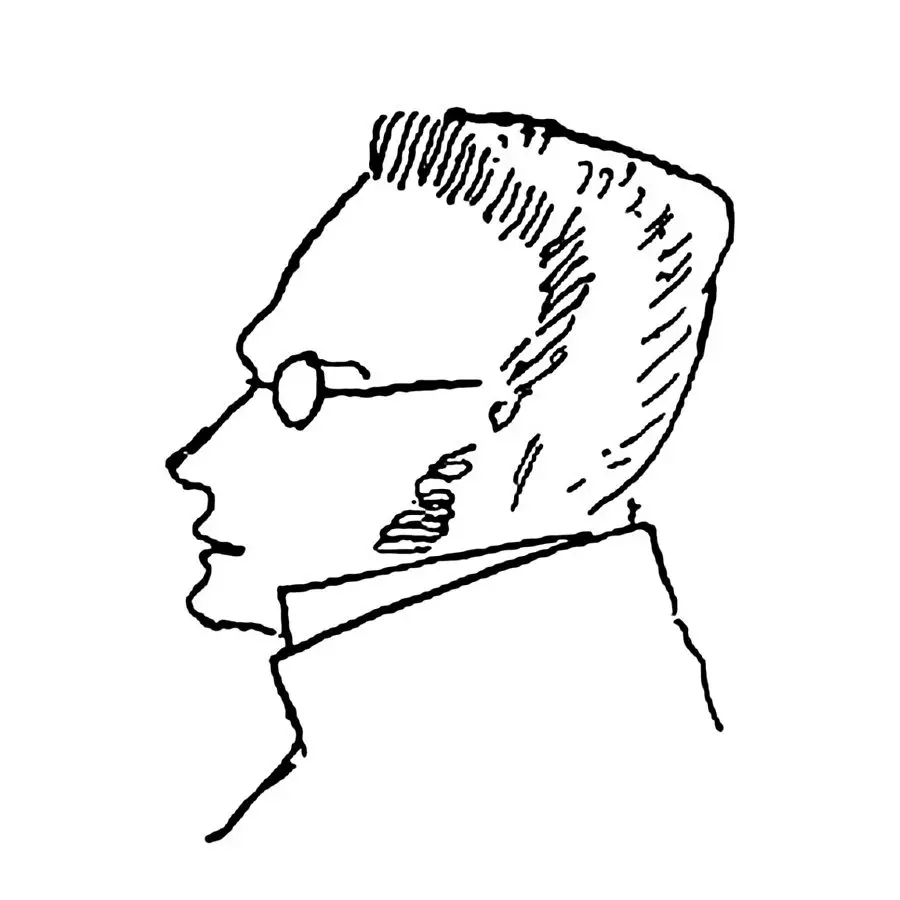
Nietzsche’s theory of the eternal recurrence

Gideon asked:

What do you think of Nietzsche’s theory of the eternal recurrence?

Answer by Martin Jenkins

As a Cosmological Doctrine, the Eternal Recurrence would entail a cyclical conception of time and ontology. Everything that is, will repeat and recur ad infinitum. There appears scant evidence for this in Nietzsche’s writings, only speculation. Further, if everything is to be as it is, this would detract from Nietzsche’s criticism of modernity and his prescriptions to change it. Namely, the overcoming of Christian and crypto Christian thinking and valuations by the New Philosopher creators – formally the Ubermensch. Activism would give way to fatalism. So the Cosmological reading of the Eternal Recurrence would appear too problematic to be sustained.

An alternative reading is that of the Eternal Recurrence being a type of Existential imperative. Life should be affirmed and lived as if it would be repeated ad infinitum. Thus the prescription of eternal recurrence would correspond to the ontological doctrine of Will to Power. Affirmative, creative, assertive activity is to be encouraged as if it were to be repeated over and over again. In so doing, one loves one’s fate – amor fati.

Another take on this doctrine is that promulgated by Gilles Deleuze in his Nietzsche and Philosophy (1962). Here, the Will to Power is continually configurating strong active and weak reactive forces into qualities of Noble (Active) and Slavish (Reactive) types. These are in a flux beneath existing structures of reality as it were. They are synthesised into existence by the Eternal Return. Either a replication of existing reality and its valuations is performed in which case, the slavish typology has not been overcome by the strong drives. Or, the strong drives triumph and the existing structures of valuation are subject to irruption. In Deleuze’s terminology, the Identity of existing reality with itself is irrupted by the strong drives of Difference.

‘In this synthesis – which relates to time – forces pass through the same differences again or, diversity is reproduced. The synthesis is one of the forces, of their difference and their reproduction: the eternal return is the synthesis which has as its principle, the Will to Power’. [P. 46 ibid]

Hence reality for Deleuze would not be replicating strict identity with itself – as with the Cosmological understanding of the Eternal Return. Instead, reality is subject to change on many levels due to the genesis of the Will to Power.


What is your favourite paradox?

Jones asked:

What is your favourite paradox and why?

Answer by Craig Skinner

A paradox starts with acceptable assumptions, proceeds by apparently acceptable reasoning, and reaches an unacceptable conclusion.

Resolution therefore requires rejection of an assumption, finding a flaw in the reasoning, or accepting the conclusion after all.

The ‘paradoxes’ standardly studied in philosophy include:

* liar paradox
* set-theoretic paradoxes
* Zeno’s paradoxes of motion
* ravens (Hempel’s paradox)
* grue (Goodman’s paradox)
* prisoner’s dilemma
* Sorites
* unexpected hanging

Some are puzzles rather than genuine paradoxes (Zeno, ravens, grue, hanging, dilemma); some (Sorites) have suggested resolutions that require non-classical logic (3-valued; fuzzy; supervaluation).

The liar paradox (and other semantic paradoxes) and set-theoretic paradoxes are sometimes classed together, both involving self-reference, but some logicians think there are principled differences between them.

The liar paradox (‘All Cretans are liars’, said by a Cretan) is my favourite because it very old, simple to grasp, and (in my view) has no solution other than accepting that there are true contradictions.

A simple formulation is the statement ‘This sentence is false’.

Is it true or false?

If it is true, then what it says is correct. Hence it is false.

If, on the other hand, it is false, then what it says is incorrect. Hence it is not false, it is true.

So, if it’s true, it’s false, and if it’s false it’s true. Either way we have a contradiction.

Suggested solutions include:

1. Just ban self-referential sentences and say that comment about a sentence must be in a higher-level metalanguage. This is akin to Russell’s Theory of Types ‘solution’ to the set-of-sets-which-are-not-members-of-themself paradox. It seems to dodge the issue. In any case you can avoid the self-referring sentence by the following amendment:

* The sentence below is true.
* The sentence above is false.

2. Abandon true/false bivalence, admit a third truth value of neither-true-nor-false, or both-true-and-false, or a null value (truth gap).

3. Accept that there is a genuine contradiction. The sentence IS true, and the sentence IS not-true (not some new category embracing both, but a full-blooded contradiction) and the world therefore contains true contradictions.

My preference is for 3. Some people go wild at this, suggesting that if we accept a single contradiction, then ANYTHING can be proved (the ‘explosion’ problem). I don’t think this is so, but wont go into why. Those interested should read Graham Priest ‘In Contradiction’ 2nd ed OUP 2006.

Hegel, incidentally held that there are true contradictions, but based this on acceptance of Kant’s antinomies (which are fallacious) and on arguments of his own which are incomprehensible (to me at any rate). However, I think he was right.

Logic containing true contradictions is called dialetheic logic or paraconsistent logic, and its proponents say that dialetheic logic is to classical logic as Einstein’s theory of gravity is to Newton’s – both get it right in ordinary circumstances, but the newer view is more correct and also gets it right in extreme circumstances.


Answer by Peter Jones

I have two if that’s okay. The first would be the Something-Nothing problem, the problem of which came first. I like this because it is simple and yet if we can solve it we have solved metaphysics. I also like Russell’s paradox. This is because if we can solve it we have solved the Something-Nothing problem.

In my view, however, all metaphysical paradoxes would be the same problem, (just as the two I’ve mentioned are the same problem) and so it wouldn’t really matter which is our favourite. I cannot explain this idea in an answer here since it would take too long, but it is not a novel idea. All metaphysical paradoxes take the same form and would require the same logical resolution, so which one we decide to work on would be a matter of taste. I like the two I’ve mentioned here because they are very approachable, while some are pretty fiendish and difficult to clarify.

It may be helpful to add that the Something-Nothing problem became a favourite of mine thanks to Paul Davies’ book The Mind of God. I would recommend this to anyone interested in metaphysical paradoxes.


Chess and philosophy

Gideon asked:

What is the value of chess to philosophy?

Answer by Jürgen Lawrenz

It is occasionally referred to in philosophical literature, but in most cases by philosophers who don’t play chess with adequate mastery, or else by players with insufficient philosophical background. Moses Mendelssohn once wrote that as a game it is too serious; as a serious pursuit too frivolous. Nevertheless the Soviets put it as one of the cornerstone of their whole culture, and they had some good reasons for this. They saw it as character building, promoting mental toughness, inhibiting lies and hypocrisy, promoting creative engagement with ideas etc. The practical end was that they produced grandmasters by the dozen; but this has no bearing on philosophy.

The sole exception was Emanuel Lasker, a world champion and trained philosopher. In 1907 and 1925 he published work on chess with philosophical merit. His point of departure was that chess is an ideal struggle – a struggle between two minds in the process of generating ideas. Since, however, in the actual struggle at the board, the whole nervous system of the combattants is involved, it is feasible to extract from this form of contest a system of ethics. It is not a socially or politically dominated ethics, as e.g. Aristotle or Hegel, but rather of a Darwinian cast, with the struggle for survival imposing its imperatives. For Lasker this represented a value stronger and more enduring than the artificial systems of school philosophy, which (as even Marx said) tend on the whole to apologise for the states and nations that exist than to pose genuine ethical issues.

If you are interested, the relevant text is accessible in Lasker’s “Manual of Chess”, Section IV, or in his book entitled “Struggle” (Kampf).

However, there is a further relevant aspect not mentioned by him, nor (as far as I know) by any other philosopher. This has to do with the creative aspects. The essence of chess are the ideas that are actualised in the course of the struggle. For aficionados who keep scores of master games the result is usually immaterial; for them the contest of ideas, problems and solutions is an aesthetic experience. There is, so to speak, a highly inventive story being unfolded, not unlike a symphony or sonata; and this consanguinity with music invites us to consider the analogous possibilities of chess. The sense of beauty is entangled; personalities step out of the web of incidents; the choreography of the pieces exhibits a kind of ever-changing mosaic made up of expectations, anticipations and surprises.

I have often had occasion to draw attention to this last-named as a feature chess shares with some works of art. A joke (i.e. a kind of surprise) stales in the repeated telling. A surprising turn in music delights an audience; the surprise never stales, but is sought out by music lovers as the very thing that gives them the greatest pleasure. Likewise with many incidents on the chess board that are called combinations. Lovers of combinations can’t get enough of them, no matter how old they are. But a philosophical treatise on this aspect has not been written. What little there is in the chess literature that bears the name philosophy, is usually mistakenly so called, and nothing other than one or another method of strategic management.

Yet so many university students are passionate chess players. I can’t help wondering why none ever seems to get their philosophical head around the aesthetic component with enough interest to write something about it!


Inverted spectrum hypothesis

Gideon asked:

What conclusions, if any, can one draw from the inverted spectrum thought experiment?

Answer by Craig Skinner

None of note in my view.

The thought is that, for all you and I know, the sensations you have when looking at colours are the inverse of mine. So, looking at grass, you have the sensation I have when looking at red things, and, looking at a ripe tomato, you have the sensation I have looking at grass. Of course we both call grass green and ripe tomatoes red, having been so taught, so that there is no communication problem.

But what’s the point ?

The point is that this is one of the so-called conceivability arguments against physicalism.

Physicalism says that the physical world is all that exists, so that mental states (sensations for example) are just physical brain states, or aspects of these.

A conceivability argument says that we can conceive a brainstate occurring with a mental accompaniment different from usual, or with no mental state at all, so that whatever causes mental states, they are not wholly determined by physical states, hence physicalism is false.

The two best known conceivability arguments are the inverted spectrum argument and the zombie argument. The latter says that we can conceive of an atom-for-atom duplicate of you, with exactly the same brainstates as you, behaving exactly like you, but without any consciousness at all. Hence, whatever causes consciousness, it is not a result of physical brainstates.

I think these are poor arguments. I have two objections.

First, conceivability doesn’t necessarily mean possibility. Our imagination can outrun possibility. Right now, I can conceive my cat jumping up and typing the rest of this answer. But this is metaphysically impossible. There could of course be worlds in which cat-like creatures with superior intelligence do such things, but they would not be cats.

Secondly, advances in our understanding may show that the arguments contain conceptual confusions. Two such conceivability arguments that might have been advanced in the 19th Century illustrate this:

1. We can conceive of a container of gas in which the molecules move faster and faster but the temperature of the gas doesn’t rise. So, whatever temperature is, it’s nothing to do with particle speed, right ? Wrong, temperature just IS mean particle velocity.

2. We can conceive of a world containing tiny, replicating bags of chemicals undergoing complex interactions (let’s call them ‘cells’), but these cells are not alive, just little bags of dead chemicals. So, whatever life is, it’s not explained by complex chemical interactions, right? Again, wrong.

Life just IS complex interaction of dead chemicals in units drawing energy from the outside, maintaining dynamic stability and replicating.

So, I think the spectrum and zombie arguments may likewise fall to advances in cognitive science as we learn how particular brainstates necessarily entail, say, seeing red or being conscious.

Also, I find it completely implausible that healthy members of the same species would see colours differently. But few people hold that we really see colours differently, as opposed to this being merely conceivable. And, of course, colour-blind people with abnormal rods and cones do see colours differently, while birds, with more complex colour vision than primates, see colours we cant imagine and differentiate shades we would judge identical.


Answer by Jürgen Lawrenz

This is an enormously complicated issue on which many people have written. But it is possible to give a simple answer, when broken down into three fairly easy conditions:

1) If everyone has an inverted spectrum, it is undetectable and makes no difference.

2) If a small minority have an inverted spectrum, they will suffer from disablement in respect of social living (maybe with technology it could be remedied with special glasses which invert the inverted spectrum).

3) If an inverted spectrum is very prevalent, communications would break down. This might lead to societies based on the spectra of individuals. Power struggles would ensue between groups who claim to see things the “right” and the “wrong” way. But you understand this is a purely conjectural point. Nothing of the kind is actually known.

Point (1) above refers to the fact that there are no ‘natural’ colours, but only radiant information that is conveyed as colour impressions to our mind. When we associate words with those colours, we are assuming a universal sensitivity of all humans to these forms of radiation and a universal consensus (excepting pathological cases) among all humans as to colours, such that ‘red’, ‘rot’, ‘rosso’ etc. all bear the same meaning in different languages.

There is an evolutionary history behind this, and the rather important fact that our sensory equipment is living tissue. Its importance in the context of the inverted spectrum proposition is that the latter presupposes a form of sensory sensitivity that is derived from computer models. On this score one’s first doubts should arise if the proposition has any bearing on human existence at all.

On the above-mentioned assumption of a universal species characteristic, it is altogether reasonable to assume that all humans (except colour blind or jaundiced people) see the same colours. What we call these subjective impression is quite irrelevant as long as we identify objects in common and call the appearance of blood ‘red’ by any word in any of the languages we employ. If one person refers to blood as ‘red’ and another as ‘green’, there is still no problem, as long as the variance is consistent.

Yet the notion of an inverted spectrum would make some difference in terms of the secondary phenomenon of subjective moods which colours tend elicit. E.g. people vary much in their response to colours, feeling good or bad, aggressive or docile, cosy or uncomfortable, warm or cold depending on the colours in their surroundings. A person who genuinely saw red as green would have some trouble relating psychologically to colours in a way that would be understood by others. Again, however, this is a phenomenon only known to apply to pathological cases (e.g. jaundice).

But the strongest argument in favour of universality is art and design, and especially advertising art. It would be instantly dead if we did not all have the same kind of receptivity to colours.

And in this respect it is interesting that the colouring of many natural features carries information. Some fruits and insects wear colouring that scares off the birds from eating them. Whether these are seen as colours by the birds cannot be ascertained; but the case of ultraviolet vision by bees suggests that the answer is “yes”. This in turn suggests that colour vision is survival equipment. An inverted spectrum that differs from the norm would be very harmful to the survival chances of its owners, and this might be the very simple answer why there seems to be such nearly total agreement on sensory information across all humans and many species of animals.

The last point to deal with (which I mentioned in passing above) relates to the mechanical fallacy. A machine can be tuned to receive particular frequencies of radiation. It can therefore easily be made to output red as green, blue as yellow–which in fact we do routinely with some visual phenomena which contain colour information (e.g. from outer space) that our senses cannot deal with unassisted. But a human sensorium is not an aggregate of antennae. It is a congregation of living cells which receive and pass on the information by which they are physically affected. Mistakes can occur (constantly!); but there are safeguards in place to avoid the inverted colour spectrum possibility. Namely: huge numbers that must agree with each other. This is the way evolving organisms ensure their survival soundness.

On that basis, an inverted spectrum is not a feasible occurrence in any sound genetic pool, since survival fitness is tied to accuracy and stability of sensory information. And now colour blindness is not an inversion, but a genetic defect resulting in deficient production of photopigments, or it can be the result of damage to the retina. Jaundice is also a pathological state without any relation to spectrum inversion. So these two cannot be accepted as reference points for any notions associated with spectrum inversion.

The conclusion to be drawn from the thought experiment of an inversion of the colour spectrum is this: (a) It relies for its cogency on pathological states (i.e. deficiencies). (b) It does not meet with any known facts in the world, and (c) presupposes the applicability of electromechanical machinery as suitable models for its arguments (which in fact are inapplicable to living organisms like humans). Finally (d) it largely ignores the evolutionary trend from which colour vision emerged, i.e. the tuning of biological fibres to radiant information which ends up being inscribed on genes that are shared across a wide variety of life forms for uniform information processing.

For these reasons the thought experiment does not appear to be a coherent proposition. It lacks a sufficient reason for it to be taken seriously. It is a close kin of another game of the same ilk known ‘Mary the blind scientist’. These are nice game to play and eminently suitable for logical exercises – but only as long as the players are aware that they are not dealing with real life, but only with the rules of their game.


Greatest 20th century philosopher

Craig asked:

Who is the greatest twentieth century philosopher and why?

Answer by Shaun Williamson

Well my answer would be Wittgenstein but the problem is that Wittgenstein is not a philosopher, he is an anti-philosopher. In his later work his view of philosophy was that there are no philosophical truths (this is not the same as claiming that there cannot be any philosophical truths). He also realised that there are no true philosophical theorems. There are no true solutions to philosophical problems but then there are no real philosophical problems. All we can do in philosophy is dissolve philosophical problems by reminding ourselves of what we already know about our own language.

For Wittgenstein all philosophies are equally false and that is why philosophers can never agree on philosophical truths or the solution to philosophical problems. However he also realised that thinking philosophically is a natural human temptation and that philosophical problems are as deep as the roots of our language.

Favourite quotations:

‘Philosophy is a battle against the bewitchment of our intelligence by means of our own language.’

‘You don’t get rid of philosophy by doing more philosophy.’

‘Nothing is hidden, everything is on the surface.’

‘Our language is in order just as it is.’

Many of the people who write about and interpret Wittgenstein are philosophers so they are often in the grip of the the very illusions that he fought against. They try to turn his writings into philosophical arguments that support their own philosophy. A good example of this is the so called ‘Private language argument’. The only later work that he prepared for publication is ‘Philosophical Investigations’ and it is important that is is called Investigations and not ‘Philosophical Arguments’. All of his later work is interesting but keep in mind that the people who have prepared it for publication are philosophers who did not really understand what he was saying.

This means that their interpretations are suspect. You cannot understand Wittgenstein if you think you are in possession of some philosophical truth or you think that you have the solution to a philosophical problem. However if you have a good knowledge of Western philosophy and you find it deeply puzzling then maybe you can approach Wittgenstein with an open mind. This may make him seem like some sort of mystic but Wittgenstein wasn’t vague or mystical. He was a logician who made important contributions to logic. Above all he came to value consistency, completeness and coherency in philosophy.

If you really understand what Wittgenstein was saying then you will no longer feel the need to think philosophically or search for philosophical truths. One writers who understands Wittgenstein is P.M.S. Hacker of St. Johns College Oxford.


Total recall? forget it

Gideon asked:

Would you like to be given the ability to remember clearly everything that has happened to you or that you have experienced in your life?

Why? or why not?

Answer by Craig Skinner

A healthy memory, broadly speaking, remembers what is significant and forgets the rest. I have already forgotten the make and colour of the car next to mine in the supermarket car park today although no doubt I noticed it at the time.

There are many examples of normal people who train their memories, using mnemonics, to remember vast amounts of unrelated information, often for entertainment purposes. And of ‘idiot savants’ who can instantly tell you the day of the week for any past date. And of taxi drivers who develop an enlarged hippocampus (the part of the brain storing memories) through learning the exact layout of all the streets in London.

But genuine cases of detailed day-by-day recall going back many years (‘Hyperthymesia’ from Greek thymesis = memory) are very rare. The first case described in a medical journal was in 2006. The subject said she had a ‘movie in my mind that never stops’, and she had difficulty organizing and categorizing information. Typically, it is an exhausting business, disrupting the person’s ability to live in the present and plan for the future.

Many years before any medical description, a perceptive fictional account was written by Jorge Luis Borges in his short story ‘Funes the Memorious’ about a peasant who, after a fall from a horse and ensuing paralysis, developed total recall of his past life. He remembers the exact position and location of every leaf he ever saw, and when he saw it, and the detailed pattern of its veins; the exact size, shape and arrangement of the clouds for every time he looked at the sky, and so on. Sometimes he recalls a whole day in moment-by-moment detail, and of course it takes him a whole day to do this. He had no need of a number system: he gave every individual number, thousands of them, a separate name. But was incapable of ‘ideas of a general, Platonic sort’ – he couldn’t grasp that the symbol ‘dog’ embraced so many unlike individuals, or even that the dog seen from the side at 3:14 had the same name as the dog seen from the front at 3:15. He had no categories, only perceptions (or memories of them).

So, as we struggle to form organized memories to draw upon for, say, answering exam questions, let us be grateful that our brains don’t get clogged up with every detail we perceive.