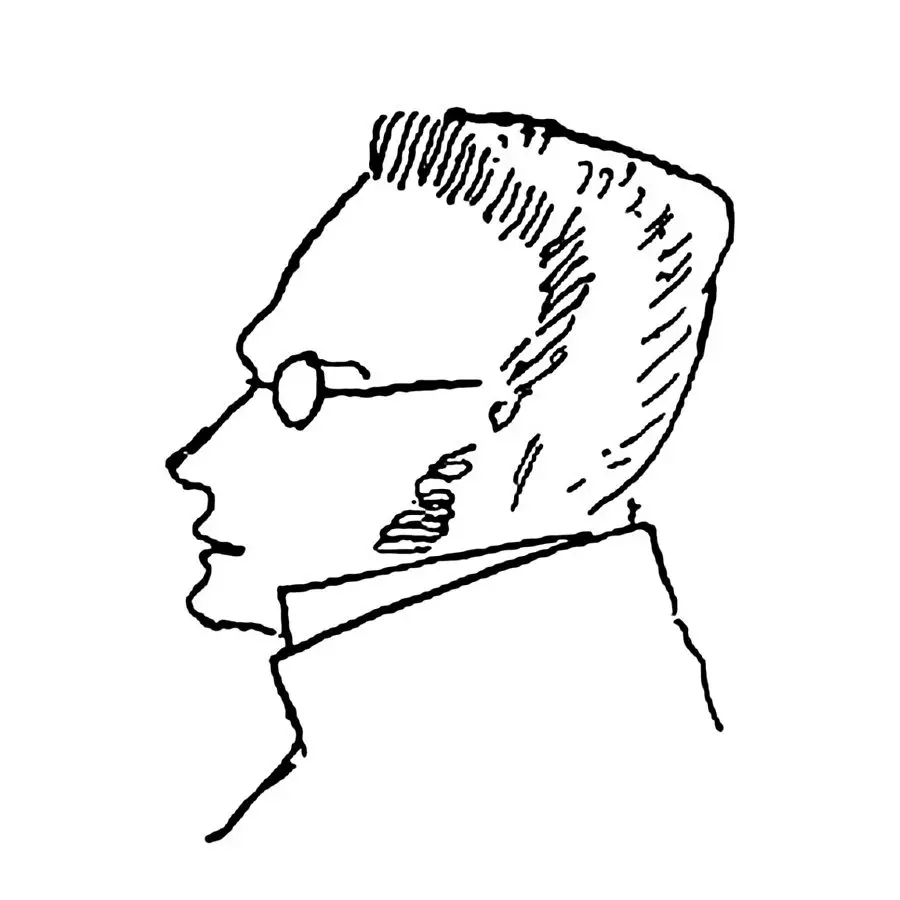
Is Baudrillard a philosopher?

Sara asked:

Is Baudrillard a philosopher?

Answer by Sanja Ivic

Yes, Jean Baudrillard is a philosopher, although he rejects fixed forms of identifications. Jean Baudrillard is often considered as a postmodern philosopher, whose work combines philosophy, social theory and cultural metaphysics. Although Baudrillard was associated with postmodernism, he didn’t identified himself with any particular discipline. The same can be argued for some other postmodern philosophers, who reject all kinds of classifications and sharp distinctions. Baudrillard’s work was influenced by Roland Barthes, Georges Bataille, Marshal McLuhan, Marcel Mauss, Jean-Paul Sartre, Fyodor Mikhaiylovich Dostoyevsky, Friedrich Nietzsche and Karl Marx.

Jean Baudrillard studied for a PhD in sociology and taught sociology at the University of Paris X in Nanterre. Because of the interdisciplinary nature of his work, Baudrillard is often characterized as both philosopher and sociologist. However, his work is closer to philosophy of culture than to sociology. In the later period of his life he was a Professor of philosophy of culture and media criticism at the European Graduate School.

In his earler works The Object System Baudrillard supplements Marxian critique of political economy by semiological theories of sign. In his later works Baudrillard has developed philosophy of the symbolic realm, which has the power to create and recreate the world. He develops this philosophy in his works: The Mirror of Production; For a Critique of the Political Economy of the Sign; Simulations; America; Symbolic Exchange and Death; The Transparency of Evil; Simulacra and Simulation; Seduction; The Illusion of the End; The Gulf War Did Not Take Place; The Perfect Crime; The Vital Illusion and Impossible Exchange.

“What Baudrillard calls ‘the symbolic’ (…) puts an end to all disjunctions between life and death, soul and body, humans and nature, the real and non-real. ‘The symbolic’ refers to a mode of thought beyond the binary oppositions of the terms of Western metaphysics and rationality, and in symbolic operations. These terms lose their distinctiveness and penetrate each other (…) He claims that all such metaphysical divisions contain the projection of an imaginary by its opposite by the privileged term. Thus, in the partition human/nature, nature (objective, material) is only the imaginary of the human thus conceptualized. (…) Each term of the disjunction excludes the other which becomes its imaginary.”[1]

Jean Baudrillard’s philosophy is based on the two main concepts ‘simulation’ and ‘hiperreality’. He coined the word ‘simulacrum’, which blurs the sharp distinction between the ‘real’ and the ‘unreal’. This distinction cannot be made in postmodern realities.

Reference

1. Kellner, Douglas, 1989, From Marxism to Postmodernism and Beyond, Polity Press: Cambridge, p. 105.


Discriminating on the basis of homosexuality

Cassie asked:

Is it wrong to discriminate on the basis of homosexuality?

Answer by Graham Hackett

By ‘discriminate’ I take you to mean different treatment of people on the basis of some real or perceived differences between them. This treatment could range from different distributions of goods to different people, all the way to denying the right to certain groups to live freely, or even to live at all.

You also ask ‘Is it wrong…’ which suggests that you are asking if there is any valid ethical justification for such discrimination. This would automatically rule out any defences of discrimination based on political or social convenience. It has never been easy to defend an argument for discrimination against a group on the basis that this would please those who are not members of the group.

You may remember the UK court case which was bought by a gay couple refused accommodation by a hotel owner who disapproved of homosexuality. In this case, the gay couple desired a service (a hotel room) which they were refused on the basis of their sexual orientation. The court upheld their claim that they were discriminated against, and that religious objections were not a valid reason for the different treatment.

There is nothing inherently wrong in the idea of discrimination. For example, it would not be difficult to construct an argument for discrimination in favour of a certain group (such as gays or blacks) on the grounds that this is a kind of restorative justice to compensate for past inequalities. This is the so-called ‘positive discrimination’. It is controversial, because discrimination in favour of group A might be interpreted as discrimination against group B, if we view the problem in a zero sum sense.

Nevertheless, an argument can be made that such positive discrimination is ethically justified.

It is difficult to see how a valid ethical argument could be made for discrimination against a group on the basis of sexual orientation (or colour). Those who discriminate often seem to tacitly acknowledge this by quoting other reasons for the discrimination (that homosexuals are prone to be pedophiles, or that black people are less intelligent and capable than non-blacks, etc). Bernard Williams wrote , in connection with colour discrimination

“If any reasons are given at all, they will be reasons which seek to correlate the fact of blackness with certain other considerations… such as insensitivity, brute stupidity, irreducible irresponsibility etc.” (The Idea of Equality, Proceedings of the Aristotelian Society LVI 1955-6).

We could easily rephrase this comment and make a similar observation for homosexuality. So many expressed views in favour of discrimination often masquerade behind spuriously concocted reasons. To quote Williams again;

“[T]he Nazi anthropologists who tried to construct theories of Aryanism were paying, in very poor coin, the homage of irrationality to reason.”

If we are to defend discrimination then we must be prepared

(a) To find, for every difference in the way people are treated, a reason for this difference;

(b) To say why the reason quoted is relevant to the case.

This is the approach suggested by Bernard Williams in the work cited. Clearly, it would be unacceptable just to say ‘I support discrimination against these people because their sexual orientation is different to that of the majority’, without also saying why this is a relevant reason for the difference in treatment. I believe that arguments for discrimination against gays would fail the relevance test.


Donald Trump conundrum

Caitlin asked:

My name is Caitlin Dewey and I’m a reporter at the Washington Post. I am quite desperate to ‘ask a philosopher’ something, so thought I’d reach out directly.

It’s a little silly, but bear with me here: You may have seen the news this morning that, yesterday, a journalist tweeted a fake quote and attributed it to Donald Trump as a joke. Donald Trump then retweeted the quote. My question now is: Has the quote become ‘real’? (Is anything on Twitter real?) I don’t know, really! But I’d be very interested in having a philosopher’s take on the subject.

Is there any way you or someone on your panel could ponder that and get back to me this morning? I’d really appreciate it. Thanks for your time!

Answer by Geoffrey Klempner

There is a simple logical answer to this.

There are two possibilities:

1. When Donald Trump retweeted the quote, he was referring to it or talking about it rather than stating the thought attributed to him. Typically, when doing this you would use quotation marks to show the difference. As in, ‘Look what someone attributed to me, ha ha, “Prime Minister David Cameron is the world’s greatest living philosopher”.’

2. When Donald Trump retweeted the quote, he intended to endorse it, even if the words did not come from him originally. In that case, he is stating the thought attributed to him. He is stating that he really thinks that, etc.

Note that in neither case is Trump claiming authorship of the original quote. In the first case he is quoting it, in the second case, he is stating it.

In Logic, the distinction in question is recognized as between ‘mention’ and ‘use’. (You can Google the ‘use-mention distinction’.) However, it is a distinction that is perfectly understandable outside the philosophy seminar room.

It appears that Trump was duped into thinking that he was the original author of the quote. He evidently agrees with it so this would be case 2.

First published online in The Washington Post as A metaphysical inquiry: If Donald Trump retweets a fake Donald Trump quote… does the quote become real? June 10th 2014


What is the meaning of a proper name?

Matthew asked:

What is the meaning of a proper name?

Answer by Eric DeJardin

Hello, Matthew! Thanks for the excellent question.

We might start, as is often done in philosophy, by defining our terms.

Let’s call an expression a ‘proper name’ if it’s (1) syntactically simple (i.e. the meanings of its parts don’t necessarily contribute to the meaning of the name, so e.g. the baseball team, ‘The Pittsburgh Pirates’ isn’t composed of pirates, and it need not include anyone from Pittsburgh), and it (2) at least purports to refer to some particular thing (with the qualifier ‘at least purports to refer’ added to countenance the possibility of proper names that arguably don’t refer, like ‘Zeus’).[1] And let’s say that the meaning of a sentence is determined by what’s involved in the act of understanding it, and that what it takes to understand a sentence is to grasp the conditions that would have to be satisfied to render it true. Finally, let’s say that the meaning of the expressions that sentences comprise, like proper names, consists in the contribution they make (when they’re used) to the meaning of a sentence.

We can now see that we’re not speaking about the meaning of a name in the sense that e.g. ‘Peter’ means ‘rock’.

So, we can now ask, what contribution do proper names make to the meanings of sentences that use them?

Puzzles about identity statements (inter alia) led Frege to argue that a name makes two contributions to the meaning of a sentence — its referent, i.e. the object to which it refers, and its sense, i.e. that which is contained in its ‘mode of presentation’ to the name user.[2] The two notions are related in that the sense of an expression determines its referent. So, a name’s referent contributes to the meaning of a sentence in which it is used insofar as it enables us to understand what conditions would have to be satisfied to render the sentence true — e.g. ‘John is 6 foot tall’ is true if the predicate ‘is 6 foot tall’ accurately describes the referent of ‘John’ — and a name’s sense contributes to the meaning of a sentence in which the name is used by providing us with a specific ‘way of thinking’ about the referent[3] (which is one way in which the somewhat obscure notion of a ‘mode of presentation’ can be understood) — e.g. the sense of ‘John’ may be ‘the manager of the Greenville Benny’s store’ (properly indexed to time and place) if that’s the manner in which you know John; and so if a predicate can be truly ascribed to the sense ‘the manager of the Greenville Benny’s store’, then a sentence using a name which expresses that sense is true.

So, as we just saw with Frege, the sense of a proper name can be cashed out in terms of a description of the name’s referent. Russell argued that all proper names in natural language are disguised descriptions, for if they merely referred directly to their bearers, then negative existential sentences containing them (e.g. ‘John doesn’t exist’) would be contradictory (since one would have to refer to John to succeed in denying his existence), and existential sentences containing them (e.g. ‘John exists’) would be tautologous (since, if the name ‘John’ succeeds in referring to John, then to go on to say of John that he exists is redundant); hence, Russell identified the meaning of a proper name with the definite descriptions that uniquely describe its bearer.[4] However, unlike Frege, for whom the sense of a name determines its referent, and so for whom a name acts as a referring expression, Russell’s descriptions don’t refer, but denote — that is, they act as quantifier expressions (i.e. expressions concerning ‘one’, ‘some’, ‘none’, ‘all’, etc.) that posit conditions that one object uniquely satisfies without thereby invoking that object (as a referring expression does).[5] Russell therefore rejects Frege’s notion that the meaning of a name is composed of its sense and referent. So, if ‘John’ disguises the description, ‘the manager of the Greenville Benny’s store’, then the name is reduced on a Russellian analysis (when used in a complete sentence) to ‘there is at least one manager of the Greenville Benny’s store, and there is at most one manager of the Greenville Benny’s store’, which is a conjunction of sentences that lacks any referring expressions (excepting ‘Greenville’ and ‘Benny’s’, which aren’t relevant here), and hence that renders sentences which use the name ‘John’ true only if the denotation of the description both exists and satisfies whatever is predicated of it.

Kripke argued, contra Russell (and, though this is disputed, contra Frege), that the meaning of a proper name cannot be identified with its associated description (or cluster of descriptions).[6] Why? Among other reasons, he argued that names and descriptions exhibit different properties in modal contexts (i.e. contexts concerned with necessity and possibility); so, while it seems necessarily true that George Washington was George Washington (N.B. not that it’s necessarily the case that George Washington was named ‘George Washington’, which is a statement that first uses and then mentions the name, but that George Washington was George Washington, which is a statement with two uses of the name), it doesn’t seem necessarily true that George Washington was ‘the first president of the United States’ (e.g. he may have been killed during the Revolutionary War, etc.). Rather, like Mill before him[7], Kripke argued (with qualifications and a bit of tentativeness) that the meaning of a proper name just is its bearer, and that names get hooked up to their bearers via a causal chain of use that originates in a kind of (formal or informal, or even accidental) ‘baptism’ in which the object is given its name.

By my lights, Kripke’s arguments are decisive, though they are not without a host of problems of their own (as is the case with most philosophical arguments; it seems to me as if the position one ultimately adopts is as much a consequence of one’s judgment about which problems one can live with as it is a consequence of one’s judgment about which arguments are the strongest). For example, if the meaning of a name is its bearer, then what role does the bearer itself play in a sentence that contains the name? Is the bearer a proper part of the proposition that the sentence expresses, and if so, how can an object be a part of a proposition? What about possible discrepancies in the causal chain that links information about the object, via its baptism when it’s ‘given’ a particular name, to the subsequent users of the name — how are they to be handled? And does it follow from this view that we cannot refer to abstract objects (supposing there are any), like numbers or propositions, since they are by definition causally effete? Further, contemporary Russellians and Fregeans have responded vigorously to arguments like those adduced by Kripke. Be sure to read their responses (e.g. see the appendix to chapter 5 of Dummett’s Frege: The Philosophy of Language for a broadly Fregean response to Kripke, or Nelson’s article ‘Descriptivism Defended’ for a broadly Russellian response to Kripke); in the end, you may come to agree with them. Whatever you do, work through the arguments on your own to discover which ones you think ultimately succeed, if any; and if you conclude that none are successful, see if you can improve upon them, or try to work out your own theory. Getting at the truth is, after all, what we’re all ultimately after!

References

1. Reimer, Marga, “Reference”, The Stanford Encyclopedia of Philosophy (Spring 2010 Edition), Edward N. Zalta (ed.), http://plato.stanford.edu/archives/spr2010/entries/reference/.

2. Frege, G., 1952, “On Sense and Reference”, in P. Geach and M. Black, eds., Translations from the Philosophical Writings of Gottlob Frege, Oxford: Blackwell, pp. 56-79.

3. Evans, G. 1982, The Varieties of Reference, Oxford: Blackwell.

4. Russell, B., 1918, “The Philosophy of Logical Atomism” in The Philosophy of Logical Atomism, D.F. Pears (ed.), La Salle: Open Court, 1985, 35-155.

5. Neale, S. 1990, Descriptions, Cambridge, MA: MIT Press Books.

6. Kripke, S., 1980, Naming and Necessity, Cambridge, MA: Harvard University Press

7. Mill, J., 1973, “A System of Logic, Ratiocinative and Inductive”, in J. Robson, ed., The Collected Works of J. S. Mill (Volumes 7-8), Toronto: University of Toronto Press.


Can a good Confucian be selfish?

Casi asked:

Could one be selfish and a good Confucian at the same time?

Answer by Tony Boese

I would say that one definitely cannot be selfish and a ‘good Confucian’ at the same time.

There are four prime ethical precepts in Confucianism: Ren, Yi, Li, and Zhi. Of these, Ren and Yi are the cardinal moral values. Indeed, though it is relatively hard to run afoul of Confucianism, violating Ren and/ or Yi would be the most direct route towards doing so. These four become Wuchang, or the Five Constants, with the addition of Xin.

A somewhat simplified explanation of these is as follows: Ren is the obligation to be altruistic and humane towards other individuals. Yi is the obligation to remain righteous in action, and to maintain a disposition of moral goodness. Li is they system of norms and propriety for everyday action. Zhi is the ability to accurately discern what is right and good, and what is the inverse, in the actions of others. Xin is the standard of integrity in thought and action.

None of these are particularly pro-selfishness; however, Ren and Yi are quite clearly diametrically opposed to selfishness. That selfishness is misaligned to altruism should be relatively self-evident provided one knows the meanings of the words in play. Righteousness, in a vacuum, might not be clearly opposed to selfishness. One could somewhat easily frame a selfish act or disposition as still honorable or in keeping with some take on a moral code – especially by an consequentialist. However, this is largely a cheat. In a Confucian context, righteous action does not include selfish action.

A perusal of different parts and parcels of Confucianism furthers the case that selfishness and proper Confucianism are inconsistent. Consider the classical Sizi, which are four virtues of high esteem in Confucianism. They are: Zhong (or Loyalty), Xiao (or Filial Piety), Jie (or Continency), and Yi (Righteousness). Loyalty is simply and obviously not a selfish thing. Neither is Filial Piety. Here we see righteousness again, and the same analysis will apply. Indeed, the only aspect of Confucianism that would get even somewhat close to a selfish thing is the sexual bits of Continence in a ‘keeping yourself from the world’ sort of way. This, however, is an undesirably narcissistic and generally weak attempt to shoehorn a pro-selfishness reading of Confucian morality.

Not to over-hone the point, but even in those more contorted and bastardized applications of (allegedly) Confucian precepts don’t get as far as selfishness. I refer to the political uses of Confucianism, principally an emphasis on Nationalism and Anti-capitalism as seen in Maoism. Though not as commonly known as the general tenets of Confucianism in a religious and philosophical context, it is no secret that Confucianism is also a political school of thought. It, mixed with the Legalism, which it at first replaced, is what ultimately lead to the development and flourishing of Maoism.

At first blush, Nationalism might seem to lean fairly heavily into the selfishness camp. In Nationalism, there is most assuredly a preference to and glorification of ‘us’ and ‘ours,’ and as such one might think of the whole population as a selfish thing; however, this hardly gets one though to interpersonal selfishness. Indeed, Nationalism asks each citizen to put the ‘us’ over the self, which is a very non-selfish position. Anti-capitalism is pretty much anti-selfishness. I grant that equating capitalism and selfish practice might not be perfectly noncontroversial, but I think the similarities are enough to maintain the link for our purposes here.

Honestly, even if one could make a cogent argument that implicated some aspect of Confucianism in supporting selfishness, the argument would not be sincere nor would it be a context-sensitive understanding of the matters at hand. For instance, an argument that says there is no selfishness, and that altruism is done for the warm-and-fuzzies and this is actually selfish at heart might appeal to intuition and experience. However, this is looking too much at the trees and thus missing the point that his would not be true of a good Confucian, and is probably not an argument that would even occur to a good Confucian, because a good Confucian would be altruistic with or without warm-and-fuzzies.


Tree in the forest revisited

Christine asked:

If a tree falls in the forest when nobody is around, does it make a sound?

Answer by Peter Jones

Hello Christine,

There are a few answers to this question depending on what it is supposed to asking. Here are some of them.

A physicist would answer no, of course not. A pressure wave only becomes sound when consciousness works it magic and transduces it into a series of experiences. It is even questionable whether a falling tree makes a sound even when there is someone around, since the only evidence we have for sound is first-person reports.

A panpsychist might say yes, of course it does, because there is always someone around. Were there not, there could be no forest in the first place. They might also answer no, since the somebody who is around might not have ears.

A sceptic might say that the question is incoherent. It assumes the reality of the forest, an image on our retina, and thus also the reality of the pressure waves, an image on our eardrum, then questions whether there is a pressure wave when a tree falls that would have been heard as a sound had somebody been around to hear it. The answer is obviously yes. If we doubt that the sound is there, even in its potential as a pressure wave, then we might as well ask whether the forest is there when nobody is around, or whether our boyfriend is there when we’re not around.

A mystic might say, with the usual ambivalence, that it would all depend on what level of analysis we are working at. All the above answers would be correct, and there would be more.

If it is a question about logic, about what we can learn by simply working it out, then the unfalsifiability of solipsism on its own prevents us from reaching a firm conclusion. We can learn from the question, but we cannot answer it except by reference to a tautology. If the forest is there then so must be the pressure wave, and the sound may or may not be there depending on whether anybody is around.

My own view is that it is not a challenging question. Once we assume the existence of the forest we must assume the existence of pressure waves with the potential to be heard or not heard. Clearly if there is nobody there they will not be heard as sound. This is not a metaphysical problem but a muddled question.

For a more metaphysical question we would have to drop the assumptions and ask: Is anything at all there when nobody is around? Is anything there even when somebody is around? What is this power that we have to hear sounds? And who is it that is listening? And so on.