Puzzle about listening to a tune

Nigel asked:

This is a puzzle about the way human memory works. If I’m listening to a tune, how is it that I can hear it as a tune without replaying it over and over in my head every second? How does memory keep alive the sequence of notes and the time gaps in between?

Answer by Jürgen Lawrenz

The answer to this is fairly simple. The same as you can remember the toothache you had yesterday, the strong coffee you drank, or the lines of a poem you memorised, so the sensory stimulation of that experience is imprinted on your memory and available for recall. There is nothing mysterious about it: All these events push a pathway through the ensemble of neurons which are responsible for their evaluation. Remembering is to re-run that pathway, using a specific trigger.

Sometimes your memory may fail; which may be the case when the trigger for the association of one tune is identical to another and confounded, so that a different tune pops into your head. In part, it depends on how much reinforcement you applied to the tune, or else how powerfully you were affected by it.

The more intriguing issue, however, is your emotional involvement. In the living environment, the physical as well as sensory impact is usually strong and unfiltered — you are having an aesthetic experience. The recall of your toothache, coffee or tune, however, is emotionally quite weak. This is because the qualitative features (‘qualia’) can be remembered, but not ‘played’. You are not having an aesthetic experience; and your emotion belongs to the present, not the past when the occurrence actually transpired. It is why we can reliably (for some time) compare the taste of yesterday’s coffee, but not experience it. Also why we go repeatedly to concerts to hear the same tunes sung by different artists. It is why (finally), attending a concert, listening to a recording, or remembering one or the other, are four qualitatively different kinds of experiences. That’s where the real mystery lies!


Answer by Geoffrey Klempner

The question is basically the same, whether we are talking about listening to a tune, or watching a football match (English or American). Remembering a sequence of events (musical notes, or movements on a football field) is more than just the ability to recall any particular event. You have to ‘hear’ the notes or ‘see’ the movements as part of a single extended sequence, with each event in the sequence gaining its ‘meaning’ from the whole.

This is a question Husserl considered in The Phenomenology of Internal Time-Consciousness. Here’s a short extract from the Stanford Encyclopedia article on Edumund Husserl:

“Finally, we should note that on Husserl’s view there is a further important dimension to perceptual experience, in that it displays a phenomenological deep- or micro-structure constituted by time-consciousness (Husserliana, vol. X, XXXIII; also see Miller 1984). This merely seemingly unconscious structure is essentially indexical in character and consists, at a given time, of both retentions, i.e., acts of immediate memory of what has been perceived ‘just a moment ago’, original impressions, i.e., acts of awareness of what is perceived ‘right now’, and protentions, i.e., immediate anticipations of what will be perceived ‘in a moment’. It is by such momentary structures of retentions, original impressions and protentions that moments of time are continuously constituted (and reconstituted) as past, present and future, respectively, so that it looks to the experiencing subject as if time were permanently flowing off.”

http://plato.stanford.edu/entries/husserl/

To me, this does not do much more than label the problem. But the thing to note is that the question about listening to a tune is wrongly posed, in that it seems to imply that there is a special problem in this case, whereas in fact human memory is fundamentally temporal (in its ‘micro-structure’) and thus different from the way that a tape recorder or computer ‘remembers’.


Thought experiments revisited

Nathan asked:

When we carry out a thought experiment, we can’t test the underlying philosophical hypothesis with any empirical data. So, besides logical flaws, what are the criteria for evaluating a philosophical hypothesis? And how can we benefit from thought experiments in our daily lives?

Answer by Massimo Pigliucci

Thought experiments are a type of argument, inviting us to consider the logical, and sometimes the empirical, implications of certain premises. They tend to invoke vivid images, and are therefore often memorable, but they are certainly not limited to philosophy, since scientists have also proposed a number of them, some of which have become famous instances of the genre.

Consider, for example, Galileo’s imagining what would happen if we dropped a heavy object from the height of a tower, tethered to a less heavy one. According to the then dominant Aristotelian physics, the heavier object – on its own – should fall more rapidly than the lighter one. But once the two are connected, Aristotelian physics predicts both that they should go faster (the combined objects are heavier than either of the two considered separately) and that they should go slower (the lighter one acting as a drag on the heavier one). This engenders a logical contradiction, showing that there must be something seriously wrong with Aristotelian physics (indeed, there was! And Galileo’s efforts paved the way for Newtonian mechanics).

Or think of Einstein’s famous thought experiment in which he imagined himself riding a wave of light, which led to his formulation of the theory of Special Relativity. And then, of course, there is quantum mechanics and Schrodinger’s cat, who is neither dead nor alive until an observer interferes with the experimental apparatus. And so forth.

While scientific thought experiments are meant to bring about insights ultimately concerning empirical matters (the behavior of falling bodies, the speed of light, or what matter does at very small scales), philosophical thought experiments are more concerned with conceptual issues, and are therefore constrained more by coherence than by empirical evidence. (This, incidentally, is a major distinction between science and philosophy.)

For instance, John Searle proposed the famous Chinese Room thought experiment, in which he invites us to reflect on what exactly produces meaning, suggesting that there must be more to it than the manipulation of symbols of which a computer – as currently understood – is capable. Then there is the Experience Machine thought up by Robert Nozick, meant to question the idea of ethical hedonism (if all that matters in life is pleasure, would it be all right to just spend all your existence inside a machine that gives you pleasure?). We also have Hilary Putnam’s ‘twin earth’ experiment, which is concerned with the relationship between meaning and reference in philosophy of language, and John Rawls’ idea of a ‘veil of ignorance’ characterizing an imaginary original position from where we get to debate how to structure a just society.

How do we test a philosophical thought experiment? We don’t, because they are not meant to be equivalent to scientific hypotheses. They are, as I said, arguments, that is examples of reasoning from certain premises to certain conclusions. Arguments can be accepted or rejected following two criteria: the soundness of their premises, and the validity of their structure. With respect to the first, a premise may be unsound, meaning that it is false. If so, even if the argument is well constructed (i.e., it is formally valid), its conclusions have to be rejected. With respect to the second, one can have an invalid argument (i.e., its form is incorrect) based on sound premises; also in this case the conclusion ought to be rejected.

Even when a thought experiment succeeds, because its premises are sound and its structure is valid, we may still not buy into its conclusion. That is because philosophical thought experiments are concerned with conceptual (or logical) coherence, and there often is more than one conceptually coherent way of describing reality. If so, only empirical data can tell us which of a number of logical scenarios actually happens to be true. (That said, it is still instructive to consider logically coherent alternatives, because they tell us how things could have been.)

As for relevance to daily life, that depends. Einstein’s thought experiment, or Schrodinger’s cat, are hardly going to be helpful in paying our bills or deciding whether to take a new job or not. But they are still crucial to enhance our understanding of the world. Some philosophical thought experiments are even more remote from daily preoccupations, for instance when they deal with issues of metaphysics. But a number of them concern very practical matters indeed, such as ethics, justice, and the sort of life we ultimately want to live.


Answer by Craig Skinner

I enjoyed Massimo Pigliucci’s stimulating and informative answer, and agree with nearly everything he says.

But I have one grumble.

As with nearly all commentators since Galileo, he gives Aristotle’s physics an unfairly bad press.

Speaking of Galileo’s thought experiment of the fall of a heavy object tethered to a lighter one, he says:

‘Aristotelian physics predicts both that they should go faster and… slower… a logical contradiction….something seriously wrong with Aristotelian physics’.

Not quite.

Aristotle’s physics is a coherent system of fluid mechanics within the then accepted frame of reference (movement in a system of concentric spheres of increasing density towards the centre). Thus, earth moves down in air and water; water moves down in air, air moves up in water, intermediately dense things move up in one medium and down in another eg wood falls in air, rises in water, rests on earth. A bigger object will fall faster than a smaller of equal density (and shape) because the smaller one’s greater surface/volume ratio produces more drag, impeding its velocity. He had a go at quantifying all this but maths was not his strong point.

And so, were Aristotle to return and hear of Galileo’s thought experiment, he would, on learning also that we had invented flying machines, invite us to simultaneously drop, from a height of 50 stadions, a big metal sphere and a smaller one. He predicts that the bigger one hits the ground first. And he is right. And if the two spheres were tethered together, but stayed separate objects, each subject to the drag effect of the air, the smaller one would indeed retard the bigger. Aristotle also predicts that an object falling through air or water will reach a maximum speed, and indeed things dropped from a great height do just this. It’s no good Galileo complaining that he meant falling in a vacuum. Aristotle simply replies that his physics was about the real world where things fall through air or water. Also, he would add, the idea of a vacuum is incoherent because, in it, a falling object would reach infinite speed. Right again — an object accelerating in vacuo in a gravitational field indefinitely would reach arbitrarily high speed. It’s just that in the empirical world, as opposed to the idealized situation, the object must ultimately hit the body which is gravitationally attracting it.

Aristotle’s physics lasted 2000 years, not because of dogma slowing science’s progress, but because it was a good theory, until Kepler, Galileo and Newton came up with better. Their framework, absolute space and time, in turn, eventually gave way to Einstein’s relativistic spacetime. And Einstein’s theory doesnt work below the Planck scale, and will give way to yet better theory, stringy, loopy or otherwise, in due course.

Aristotle has a place in the line of succession of great physicists. Just read Galileo’s Dialogues Concerning Two Sciences to see how deeply indebted Galileo is to him. And for a modern physicist’s view try Rovelli C (2014) Aristotle’s Physics: a Physicist’s Look. PhilSci Archive (on line at philsci-archive.pitt.edu)


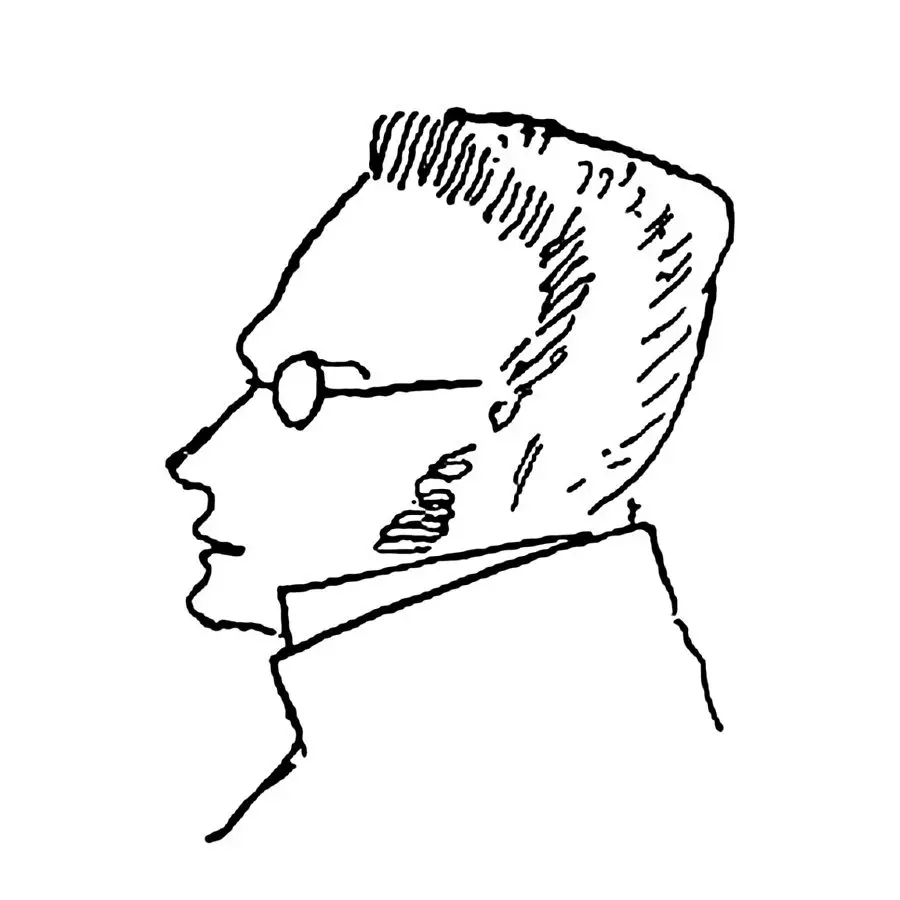
The philosophy of Max Stirner

Scott asked:

How do you rate Max Stirner?

Answer by Martin Jenkins

Max Stirner, the alias of Kasper Schmidt (1806–1856) was a member of the Berlin Doctor’s Club. Here, along with other ‘Young Hegelians’ such as Bruno Bauer, Ludwig Feuerbach, Arnold Ruge and of course, Karl Marx and Frederick Engels, they discussed and radically developed Hegel’s philosophy and its applications to socio-political issues. Stirner published The Ego and its Own in 1844 and this text can be understood as the development of Hegel’s philosophy to its extreme.

Christian Spooks

A large proportion of Stirner’s book is composed of an attack on the philosophy of his fellow Young Hegelian Ludwig Feuerbach. In his Essence of Christianity, Feuerbach analysed the Christian Religion. His central thesis was that human beings had abstracted and alienated their essence by positing it in a creation of theirs called God. The creation took on greater reality to become the cause of all actual things including the now subordinate human being: the creation became the Creator.

Stirner vehemently attacked this humanism as being in actuality, a perpetuation of the Christian religion and thus the continued estrangement of human beings from themselves. In his words, Fixed Ideas or Spooks still informed people’s thinking and acting.

“And after the annihilation of faith Feuerbach thinks to put to the supposedly safe harbour of love. ‘The first and most highest law must be the love of man to man. Homo Homini Deus est – this is the supreme practical maxim, this is the turning point of the worlds History’. But properly speaking only the god has changed………to homo as Deus.” (P.74)

Unselfish, other regarding actions are to be approbated as good and ‘selfish’ actions are condemned as contrary to the divine love between human beings. These Fixed Ideas become our master, categories which occupy our being prioritising an alien abstraction over and against our own interests. Feuerbach’s radical solution to the estrangement of humanity from itself in Religion actively perpetuates the estrangement; albeit in a humanist and secular guise.

The same themes Stirner identified in Feuerbach are present in political philosophies. Spooks still seek to determine how we think and act, they occupy and attempt to shape our ontology in conformity (a theme later examined in depth a hundred and so years later by Michel Foucault).

With Political Liberalism, the State is the Spook that endeavours to define what it is to be a human being. After the demise of Absolute Monarchies, the concept and practice of Citizenship is observed. As Stirner writes:

“The commonality or Citizenship is nothing else than the thought that the State is all in all, the true man and, that the individual’s human value consists in being Citizens of the State.” (P. 128)

Each citizen is to recognise and promote the welfare of the whole, to make the ends and interests of the State his/ her own interests. The concept of the ‘General Will’ as espoused by Jean Jacques Rousseau accurately captures this position. Here the interests of the Community or State as opposed to particular or sectional interests, are to be established and furthered by the stated consensus of the citizenship; this becomes law to which citizens must obey in their capacity as subjects. Hence the rational citizen transcends his/ her irrational particularity to establish the interests of the State. In doing so, the true, rational and free nature of humanity is realised. The Citizen/ State alone is the true human being, it commands and prescribes what is right and wrong; any other power such as the individual will or personality is judged as ‘Un-Man’, irrational, criminal, out-law. Again, Christian principles such as mutual love, self-sacrifice for some greater thing are present albeit in a supposedly rational and secular guise. Accordingly, the individual is reduced to a mere instrument of society, shaped, moulded and thereby limited by society’s needs as prescribed by, for example, its education system.

“…never does a State aim to bring in the free activity of individuals but always and only that which is bound to the purpose of the state.” (P. 298).

Also:

“The State wants to make something out of man, therefore, there live in it only made men, everyone who wants to be his own self is its opponent and is nothing.” (P. 299)

Again, human beings are estranged from themselves by means of a posited essence, this time the concept of the Rational and Free Human being, the subject of Citizenship. This is, for Stirner, another Spook.

Social Liberalism concerns itself with wealth and the ownership of property and entails Stirner’s understanding of Socialism/ Communism. Whereas Political Liberalism defines human beings as political citizens and nothing more; Social Liberalism is a response to the inequalities and injustices of capitalism. Its consequent diagnosis is the abolition of private property. Property will become the common property of the State/ Society. ‘Neither command nor property is left to the individual; the state took the former, society the latter.’ (P. 155).

Whilst recognising that Liberal property relations leave the average man propertyless, Stirner is highly critical the revolutionary prescriptions of Socialists like Pierre Proudhon.

Common Ownership of property merely changes the relation of the ownership of property, it does not abolish ownership. For it prevents any individual from owning property, so in theory all are owners but no one has anything. The collective becomes the new master of the ‘I’. Further, like Feuerbachian Humanism and Political Liberalism, Socialism/ Communism is a continuation of Christian ways of thinking.

“When the law says ‘The King is proprietor… of everything… he has potestas and Imperium over it. The Communists make this clearer by transforming that imperium to ‘the society of all’. Therefore because both are enemies of egoism, they are on that account Christians, or more generally speaking, religious men – believers in ghosts, dependents, servants of some generality (God, Society etc). In this too, Proudhon is like the Christians when he ascribes to God that which he denies to men. He names Him the proprietor of the earth. Herewith he proves that he cannot away the proprietor as such; he comes to a proprietor at last but removes him to the other world. Neither God nor Man (human society) is proprietor, but the individual.” (P. 331)

People will become labourers for the common good and more, will be understood as servants for the community where each labours for the other as labour becomes a defining virtue of the human essence, of socialist humanity. ‘The state will provide all’. This is another example of the self-sacrifice and abrogation of the individual for a higher ideal. In this instance communist society is the Ideal but, for Stirner it remains within and is a reiteration of Christian categories of thinking and being.

Unique Ownness, Power, Union of Egos

Stirner’s remedy is for the Ego to simply stop recognising such Spooks. Thereby, the estrangement of humanity from itself is negated and a return to the human as human as itself occurs, as Ego. It is not a matter of seeking Freedom as usually sought by political and social movements. Stirner challenges the concept of Freedom as being negative, it is always about being free from something. It is also relative and there is no substantive state of Freedom – this is a Christian concept evoking a final state, another world such as heaven which is free from everything. In reality, new relations of power replace the previous but they still remain coercive in some capacity. Besides, what is at the basis of any claim for freedom is the ego. The ego is my own, it is me as the owner of my Ownness. It is at the basis of all I do. I am Unique, no one else can be me, no-one else can perceive things as I do. At the same time I am not who I am. The ego is transcendental, a creative nothingness which is not identical with what it owns, with what it does. This continues the theme of the transcendental ego in German Idealism. It is epitomised by Fichte’s instruction to his students ‘ to think the wall in front of you. Now think about that which thinks…’ The Creative Nothing is the real basis of all social intercourse.

There is no objective ‘Right’ or morality – these only exist within Christian and crypto-Christian paradigms. There is only Power or might which facilitates what the ego can do, can possess, can retain.

“What you have the power to be, you have the ‘right’ to. I derive all right and all warrant from me; I am entitled to everything that I have in my power.” (P. 248).

In essence, it is a matter of ‘might is right’. If I choose to help other people, it is not because I am compelled to by any mythical Spook of morality in my head such as duty, right, ought; I do it because I choose to as it benefits me in some capacity. Does this entail the collapse of a society of peoples? Stirner maintains it does not as individual ego’s can associate with others in furtherance of their interests in a Union of Egoists. This is a purely voluntary association and the ego is a member only insofar as his/her interests are being satisfied. ‘Only in the Union can you assert yourself as unique; because the Union does not possess you but you possess it or make it of use to you’ (P. 415)

To the egoist, only its history has value. It wants to develop itself and not ‘Man’, ‘Society’ or any other Spook. The Egoist is not a tool to be used by God, Society etc; it recognises no calling and it lives himself out ‘regardless of how well or ill humanity fare’. (P. 489)

“I am the owner of my might and I am so when I know myself as unique. In the unique One, the owner himself returns into his creative nothing, of which he is born. Every Higher essence above me, be it God, be it Man, weakens the feeling of my uniqueness And pales only before the sun of consciousness. If I concern myself for myself, the Unique one the my concerns rests on its transitory, mortal creator who consumes Himself and I may say: All things are nothing to me.” (ibid)

Conclusion

Stirner’s attack on the Christian religion and its secular derivatives within an Hegelian philosophical paradigm is certainly creative and innovative. Like Nietzsche, he saw ‘modern ideas’ as a continuation of themes central to Christianity such as community, equality, self-sacrifice and the like. His solution to these issues – Egoism – although attractive in its extremism, would be unworkable. In all probability, it would entail the bellum omne contra omnes as Hobbes contended the state of nature to be in his Leviathan. Power and might of the Ego would be the dynamic of life. An ironical that Hobbes the materialist and Stirner the extreme Hegelian Idealist both arrive at the same conclusion, a conclusion that horrified Hobbes but apparently one which Stirner recommends. The Union of Egoists would essentially be a gang, a tribe and the conditions they operate in not unlike failed states in the world that we witness at the moment. It is highly unlikely that individualist egoism could prosper here, rather a subordination to gang leaders, to a tyranny of arbitrary power.

Many interpretations of Christianity would not emphasise those elements Stirner is so critical of. Many advocates of capitalism find in the Christian Bible, strictures that justify the acquisition of wealth, its consequent inequality and certainly do not draw socialistic conclusions. So Stirner’s attack on Christianity does not necessarily follow.

If the Ego can do what it wants, then say a promise made yesterday does not have to be maintained today. (Indeed, if all morality is a spook then promises would be impossible) As such, social co-operation would be impossible as there would be an absence of reliability and, of trust. The existence of a society would, I believe be impossible. To avoid this, co-operation would have to be practiced in for example, the Union of Egos, co-operation whereby compromises would have to be made by the Ego – such as observing a promise. The Ego would be doing something it doesn’t want to do which, is contrary to what Stirner holds the Ego to be. Further, some form of morality would have to be invoked for social norms – such as promising – to be possible. As Stirner denies morality, this would prove impossible.

Stirner’s reduction of all action by the Ego to its interests is little better that a tautology: I do things because I do them. It is the Self or Ego which acts – yes, how can it be otherwise? Such interests might not be in my interests – self-sacrifice does occur, people sacrifice their lives for others – this can hardly be in their own interests! Further, many actions are done without a prior calculation deciding how they might or might not be in my self interest. This area is far more complex than Stirner allows.

Evolutionary biology and anthropology provide evidence that empathy and co-operation are at the bedrock of ‘morality’. Co-operation ensured human beings survived as a species. This is the antithesis of Stirner’s position, if his strictures were adopted, it is unlikely human beings would have survived at all. Also, if co-operation and all the values Stirner attacks find their basis in human evolution, they do not have their origin in the Spooks he attacks. Therefore, his attack on Religion etc as the cause of such values is misplaced.

The Ego as unique etc, appears to come from nowhere and needs nothing external to develop as an Ego, as a human being. It is a-social. This is a point noted by Karl Marx after he had read The Ego and Its Own. The Sixth Thesis on Feuerbach states that ‘the essence of man is no abstraction inherent in each human being, it is in its reality, the ensemble of the human relations’. Marx took from Stirner the point that contra to Feuerbach, there is no human essence or nature (hence he ceased to be a Feuerbachian that he was as evidenced in the 1844 Economic and Philosophical Manuscripts) but, internal content is acquired from without, from society. This is the point of Stirner’s identification and criticism of the Spooks of Christianity etc which are internalised by human beings. Yet where Stirner reduces the self to a Creative Nothing, Marx maintained that as the content of human interiority is acquired from a society, the point is therefore to change society and not to negate it with and by a Creative Nothing of the Ego. Indeed, the Creative Nothing would be impossible without the internalised content acquired by social interaction, by socialisation. In this sense, Stirner’s Creative Nothingness is a non-starter. A Transcendental Ego could be retained, an Ego that transcends and is apart from social content (as Sartre demonstrates in Being and Nothingness) but which simultaneously, needs that content to be an Ego. Stirner maintains it does not, which is absurd.

As an exercise in the development of Hegelianism, I think Stirner’s work is extremely interesting. It also contains insightful critiques of modernity which have been taken up by Individualists, by anarchists of right and left and as mentioned above, insights which can be found in the works of ‘critical ontologist’ Michel Foucault concerning social categories of sexuality, gender, mental health and so on that are imposed on the human subject. Karl Marx was so perturbed by Stirner’s book that he wrote The Holy Family and more importantly, The German Ideology to refute Stirner. Taken literally and implemented, Stirner’s Egoism would be, to say the least, impractical.


Bernard Williams ‘The Idea of Equality’

Amanda asked:

I’m struggling with Bernard Williams ‘The Idea of Equality’. Can anybody help?!

Answer by Eric DeJardin

In ‘The Idea of Equality,’ Williams aims to show how we can arrive at robust conceptions of factual and normative equality — viz. equality of respect (ER) and equality of opportunity (EO) — that can help ground political equality by ‘build[ing] up’ notions of equality that, in an attempt to avoid obvious falsehoods and absurdities, are too weak and insubstantial to do the work themselves.

Williams states that moral claims ‘arise from’ certain human characteristics. When some human characteristic is universal, therefore, universal moral claims, and hence universal moral obligations, arise from it. If universal moral claims are denied on irrelevant grounds to any people or groups of people in whom the universal characteristics that ground them are instantiated, then they are being subjected to unequal treatment in the moral sense.

One universal human characteristic, Williams claims, is the ‘desire for self-respect,’ by which he means ‘a certain human desire to be identified with what one is doing, to be able to realize purposes of one’s own, and not to be the [involuntary] instrument of another’s will.’ It is the universal desire, and the basic human facts that make it possible, that constitutes ER in the factual sense, and the universal claim that constitutes ER in the normative sense. But what does the notion of ‘respect’ itself involve?

According to Williams, the content of the notion of respect can be glimpsed if we contrast viewing others from ‘the technical point of view’ (TPOV), I.e. identifying them with their social roles, successes, failures or status, with viewing them from ‘the human point of view’ (HPOV), I.e. seeing them, or attempting to see them, as they see themselves, their social roles, and the world. To treat one with respect involves making the ‘effort at identification’ that seeing someone from HPOV presupposes. It is here that Williams explicitly links up the notion of respect with the notion of equality by pointing out that social roles function as ‘conspicuous bearers of… inequality,’ and hence insofar as treating others with respect involves discounting their social roles as we consider them, it removes a substantial obstacle to seeing people as equals.

But this is not all that the notion of respect involves, for one could make an effort at understanding others from HPOV while degrading or exploiting them, a situation which involves acts or attitudes that any coherent notion of respect would seem to preclude. Further, in some cases, as Williams notes, those who are degraded or exploited cannot clearly perceive their degradation or exploitation; viewing others from HPOV, therefore, is a necessary but not sufficient condition of treating them with respect. Hence, to satisfy the obligation of respect, we need to go further than HPOV and adopt towards them an attenuated version of the ideal observer stance, seeing others not merely as they see themselves, but rather as they would see themselves if their self understanding hadn’t been contaminated by their social roles and the social structures in which they exist.

But from this it follows that people can be more or less conscious of this contamination, and Williams uses this fact to bridge the gap between the moral obligations that ER imposes on people and the political implications of ER. If ER both obligates us to see others from HPOV as ideal observers and prohibits us from degrading or exploiting others, then, Williams argues, the ‘ideal of a stable hierarchy must… disappear.’ This destabilization is enhanced when it is coupled with the notion that the role of people within a social system is ‘[a] product of the social system itself.’ So, if ER precludes degradation and exploitation, it precludes the use of propaganda and social conditioning to suppress the social awareness of the ‘lower’ orders that the enlightened hierarchical idealist must support if a stable hierarchy is to be maintained; indeed, ER on the contrary requires an obligatory enhancement of social awareness. But then if the moral obligations of ER are carried through consistently, Williams argues, we see in the consequent incoherence of the notion of a hierarchical system that is at the same time stable, enlightened and an advocate of ER, that we’ve made a significant move towards grounding political equality.

After considering ER, which is concerned with ways in which people are equal, Williams moves on to consider EO, which is concerned with ways in which people are unequal, and hence, unlike, ER is also concerned with ‘the distributions of, or access to, certain goods to which their inequalities are relevant.’ Williams begins by distinguishing inequality of need, and the goods which need ‘demands,’ from inequality of merit, and the goods which merit ‘earns.’ The ‘proper ground’ for the distribution of needed goods is, Williams argues, the need itself, but the proper ground for the distribution of merited goods is not necessarily merit alone, for unlike the case of needed goods, it’s not the case the only those who earn merited goods can be said to desire them. We must consider, then, with merited goods, ‘not only… the distribution of the good, but also… the distribution of the opportunity of achieving the good,’ the latter of which ‘can be said to be distributed equally to everybody.’ Questions about EO arise when we consider merited goods that are scarce, and that many people from all ‘sections of society’ desire. Hence, EO is fundamentally concerned not only with who acquires merited goods, but with who is excluded from acquiring merited goods, and so with the proper grounds of exclusion from access to them.

After considering a number of formulations of EO, Williams concludes that the proper grounds of exclusion from access to merited goods (1) must be ‘appropriate or rational for the good in question,’ (2) should be ‘such that people from all sections of society have an equal chance of satisfying them,’ and (3) cannot comprise socially correctable disadvantages that are strongly correlated with certain sections of society.

With condition (3), we see a sense in which ER and EO converge, for ER obliges us to discount the social roles that act as bearers of inequality, while EO obliges us to discount the correctable social factors that help determine the distribution of those social roles. In this sense, both ER and EO oblige us to look beyond socially determined bearers of inequality to the person himself; and although this may not get us all the way to a notion of the equality of persons, it does, Williams argues, ‘[move us] recognizably in that direction.’

But it is at the point at which ER and EO seem to converge that we can most clearly see both the ways in which they differ and the ways in which these differences, coupled with certain psychological and anthropological considerations, lead ultimately to a deep conflict between the two.

First, ER is invoked in cases in which people are said to be equal, whereas EO is invoked in cases in which people are admitted to be unequal.

Second, ER has both factual and normative elements, whereas EO is entirely normative, and hence must rely on a distinct factual conception of equality to ground it.

Third, ER is not concerned, as EO is, with the distribution of limited goods, from which it follows that ER does not rely, as EO does, on the distinction between need and merit.

Fourth, ER obliges us not to focus at all on social status, whereas EO is fundamentally concerned with the distribution of goods the possession of which almost inevitably confers social status, and which are at least partly desired because of this.

Fifth, ER is fundamentally concerned with the desires, aims and beliefs of a person not with an eye to their efficacy in bringing about certain ends, but rather insofar as they uniquely identify each person as an individual, whereas EO looks upon them as potentially modifiable human characteristics that may or may not conduce to the achievement of specific ends; hence, with ER we find ourselves reflecting on recognizable persons, whereas with EO, pushed to its logical extreme, we find ourselves reflecting on persons conceived of as ‘pure subjects or bearers of predicates.’

We are now able to see the myriad ways in which ER and EO might conflict in practice, and we are also in a position to understand better the reasons that explain this conflict.

ER and EO conflict insofar as they are targeted at distinct ends: The end of ER is to treat persons as they are independent of their social roles, I.e. to accord them a degree of dignity simply because they are by nature beings of a certain kind, viz. conscious, rational agents with a particular view of themselves and of the world; the end of EO, on the other hand, is to provide every person with a fair and equal opportunity to achieve some desired but limited end which may ultimately frustrate our efforts at securing ER by acting socially as a bearer of inequality.

The reason that a vigorous pursuit of EO may ultimately frustrate ER is that our notion of respect is itself prima facie inconsistent: on the one hand, we accord, and desire to accord people respect simply in virtue of their being people; on the other hand, one of the specific aspects of persons to which we accord respect is their capacity for achievement.


Passion in a post-postmodern society

Sondra asked:

Is it acceptable in today’s post-postmodern society to lack a passion; to not be passionate?

Answer by Massimo Pigliucci

This is a deceptively simple question, which could probably lead to a semester worth of philosophical explorations. Let me give you a flavor of what I mean by focusing in turn on some of the key words in your query:

‘acceptable’: To whom? Who should we elect as the arbiter of what is or is not acceptable nowadays? We could go for society at large (consensus? majority?), but of course cultural history and anthropology tell us very clearly that what is acceptable to one society in one historical period may not be acceptable to another society in the same time frame, or even to the same society at a different time. Gay marriage was definitely not acceptable in American society until a few years ago, but it is now becoming the norm, and has consequently been legalized in a number of states.

Perhaps a better way to frame the issue is to argue that some things ought to be acceptable (or unacceptable) across human societies, and if they are not so in a particular society and time it is because members of that society have not realized it, yet. For instance, in ancient Athens it was acceptable to have slaves, and the same of course was true of the United States a mere 150 years ago. But we regard that attitude as unacceptable, without qualifications. Moreover, we think that we have good reasons for our rejection of slavery — i.e., our stand on the issue seems to be of a qualitatively distinct kind from the eventual rejection of, say, the fashion for Victorian corsets. And yet, it is famously devilishly difficult to pinpoint exactly why at the least some moral dictates should be thought of in an altogether different category than fashion or etiquette.

‘post-postmodern society’: do we really live in a post-postmodern society? Or are we still in a postmodern one? I guess it depends on what one means by ‘postmodern.’ Postmodernism is a complex set of cultural and intellectual trends that have affected literature, the arts and philosophy for decades during the 20th century, and which still, to some extent, exert influence on contemporary society. But it isn’t at all clear that there is a uniquely valid interpretation of what it means to adopt a postmodern stance, and of course even more so a post-postmodern one! At a minimum, postmodernism was a reaction to modernism, yet another complex and somewhat vaguely defined set of cultural attitudes that characterized sectors of Western society after World War I. Modernism — naturally — was itself a reaction to the horrors of that war and to the dehumanizing aspects of the Industrial Revolution. It was also, in an important sense, a rejection of the Enlightenment simplistic optimism about the power of human reason.

One might therefore infer — incorrectly, as it turns out — that postmodernism represents a return to the values of the Enlightenment. On the contrary, the term is often associated with extreme skepticism and with various forms of epistemic and moral relativism (i.e., with the ideas that there are no better or worse ways of knowing things — science is just another type of human activity, on the same level as, say, religion or mysticism; and that there is no such thing as right and wrong, there are only cultural variations on what is or is not — arbitrarily — acceptable to people).

But there is a variety of arguments against postmodernism, beginning with the obvious observation that it is self-defeating: if there is no particularly good reason to adopt any epistemic or moral perspective, why should I adopt the postmodernist one? Moreover, it has been observed that postmodernists themselves don’t really live up to the philosophy they preach. A good number of them, for instance, still go to the doctor when they are sick, or to the mechanic when their car doesn’t run, on the face of it contradicting the very idea that all knowledge is relative and that expertise is an illusion or a just a power play. If any of these or other arguments against postmodernism have succeeded (or if people just got a bit tired of the postmodern fad), then we do live in a post-postmodern society.

‘passion’: what do we mean when we say that someone may lack passion? Most human beings are passionate about something, unless they are severely mentally disturbed. As David Hume pointed out, in fact, passions (i.e., emotions) are really in charge of what we do most of the time, and we use reason largely instrumentally, to achieve the goals about which we are passionate. For instance, I am passionate about explaining philosophy (I know, go figure!), which is why I am writing these words. You could present me with an argument as for why I should care, but, honestly, if I didn’t already care such argument would be merely academic (in the worst sense of the word).

Perhaps your question is really aiming at whether it ought to be acceptable for people not to care about something above and beyond their own needs and wants. We do live in what seems to be an increasingly cynical society, at the least in the United States, where a number of people have elevated egoism itself to a virtue, so the question is perfectly appropriate. The answer depends on how you react to the fundamental moral question that the ancient Greeks posed to themselves: what sort of live ought I to live? What they proposed — the pursuit of the eudaimonic life, a life of flourishing — implies the pursuit of a number of virtues. These virtues famously include courage, temperance, magnanimity, proper ambition, good temper, modesty, friendliness, and even wittiness and appropriate righteousness. As you can see, all of these are ethical virtues, and as a consequence I’m pretty sure Aristotle would reply to you full question in the negative: no, it is not acceptable to be without passion, because it means you would not be a full human being, nor a good and moral member of your polity.


Thought experiments in philosophy

Nathan asked:

When we carry out a thought experiment, we can’t test the underlying philosophical hypothesis with any empirical data. So, besides logical flaws, what are the criteria for evaluating a philosophical hypothesis? And how can we benefit from thought experiments in our daily lives?

Answer by Geoffrey Klempner

Briefly, when we assess a philosophical thought experiment for ‘logical flaws’ this does not just cover formal logic but flaws in conceptualising and reasoning.

This is a big deal. In thinking about the ‘big’ questions, our thoughts are often confused, in a deep way. The mode of expression may be logical (there is no obvious self-contradiction) and yet we are enmeshed in one or other form of ‘disguised nonsense’ (to use Wittgenstein’s term: ‘My aim is: to teach you to pass from a piece of disguised nonsense to something that is patent nonsense’ Philosophical Investigations para. 464).

The aim of a philosophical thought experiment is to help you to do this. In filling out the details of the imagined scenario, you are forced to see hidden clashes or incoherencies that you weren’t aware of before, forced to ask questions that you hadn’t thought to ask before.

A thought experiment should also take account of any clash with empirical data, or at least theories formed on the basis of such data. For example, a thought experiment claiming to ‘prove’ the validity determinism would be put in question by discoveries in physics. Kant tried to do this in the ‘Analogies of Experience’ in the Critique of Pure Reason. He presented what he thought was a cast-iron proof of the necessity of determinism, but it is widely considered today that he was wrong.

So there is a two-way process here. Sometimes it takes an empirical result to make us see that we had reasoned out something wrongly a priori.

As for the use of thought experiments in our daily lives — we do this all the time. You offer to take Granny along with you for car trip to the seaside. Your wife points out that there’s no way Granny can sit in the back with her arthritis, and Uncle Joe’s legs are far too long to squash him in there. That’s a thought experiment. You didn’t need to actually try to fit Granny and Joe into the car, you could ‘see’ the result in your mind’s eye.

Of course, there’s also a question whether philosophy as such is useful in our daily lives, which I think it is. The debate over free will, for example. In that case, any philosophical thought experiment will impact on the decisions we make.

Nathan is currently following Pathways Program A The Possible World Machine.