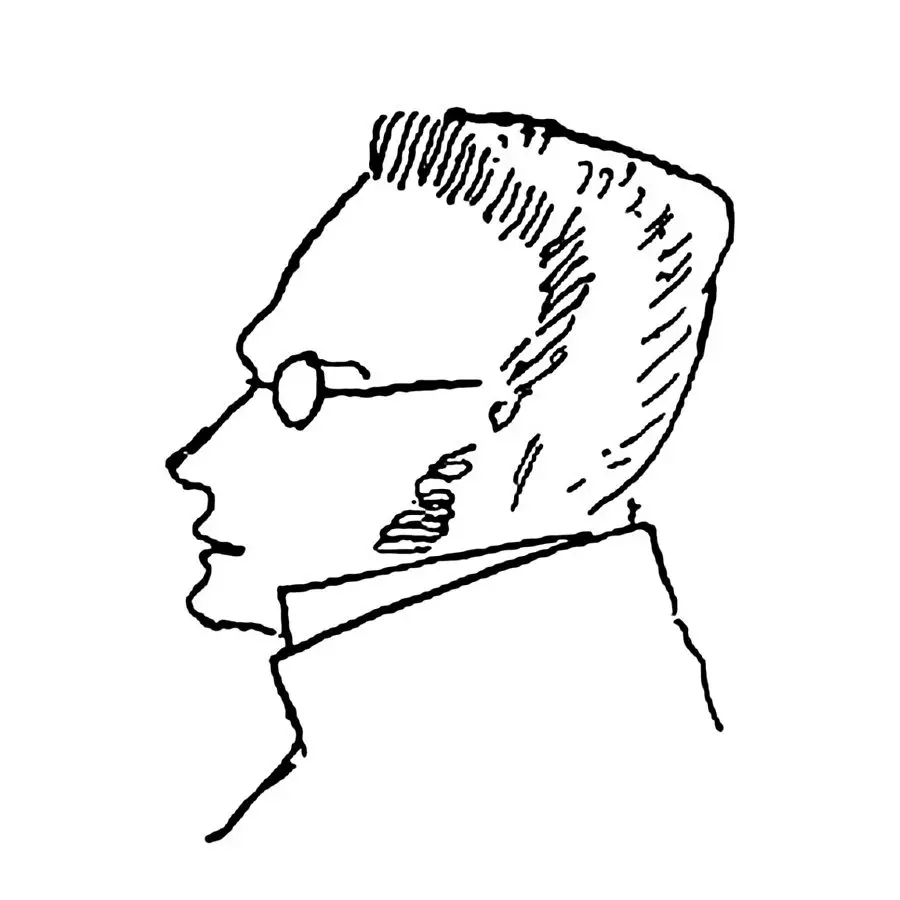
More on Heidegger’s ‘Dasein’

Sam asked:

Hi, I’m struggling to understand what Heidegger means by ‘Dasein’ and it’s (our) relationship to nothing. What does Heidegger mean by ‘nothing’ in this context?

Answer by Martin Jenkins

Martin Heidegger (1889-1976) is trying to answer the question and is questioning the question of: What is Being? Philosophy has, since Plato, variously defined Being as presence, as substance, as subjective self-awareness and awareness and definition of those objects before human beings. Heidegger is trying to develop a language and thinking that radically departs from this previous Philosophy to ask the question anew to hopefully allow a non-appropriative relation with Being. Hence new terms like Dasein, the Nothing and the various structures of ‘Being in the World’ as found in Being and Time (1927) are used to create a new approach to the most fundamental question and issue of all.

For Heidegger’s contention is that Western Philosophy has drifted away from the insights of the pre-Socratic Greeks into Being. It’s trajectory has not only buried the question — a question borne of wonder, it has facilitated the ascendancy of technicist thinking and doing so much so, that Being and beings have been relegated to what merely can be utilised and exploited by human beings. So much so that modern humanity is threatened by the prospect of nuclear war and perhaps in our own time, ecological collapse. Moreover, scientistic narratives liken and limit human beings as little more than complex machines, that the brain is an ‘advanced computer’ , that we are our genes and the like. This thinking is, according to Heidegger, the consequence of Western Philosophy.

So from Being and Time onwards, Heidegger is attempting to rethink the question of Being. One approach is found in his ‘What is Metaphysics?‘ (1929).

The Nothing

Science dismisses Philosophy and the Nothing which is inherent to it. As the Nothing cannot be measured, cannot be placed in a test tube, cannot be subject to verification or falsification; Science dismisses it. Yet Nothing, nothingness is experienced as real phenomena by Dasein. Perhaps Nothingness arises from the negative, from negation as found and practiced in Logic? Heidegger counters that Negation in Logic is presupposed by Dasein’s experience of the Nothing. He explores situations when the Nothing arises. One such situation is that of Anxiety. In this state, one feels ‘ill at ease’ about something indefinite. Within this state, all things -including ourselves- melt into indifference; beings as a whole recede away from Dasein, yet Dasein remains to experience this receding of beings as a whole and their replacement by the Nothing. This ‘melting’ is the nihilating action of the Nothing. So contrary to the quantitative limitations of science, the Nothing is a definite state which presents itself to and is therefore lived by Dasein. The Nothing is not nothing. Consider Sam, the example of expecting something to be in a room you enter. When entering the room, that specific thing you’ve been looking forward to, is not there. It is conspicuous by its absence. The absence is the Nothing and its nihilating action. Yet experiencing the Nothing strangely brings you closer to the expected but absent object.

In experiencing the nothing, Dasein is simultaneously projected back toward beings. This acute contrast allows the appreciation of beings as a whole and, more importantly for Heidegger who is asking the question ‘What is Being? — it facilitates their disclosure or openedness.

The Nothing therefore brings Dasein closer to beings and allows them to reveal themselves, to disclose themselves anew or, perhaps in ways never experienced before. By being held out into the Nothing, Dasein transcends beings as a whole. This transcendence simultaneously compels Dasein back towards beings so as to appreciate beings, what they are, what they mean, how they disclose themselves and this is Being. This experience of the Nothing is one way, one path toward answering the question, What is being?

So contrary to the condescension of science, the Nothing is inherent to Being and to Dasein’s being within Being. As Heidegger writes, it is not about existing in a constant condition of anxiety so as to anticipate being by means of the nihilating act of the Nothing; the Nothing is encountered in other areas of life, of Dasein’s being. Unyielding antagonism, stinging rebuke, galling failure, merciless prohibition, bitter privation, in the creative process (writer’s block?) and a desire to complete the work: all these are examples of the nihilation of the Nothing.

Introduction to Metaphysics

In these above entitled lectures from 1935 but first published in 1959, Heidegger explores the fundamental question of metaphysics. The Nothing is again employed when Heidegger poses the question: ‘Why are there beings at all instead of Nothing?’ He writes that this question can arise in despair, arise in ‘heartfelt joy’ when things are felt and appreciated as if for the first time; and it can arise in boredom when a ‘wasteland of indifferent objects’ loom up before us. The import is again, the astonishment that works upon the fact that there is something in existence rather than nothing. Concentrating upon the contrast between Something and the Nothing makes beings and more importantly, Being explicit. The Nothing serves as a negation, as a springboard by which thinking is thrown back to Being and beings. By this action, it is possible for genuine thinking to be receptive to Being and to ponder it i.e. that there is Something rather than Nothing.


Questions about evil

Elisabeth asked:

What is the definition of evil?
Where do you think it originated from?
Why do you think it continues?

Answer by Geoffrey Klempner

I wonder about the definition of evil. It seems to me that, in ordinary usage, we use the term ‘evil’ when we just mean, ‘very bad’ or ‘irredeemably bad’. Some things are good, and some things are very good. Some things are bad, and some things are very bad.

Why is there ‘good’ and ‘bad’? Because human beings make value judgements. If you sip a drink and it tastes nice, that’d good. If you sip the drink and it tastes nasty, that’s bad. But if the ‘nice’ drink is poisonous, then you shouldn’t drink it because poison is bad. If the ‘nasty’ drink is prescribed medicine, then you should drink it despite the nasty taste, because it is good for you. In this way, value judgements are generated and refined, as we learn more and more about the world.

The question ‘where evil originates from’ can only arise if you assume that the world somehow ‘ought’ to be good, for example, if it was created by a loving God. Then we have the ‘problem of evil’, which has been discussed in these pages. It is not a problem for me because I am an atheist. However, hypothetically, if God did exist then I see absolutely no reason why God should prevent all bad things from happening. How can human beings possibly be in a position to judge?

I once bought a car, an old Ford Capri with 3 litre engine which claimed (it had the decal) to be a special model, the RS3100. I called a classic car specialist round to look at it. When I phoned later, he said that the Capri was in a state which, in the second-hand car trade, is called ‘evil’. An evil car is one that is so badly corroded with rust, that it is not worth the time or expense to repair. If it had been an RS3100 (which it wasn’t, it was a fake!) it might have been worth the trouble.

The question, ‘Where do evil cars come from?’ would be judged silly. Rusting is a natural process, and cars that aren’t looked after, or kept in barns for years and years, are prone to rust away. ‘Where do evil people come from?’ is not a lot different from this. No new-born infant is evil. People go bad. It would probably be a lot easier to prevent any more cars from rusting away than it would be to prevent any more people becoming bad, or evil.


Melissa asked:

In order to answer the question, ‘What is the difference between good and evil in a person’, what would I need to know to answer this correctly?

Answer by Henk Tuten

I’ll answer your question from an evolutionary point of view. Evolution distinguishes no good and evil, it selects on effect. But in evolution of humans (very recent evolution) different cultures developed. The Roman Christian culture presumes reality as created, some sort of ‘intelligence’ behind Christian reality. Anything that doesn’t fit the interpreted design is considered as conflicting and labeled as ‘evil’. Obviously this a cultural matter.

So first you need to know who asked this question. More specifically: what is the culture of that person.

Good and Evil are cultural judgements. For instance in many cultures what is considered homosexuality, is judged as ‘evil’. Because it doesn’t fit the cultural ways of handling reality, and causes fear and anger

Evolution doesn’t judge. Homosexuality survived, so it is there. Point.

Now you can’t give this person an absolute difference between a good and an evil, but you can point out that in his or her culture some behavior is not accepted (labeled as evil). And give examples in his/her culture of culturally evil behavior, and of the cultural rules.

You can’t offer an ‘understanding’ of ‘good’ and ‘evil’ , but you can offer an insight in the workings of the cultural rules.

Distinguishing Good and Evil is a conflict way of treating reality. There are other ways, but Roman Christian Culture was quite effective in almost completely destroying them.


Slavery and moral progress

Morgan asked:

Today, we think that slavery is wrong and barbaric although once it was considered perfectly acceptable. Is it possible that in the future something we think is OK now will be judged in the same way? any examples you can think of??

Answer by Massimo Pigliucci

The answer to this question hinges on the concept of moral progress, and hence on the whole discussion between moral objectivists and relativists. If one thinks that morality is entirely culturally relative and arbitrary — something, say, akin to etiquette — then one cannot possibly defend the idea that slavery is wrong in general. It may be considered wrong by our society today, but we have no grounds to think it wrong in any other society or at any other time.

Few philosophers, I surmise, subscribe to that sort of relativism. And most people today — philosophers or not — would probably agree that ‘slavery is wrong’ is a bit more powerful a statement than ‘the dinner knife ought to be placed on the right of the plate.’ The trouble, of course, is that it has proven remarkably difficult to unpack and rationally defend the idea of objective morality, at the least in the strong sense of the existence of mind-independent moral truths somewhere ‘out there’ (a position referred to in meta-ethics as moral realism).

But one does not need to go far to be able to agree that slavery is wrong in a robust sense of the term ‘wrong.’ Ethics, after all, is a way of thinking about the acceptability (or not) of certain actions within the context of human societies. That acceptability can be based on a number of criteria, but these usually include the utilitarian preference for reducing suffering and increasing ‘happiness’ (broadly construed), as well as the virtue ethical requirement to live virtuous (i.e., characterized by equanimity, justice, courage, etc.) lives and to put in place societal conditions that foster human flourishing (again, broadly construed — what the ancient Greeks called eudaimonia).

In this context, then, ethics becomes a type of practical reasoning of the ‘if… then’ type, which begins with certain premises (if X is the case…) and attempts to arrive at logically entailed conclusions (… then Y will also be the case). For instance, from the premise that human flourishing is a valuable goal one can immediately derive that slavery is, therefore, wrong, because it clearly hampers the flourishing of the slaves, under pretty much any reasonable conception of flourishing.

Of course, as in any instance of logical reasoning, one could reject the premise — in this case, that we should value human flourishing. But that move would then require replacing it with some other acceptable premise from which to derive the conclusion that slavery is not morally wrong. For instance, someone could say that whoever can impose by force the subjugation of another human being has the right to do so, from which it would indeed follow that slavery is morally good. Notice first, however, that the same person would have then to allow the (logical) possibility that he himself may one day become a slave, if he encountered someone who had more coercive force at his disposal and used it to impose his will. Second, and fortunately, most of us actually reject this alternative premise and consider someone who would defend it as a sociopath (in the technical sense of the term: a person with a diminished ability to empathize with other human beings, especially the slaves).

The second part of the question concerns possible examples of behaviors that are currently deemed acceptable but will likely, in the future, be regarded just as immoral as we regard slavery to be. I think there is a number of such examples, but an obvious one that comes to mind is our treatment of animals for food consumption. I am not a vegetarian, and even less a vegan, but I do try to be what you could call an ‘ethical omnivore’: I potentially eat anything, but I do concern myself with where my food comes from, and in particular with its environmental and ethical impact.

If I were a utilitarian, like my colleague Peter Singer, I could justify my concern for the treatment of animals on the basis of the fact that it increases overall suffering in the world (namely, that of the animals in question!) while increasing overall happiness only marginally (through the pleasure experienced by those who eat the animals). As a virtue ethicist, instead, I think that it is a sign of a bad moral character to impose suffering on other sentient beings (be they human or not) for the sake of one’s own aesthetic and sensory pleasure. Either way, it amounts to the same result, and I am convinced that future generations will increasingly see it that way, and will therefore be surprised at our inability as a society to recognize the point, just like we are surprised at the inability of previous societies (or, indeed, of some current ones!) to recognize that slavery is wrong.


What does Heidegger mean by ‘Dasein’?

Sam asked:

Hi, I’m struggling to understand what Heidegger means by ‘Dasein’ and it’s (our) relationship to nothing. What does Heidegger mean by ‘nothing’ in this context?

Answer by Jürgen Lawrenz

I can understand your confusion, because there is no exact English equivalent to ‘Dasein’ and therefore it has to be reconstructed. Nevertheless there is a relatively straightforward way of grasping it.

‘Dasein’ is a conscious (i.e. intentional) form of existence, therefore it pertains in the main to living creatures such as humans. But humans exploit, use, change and consume non-living materials; thereby they bring the latter into the orbit of their own Dasein and confer a dependent Dasein on them. Our consciousness becomes affixed to these appurtenances and compels us to consider them as integral to the concept of Dasein.

For example, a hammer does not have Dasein; it merely exists. But hammers don’t occur naturally, they are made with intention, and so the concept of Dasein must embrace them, not for their sake, but for the sake of conscious creatures. Accordingly Man + Hammer have a common Dasein. Dasein thus identifies the living and the non-living insofar as they form a purposeful and meaningful symbiosis.

Dasein is in that sense a special instance of existence. Beyond this symbiosis, we acknowledge the existence of things that have no intentional being and play no role in Dasein (e.g. stars, galaxies, gravity, electromagnetic radiation, quantum mechanical wavefronts, but also the unworked ore and wood of the hammer, etc.). They are ‘foreign’ to us, not in any way entangled in our actual Dasein.

Nevertheless, being aware of these things can create a sense that in their alienness they still ‘are’, even though they might ‘not be’. They represent a form of existence that is the opposite of meaningful and purposive Dasein, and in their mere existence provoke or evoke a feeling of ‘worried emptiness’ which we can scarcely articulate, because it is indefinite. Heidegger calls such worried states ‘Angst’ and ‘Moodiness’, which is not the fear of some particular thing, but just a fear without a specific object — in short a ‘Nothing’. Such a state can result in torpor, when everything seems to be equally void, vapid and meaningless. For example, you may look at the sky at night and be overcome by the senselessness of such huge, empty, useless Nothingness. Here it is the absence of a connection to your Dasein that brings forth the worry and may induce you to question whether your Dasein is perhaps merely an illusion, in a word, Nothing.

Heidegger is quite specific that we must not understand this in the scientific (empirical) sense. Science can interpret ‘Nothing’ only as a negation. But it is a psychological (or, in his terminology, ‘phenomenological’) state, because this feeling of Nothingness rests on precisely the absence of interpretable (meaningful) phenomena for a sensible creature.

From here we go on to the question of Being, which is the real mystery. But this is a problem for another day. Meanwhile stick to Dasein as ‘conscious existence’ and keep in mind that this consciousness is in the world of facts and things which belong to our collective experiences. Then the word should not hold any terrors for you. And then you can see that the ‘Nichts’ of Heidegger is everything in which consciousness is not directly entangled.


Virtue and hubris in Ancient Greece

Nicole asked:

How do I explain moderation and human excellence as it relates to the Homeric tradition and the ancient Greek virtues? How does the concept of hubris relate to the difference between humans and the gods?

Answer by Graham Hackett

Nicole, I think a great deal of the ancient Greek attitude to virtue can be found in Aristotle’s Nicomachean Ethics. Of course, he was writing some time after the Heroic age usually associated with Homer, but nevertheless, he worked with the tradition and refined those traditions for practical use by educated fourth century BC Greeks.

It’s all very different from Christian principles of virtue. The term ‘arete’, usually translated as ‘virtue’ in modern English, meant something quite unique to an ancient Greek. Everything — objects as well as people, had their own specific purpose, the attributes which enabled them to carry out this function were virtues, and performing particularly well in this function was excellence. So the function of a knife was to cut, and its particular virtue or arete was to be sharp. The particular arete of a racehorse was swiftness. Of course, the Greeks would regard a human as more complex than an object or animal, so the arete of a human would be complex and multi-faceted.

An ancient Greek, even a Homeric hero like Odysseus could behave quite unethically from our point of view, yet still be considered virtuous, even to the point of excellence, by the Greeks. Odysseus famously hanged all of his household staff for disloyalty when he returned to Ithaca, in a passage from Homer which makes rather grim reading. Yet Odysseus still has arete because he is performing his function as a human well. For a Homeric hero, mercy and foregiveness, whilst virtues, competed with other characteristics considered as virtues, such as increasing ones honour and status, rewarding one’s friends and punishing ones enemies. Courage and love of honour would be regarded as important virtues by Homer, whilst later Christian virtues, such as humility would puzzle an ancient Greek. Pride, considered as at worst a sin, and at best a doubtful human attribute by Christian thinkers, was regarded as arete by ancient Greeks.

Of course, some of these qualities could be pursued to excess; the man searching for honour might become a vainglorious fool, the man of courage might err in the direction of either undue timidity or rashness. Hence the need for moderation. Aristotle attempted a fairly sophisticated development of this notion of moderation by his ‘doctrine of the mean’, whereby he divided the pursuit of many virtues into three parts;

– too much of the virtue,

– not enough of the virtue,

– an appropriate intermediate position.

A virtuous Greek would arrive at a decision after calm deliberation, whilst a Christian would probably consider herself virtuous only if she arrived at a decision after a considerable inner struggle. To use a phrase lazily employed by journalists today, the Christian virtuous man could only consider himself virtuous after a struggle with his ‘inner demons’. To a Christian, excellence in virtue is only achieved after torment, struggle against temptation, and final suppression of these temptations. To an ancient Greek, excellence in virtue would be arrived at after calm deliberation as to how particular courses of action benefitted ones own personal well-being (or eudaemonia), and contributed to life in the wider society.

Although ancient Greeks had a notion of hubris, it was somewhat different from the idea as developed by later Christian writers. For a Christian the chastisement of hubris is God’s punishment for the sin of pride. For an ancient Greek pride was not seen as wrong. Punishment by the Greek gods was generally reserved for those mortals who strayed onto their territory. If you tried to fly, your artificial wings would burn, and the gods would plunge you to your death. The gods might decide to punish you if you were too beautiful, handsome or noble, or were ‘too good’ at some particular activity. Sometimes, the transgress of humans was entirely unwitting. ‘The Lord thy God is a jealous God’, is a well known phrase in Judeo-Christian morality. For a Christian, this jealousy was directed at those who followed alternatives to the only true God. For an ancient Greek, the jealousy was a rather spiteful dislike of humans who became too godlike themselves. It was mean and capricious, and was a message to humans to keep out of immortal territory.


Confused about the external world

Nina asked:

In my Philosophy class we were asked to answer this question…

If you can’t prove that anything exists outside your mind, is it all right to go on believing in the external world anyway?

I am so confused with this whole external world concept!

Answer by Jürgen Lawrenz

Your confusion is easily ameliorated. It is, in the first place, engendered by a stringent notion of absolute certainty. In the second place, by an unwarranted and indeed unprovable instrumental interpretation of existence. Once you put these aside as mere (though intriguing) speculation, you can plant your feet on the ground and prove, beyond the slightest doubt, that ‘nothing is in the mind that was not previously in the senses.’ This sentence was written 2500 years ago by Democritus and remains as true today as ever.

What it means is that the contents of your mind are like a flower that springs up from a seed and grows by exercising its capacity for self-nurture from nutrition in the environment, sunlight, water etc.. In technical lingo the mind’s nurture is called ‘priming’. Apart from a few survival skills passed on by the parents to their offspring, there is nothing in the mind at birth. But your mind has the capacity for responding to sensory information and to imprint these impressions on memory. As more and more stimuli accumulate, discrimination grows, judgements are formed and the infant acquires ‘knowledge’. You will not doubt understand that the pathway of this information is from the ‘outside world’, via the sensory conduits, to the appropriate neural cortices. Therefore an outside world has to exist prior to your accumulation of facts, features and knowledge of this world.

In fact, the only curious issue here is that the question in your statement is stated back to front. Rather than proving that an ‘outside world’ exists, you should ask if you can prove that any world can exist ‘in’ your mind. The answer is ‘No’. Every human being has a unique image of that world. We only know what’s ‘inside’ by the consensus of many people that your ‘inner’ world corresponds to everyone’s ‘inner world’, except in the trivial detail of their own location and environment.

In a word, don’t fall for assumptions that have no plausibility behind them. We are not inside the Matrix, but in a world that is real. Just think of all the other creatures whose evolution depends on them making correct inferences and judgements for survival. You are not unique or alone!


Answer by Helier Robinson

The external world concept is confusing until you understand its two meanings. One meaning is the empirical world that we all perceive around us, and which is external our heads. The second meaning arises with the claim, which may or may not be true, that everything that we are conscious of, including the empirical world, is in our minds, and our minds are in our heads; and everything empirical is an image of reality, not reality itself; and reality itself is the external world, also called the noumenal world.

To understand this you must recognise that if everything perceived — everything empirical — is an image of something noumenal, then your own empirical head is an image of your noumenal head. Your noumenal head contains your noumenal brain which contains your empirical world which contains you empirical head. So if you go out on a sunny day than beyond the blue sky is the inside surface of your noumenal skull. Very, very shocking to common sense, but logically sound. In the past knowledge of the noumenal world was metaphysical; now it is mathematical theoretical science. So the answer to the question in your philosophy class is yes, it is all right to go on believing in the external world — the noumenal world — because of the success of science. You can continue to be commonsensical about the external world in everyday living, but to do so in philosophy is over simplification.