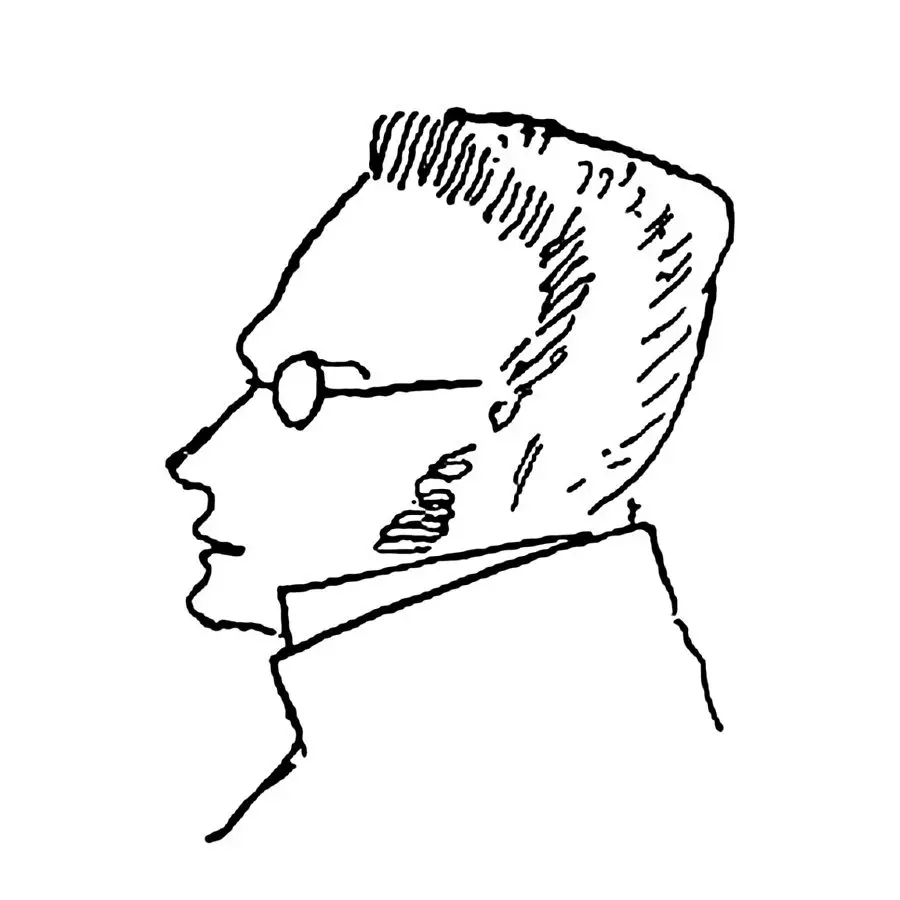
Kant on lies and the axe man

Derek asked:

I thought it was pretty obvious that Kant was a moral absolutist and really meant that one must not lie, at any cost. If an axe murderer came looking for a victim, and asked you where the intended victim was, Kant insisted one must not lie even to save his life.

But I was in a conversation the other day and the topic came up. My interlocutor insisted that Kant didn’t really mean what he said, but rather it was a ‘thought exercise’.

What do you think? Did Kant really mean that one should not lie, even to save a life?

Answer by Craig Skinner

You are right. Kant was a moral absolutist about this and meant what he said.

His critics found this hard line difficult to accept. One of them (Benjamin Constant) suggested a way out. He urged that a duty to somebody arises from that person’s right. So, the duty to tell the truth arises from the listener’s right to hear it. But the mad axeman has forfeited his right to hear the truth, so I have no duty to tell him it.

However, Kant stuck to his guns, saying that the duty was not one to the individual listener (or to oneself), but to humanity as a whole. He replied:

‘Truthfulness in statements… is the formal duty of man to everyone, however great the disadvantage that may arise therefrom for him or for any other’ (‘On a Supposed Right to Lie Because of Philanthropy’, 1799).

So, how to deal with the enquiring axeman?

We find the answer in what Kant did outside the study, rather than in what he wrote inside it – ‘by their deeds ye shall know them’, as the Bible rightly says.

Kant’s writings on religion annoyed the king who thought them disrespectful to Christianity. He demanded Kant’s promise there would be no further writing on the topic. Kant replied:

‘As your majesty’s faithful subject, I shall in the future completely desist from all public lectures or papers concerning religion’.

The king was satisfied. But Kant knew the king wouldn’t live long, and when he died, Kant considered his promise void because it only applied to himself ‘as your majesty’s faithful subject’ and, with the king’s death, Kant was no longer his subject.

So Kant didn’t lie, but told a misleading truth.

And so it can be with the axeman demanding ‘Is he inside your house?’ We can’t say ‘No’ (a lie). We surely can’t say ‘Yes’. But we can say ‘I spoke to him down the supermarket about half an hour ago’ or ‘He often goes to the pub at this time’ (misleading truths).

Or when my old aunt Agatha watches me unwrap her birthday gift to me, revealing a hideous shirt I will never wear, and asks me if I like it, I can say ‘Wow!, thanks a bundle’ or ‘ I’ve never seen such colourful checks’.

So, it’s no lies for the Kantian, but sometimes misleading truths are in order. And the latter, unlike lies, don’t produce such problems with Kant’s Categorical Imperative, and so fit in better with his philosophy, but I wont pursue the detail of that here.


Answer by Geoffrey Klempner

In Kant’s moral philosophy the Categorical Imperative is a law of reason, like the laws of logic. Telling a lie can never be the rational thing to do, even if there are very strong ‘reasons’ for lying because of the predicted consequences if you tell the truth. Kant makes the point that if you thought the intended victim went left when in fact he went right and told the would-be axe murderer, ‘He went right’, intending to lie but in fact stating the truth, then you would share responsibility for the victim’s death. (Try this thought experiment out for yourself and see how you would feel.) More generally, we can never be sure of the wider consequences of an act which was intended to do good. For example, the wider consequences of your being identified as a ‘person who is prepared to tell a lie, when it is expedient to do so.’

How to deal with the axe man? There are various possibilities. If I refuse to say to say anything but glance my eyes left (intending to deceive the axe man) that isn’t a lie, on Kant’s definition. Then again, whether I say ‘left’ or glance my eyes left, the axe man can reason that any normal person would try to lie or deceive in those circumstances, and go right. Or it could be a double-bluff. So this becomes an exercise in game theory. In a world where all our choices are determined by game theory (including the choice whether to tell the truth or tell a lie) something precious has been lost, the foundation of our ability to communicate with one another. That’s the point Kant is making.


Free will and destiny

Larry asked:

What is the difference between free will and destiny?

Answer by Jürgen Lawrenz

This is really simple, Larry. Every human being has free will, and is capable of demonstrating it at a moment’s notice to any interrogator. This is not countered by pointing to limitations on its exercise, i.e. the interrogator might be a member of the Inquisition or my intention to walk out is inhibited by a locked door. Destiny on the other hand is a word we apply in hindsight, when we know what happened to a person or a community or nation. This becomes clear when we inspect the cognate word ‘destination’, which means ‘where we are going’. We can never be 100% sure that we will arrive; and the word ‘destiny’ shares this uncertainty. Hence a sentence like ‘it was Columbus’ destiny to discover America’ is an historically valid assertion; but for anyone to say it before it happened would have been nonsense or at best a wish and a promise. So the only valid use of the word ‘destiny’ is for what you already know to have occurred.


Answer by Geoffrey Klempner

Imagine that you are Oedipus and that the Delphic Oracle has just told you that you will kill your father and marry your mother. The Delphic Oracle is in direct communication with the gods, and never lies. You know, as an indisputable fact, that one way or another you will kill your father and marry your mother. If you flee the city, or if you hide away, or even if you attempt to kill yourself, the result will be the same, even if the details differ. The gods have decided your destiny and there is nothing you can do about it.

The Greek idea of gods moving human beings around like pieces on a chess board has since been replaced by the far more terrifying notion that there is just one God, all-powerful, who knows everything, past, present and future. If it is a fact about the future — a fact that God sees and knows with absolute certainty — that you will kill your father and marry your mother, then that is what will happen, regardless of what you intend. The original Oedipus had some freedom to choose how this terrible destiny would come about, you have none.

Over the centuries, theologians have argued over this problem of ‘free will and God’s foreknowledge’. Various attempts have been made to rescue a notion of free will worth wanting from this mess. I will not throw my two pennyworth in here, as I am not in the least bit tempted by the idea that there is a God who knows my destiny.


What will happen to me when I die?

Shane asked:

What I am about to say is a desperate call for help. i am reaching out to you so that I may be assisted with this dear worry I have been plagued with for several years. Basically, I am paranoid about what will happen to me after I die. Because of argument amongst equally learned, intelligent capable philosophers, I cant figure out what the afterlife (if there is one) will consist of. The reason this is an obsession and highly alarming to me is because several different religions state you must believe such and such in order to escape hell (eternal torture). You can’t simultaneously be a follower of incompatible religions, so it’s like you’re taking an eternal chance in believing anything. Moreover, it seems the superiority of one religion over the other cannot be determined. Philosophers argue about this stuff night and day, and the arguments never end… nothing is ever decided for certain. No one can be sure of anything. Must I believe that when I die, I’ll more than likely go to some sort of hell? My morals aren’t terrific, you know. This is driving me mad. It is something I dwell on ALL the time. Life is so terribly fragile, and any of us could go at any time. I’m at a higher risk of death than a lot because of heart disease in my genes.

What is a man supposed to do in a predicament like this?

You probably have beliefs about the afterlife, but how can you be SURE of them when you are aware of the other equally knowledgeable minds that don’t believe as you do that have solid arguments for their own world view and against your own? You cant say that you’re somehow superior to a whole mass of intelligent minds!

Answer by Craig Skinner

I’m not sure I can help, but I’ll try.

You nail the problem nicely — ‘no one can be sure of anything’, but then ask ‘what is a man supposed to do?’ rather than identify the solution, namely to suspend judgment.

Uncertainty is the human condition. We cant even be absolutely sure about the existence of the external world, the self and causation (Hume), or the truth of science (no hypothesis can ever be proven true or false) or maths (incomplete, and consistency unprovable, as shown by Godel), never mind religion.

We can do no more than live with this uncertainty, proportioning our beliefs to the evidence, as Hume puts it, and suspending belief where evidence is absent or conflicting.

In the West, philosophical response to uncertainty has mostly been to try to formulate a Scheme of Things that aims to match up with The Way Things Are, such as idealism, materialism, dualism, panpsychism, with or without deism or theism. In the East (Buddhism) and for a few in the west (Pyrrhonists), the alternative view is that no Scheme is possible, we can know only appearances, there is no ‘deeper’ or ‘underlying’ reality, and we should suspend belief in anything beyond appearance. Even Kant held that the forms of our intuition and categories of our thought, necessary for any experience at all to occur, allowed knowledge only of appearances, although we might legitimately speculate about underlying reality, including matters such as free will, God and immortality.

Take your pick: a Buddhist/ Pyrrhonist going with the flow (which allegedly dispels illusion, gives peace of mind and reduces suffering), or a struggle to understand The Way Things Are that will be unending and forever uncertain, only probabilistic.

I have speculated on religious matters for over sixty years now. I grew up in a Christian home, but soon became atheistic. As a young man I read Whitehead’s (difficult) work on process philosophy, and was impressed with the idea of all of us, including God, together constantly engaged in an instant by instant process of becoming, so I was theistic for a while. Later I became agnostic. Then, in middle age some serious Biblical study made me an atheist again. More recently I returned to agnosticism, although I dislike the militant, dogmatic, and sometimes philosophically naive, ‘new’ atheism (Dawkins, Harris, Hitchens).

But through all this I have been angst-free, unlike yourself. I can see two reasons for this.

First, my job (medical doctor) involved constant uncertainty (is the diagnosis this, that or the other, will she get better, how long has he got, what’s the best treatment) so I never had any problem living with uncertainty.

Secondly, perhaps more importantly, I’ve never had your fears of hell. It’s not that I know the truth about the matter. But at least I can say (and so can you), that if there were a God who metes out infinite punishment to us, flawed, finite creatures as we are, with finite sins, such a being would not command our respect, never mind our worship. And you couldn’t trust such a god to treat you decently even if you feared it. My agnosticism doesn’t include such a horrible being: I definitely believe no such god exists. Maybe your own troubles will cease only when you do the same. It doesn’t mean you need be atheistic, or even agnostic. Religious belief is not contrary to reason, and many critical thinkers, including scientists and philosophers, are religious.

All the best. I hope you will be able to focus more on life before death and dispel your morbid fears.


Answer by Geoffrey Klempner

I don’t have a lot to add to what Craig has said. In my YouTube video, ‘What is death?’ http://youtu.be/bzWbN40zB9A I consider the very scary thought that death, interpreted as the permanent cessation of consciousness, is impossible to prove because ‘permanent’ implies all of infinite future time. No empirical evidence would suffice to establish that I will never, in some far future time, ‘wake up’. And what manner of terrifying things might happen to me when I do?

Wittgenstein in the book he completed shortly before his death On Certainty considers the possibility that general anaesthetic works, not by producing a state of unconsciousness, but rather by causing complete paralysis and the subsequent erasure of the memory of the pain one suffered under the surgeon’s knife. The very thought of such an unquantifiable possibility, immune from empirical verification or falsification, might be sufficient to deter you from ever undergoing an operation.

Irrational fears aside, we have to live our lives according to what can be reasonably predicted based on what we know. But what is ‘reasonable’ or ‘unreasonable’ is very much up for grabs if you allow religion into the equation.


Answer by Hubertus Fremerey

This is a famous metaphysical problem. A book that you might find helpful:

Samuel Scheffler Death and the Afterlife


What is direct realism?

Sarah asked:

What is direct realism?

Answer by Helier Robinson

Direct realism is the name given to naive realism by naive realists who do not like being called naive. Naive realism is the doctrine what we perceive around us — the empirical world — is real, in the sense of continuing to exist when unperceived. But it cannot be real, it can at best be images of reality, because it consists of secondary qualities and illusions. It is also sometimes called common sense realism.


Geoffrey Klempner

What is the difference between naive realism and direct realism? Russell has a nice quote on this:

“Thus, science seems to be at war with itself: when it means most to be objective, it finds itself plunged into subjectivity against its will. Naive realism leads to physics, and physics, if true, shows that naive realism is false. Therefore, naive realism, if true, is false, therefore it is false.” (Inquiry into Meaning and Truth, 1940).

Naive realists, it is claimed, don’t realize (or don’t think about) all the physical processes involved in perception. I am not ‘looking’ at my computer monitor as I write these words, but at an image at the back of my retina which my brain ‘interprets’ as an object in an external world.

But why stop there? The image at the back of my retina is converted into electrical impulses in my optic nerve. So I am really not ‘looking’ at those impulses? How far do you trace the chain of causes and effects back? And who, or what, is this ‘I’ that is ‘perceiving’ these various kinds of entity or process?

The response of the direct realist is to cut the Gordian knot, avoiding the threatened regress. Perception, when it is successful, not subject to illusion, has an object in the physical world. The ‘I’ that does the perceiving is another object in the physical world, one which has mental as well as physical attributes.

Back in the 1920s, direct realism was called ‘New Realism’, a revolt against the prevailing idealist philosophy of Royce, Bradley and McTaggart. Two great metaphysical works, Samuel Alexander’s Space, Time and Deity (1920) and A.N. Whitehead Process and Reality (1929) epitomized the new realist approach to the fundamental questions of metaphysics.

In more recent times, direct realism was once again revived by philosophers influenced by the the linguistic philosophy of the later Wittgenstein and J.L. Austin. As academic philosophers tend to do, they thought they had ‘discovered’ it.


Do scientists need help from philosophers?

Jack asked:

I recently saw (YouTube) a very interesting discussion between Lawrence Krauss, Daniel Dennett and Massimo Pigliucci on the limits of science. One point that was not discussed adequately was that science sometimes turns to philosophers to help formulate the right questions. Dr. Krauss agreed apparently only if the physicist or other scientist runs out of questions to explore. I feel that the philosophy of science should play a larger role, but it intrigues me that scientists DO turn to philosopher to formulate the right question. That is, how does one know that they’re asking the wrong question? Is there a method for evaluating such, and for formulating the right question? I don’t expect Steps 1, 2 and 3, just some insights.

Answer by Massimo Pigliucci

The relationship between science and philosophy is a complex and always evolving one. Physicist Lawrence Krauss is notoriously skeptical of any use of philosophy to scientists [1], while philosopher Dan Dennett has famously written (in Darwin’s Dangerous Idea), that ‘There is no such thing as philosophy-free science; there is only science whose philosophical baggage is taken on board without examination.’

Then there is Einstein’s (no lightweight in matters of science!) opinion, as expressed to philosopher of science Robert Thornton in 1944:

"I fully agree with you about the significance and educational value of methodology as well as history and philosophy of science. So many people today — and even professional scientists — seem to me like somebody who has seen thousands of trees but has never seen a forest. A knowledge of the historic and philosophical background gives that kind of independence from prejudices of his generation from which most scientists are suffering. This independence created by philosophical insight is — in my opinion — the mark of distinction between a mere artisan or specialist and a real seeker after truth."

None of this amounts to philosophers telling scientists which questions to ask, or how to formulate the questions they are interested in. The idea, rather, is that philosophers are good at stepping back from the nitty gritty details of everyday scientific investigation (because, you know, they don’t have to run labs or get grants funded), and are well trained in the logical analysis of concepts and their implications. Which makes philosophers valuable partners especially in those areas of science that are not well defined, either because they are not yet fully mature, or, at the other extreme, because they are at the cutting edge of what science can currently do.

For instance, much discussion between scientists and philosophers of science these days concerns the status of string theory in fundamental physics. Given that there is no currently foreseeable way of testing the novel predictions made by the theory, is it even science? The battle lines are drawn in somewhat unexpected ways, with for example philosopher of physics Richard Dawid openly calling for a ‘post-empirical’ science (which to me looks a lot like mathematically-based metaphysics), countered by physicist Lee Smolin advocating for a return to empirically verifiable theorizing and a move away from what he sees as increasingly unhinged (from the real world) speculation.

It is, I think, highly unfortunate that some high profile scientists and science popularizers (e.g., Krauss, Stephen Hawking, Neil deGrasse Tyson [2]) have recently made disparaging remarks about philosophy, just as it is equally problematic that some philosophers (e.g., Jerry Fodor in his What Darwin Got Wrong, and Thomas Nagel, in his Mind and Cosmos) have made statements about science that are clearly ill informed and not carefully thought out.

Rather, science and philosophy should keep engaging in that continuous dialogue from which science itself, at the time characterized by practitioners such as Galileo and Newton as ‘natural philosophy,’ evolved from philosophy as an independent field of inquiry.

[1] See: Lawrence Krauss: another physicist with an anti-philosophy complex, and Krauss does it again, so soon!.

[2] Neil deGrasse Tyson and the value of philosophy.


Newton ‘I frame no hypotheses’

Fred asked:

When Newton said, ‘Hypotheses non fingo’ was he lying?

Answer by Helier Robinson

No, probably not: he almost certainly believed that he was being exclusively empirical. However, his first law — a body remains at rest or in uniform motion unless acted upon by an outside force — is hypothetical, speculative: it could only be tested empirically by going into space, far from any gravitational fields.


Answer by Geoffrey Klempner

One of Isaac Newton’s greatest fans, Immanuel Kant, has a nice take on Newton’s claim in the Preface to the 1st edition of the Critique of Pure Reason:

"As to certainty, I have prescribed to myself the maxim, that in this kind of investigation it is in no wise permissible to hold opinions. Everything, therefore, which bears any manner of resemblance to an hypothesis is to be treated as contraband; it is not to be put up for sale even at the lowest price, but forthwith confiscated, immediately upon detection.”

Surely, there’s a huge difference between Kant’s investigation and Newton’s? Kant is doing philosophy, and his conclusions are intended as necessary truths. Newton is doing empirical science.

This is an over-simplification. Newton’s First Law of motion is, in fact, an instantiation of Leibniz’s Principle of Sufficient Reason, which is a necessary truth. There is no reason why a moving body would slow down or stop, unless a force acted upon it. It was Newton’s genius to see that what everyone observes to take place in the natural world — bodies ‘naturally’ slow down unless you keep pushing them along — has an explanation in terms of the First Law, because in our real world (discounting the far reaches of space) we always have to reckon with the forces of gravity and friction.

This is just one example of many where truths of reason are explicitly or implicitly appealed to in formulating physical theories. The theories can still turn out to be wrong. The alleged ‘truths of reason’ could themselves be incorrect or require radical revision. However, Newton was right in his faith that reason has a large part to play in discovering and formulating the laws of physics.