Monkeys under the skin

Angelica asked:

Do you believe that the origin of people was a monkey?

Answer by Geoffrey Klempner

I don’t ‘believe’ any scientific theory — that’s not what theories are for. Science is not religion. Darwin’s theory of evolution by natural selection is the best theory on the table, which means that it is there to discuss, to use, to test (to destruction, if necessary) but above all to guide research. And that is something the theory of evolution has done magnificently.

Darwin aroused a storm of controversy when he asserted, on the evidence he had gathered, that human beings were descended from apes. More precisely, humans, apes, and monkeys are divergent evolutionary paths from a common primate ancestor. (We are closer to apes than to monkeys.)

Would there have been the same fuss if Darwin had claimed that humans were descended from an a more noble species, such as the lion? I’m sure some of the protestors would be mollified — quite happy to think of themselves as having lion ancestors!

How about you? Do you have a favourite animal species that you would like to have descended from?

As much as one might like to believe it, the evidence doesn’t support the theory of human lion ancestry. It is not on the table. To the best of my knowledge, there’s no empirical basis for the view that human beings are lions under the skin — except perhaps in a metaphorical sense.

That’s the thing about science. You don’t go by what you would like to believe, you go by the evidence.


The meaning of life

Robert asked:

Dear Geoffrey,

What is your answer to the question, “What is the meaning of life”?

Answer by Geoffrey Klempner

No, I don’t know what’s happened to the other panel members either, your guess is as good as mine. (Except for Gideon, of course, who is related to me by Leibniz’s Law.)

Well, it’s summer. Maybe they’re enjoying a well-earned holiday at some fancy continental resort. Except — damn! — one minute you’re out there having a wonderful time getting suntanned and sampling the local cuisine, and the next minute you’re spreadeagled on the promenade with your skull smashed to bits.

It makes no sense.

I’m not going to answer your question because, logically, it cannot have an answer.

Suppose life has a meaning. Let’s call the meaning ‘X’.

X is the meaning of your life, X is the meaning of my life, X is the meaning of everybody’s life. Why is X the meaning? Who said? Maybe you got it from some Holy Book. It doesn’t matter. Suppose I don’t want the meaning to be X. I want it to be Y. That’s my bad luck, because the fact is that the meaning is X and not Y, and that is that.

If there is some person or entity that set the meaning of life to be X, I want to kill that person or destroy that entity. I refuse to have the meaning of life prescribed to me. Is that not a perfectly reasonable position to take? An eminently philosophical view, I would have thought — insofar as your philosophy allows for killing or destruction in a worthy cause.

The very fact that life has a meaning would render life meaningless. Human beings are reduced to actors on a stage, all our thoughts and actions scripted for a purpose that we didn’t choose.

If life has a meaning, then it has no meaning.
If life has no meaning, then it has no meaning.
Ergo, life has no meaning.

If life has no meaning, then why bother to get up in the morning? Generally, when I wake up, I need to pee. There is only so long I can hold it in before I simply have to get up. That’s basically the answer the Stoics gave: you follow nature. You do what you want or need to do. Or, as Hume said, “Reason is, and ought only to be the slave of the passions.”

If there is nothing you want from life, then that is very sad and the best thing you can do is kill yourself. But make sure first that you really know what you want, or rather don’t want. (It’s much more likely that there are lots of things you want, but they are all deemed impossible. That’s never stopped me.)

I woke up today and realized that I was 65 (and have been for a few months). Only a short while ago, I was 21 and setting out on a course of philosophical study that has extended for 44 years and still counting. It’s a choice I made, and continue to make, every day of my life — for no reason except that the questions of philosophy interest me, and I have not yet answered them all.

Least of all this one. I have just given you my view — take it or leave it.


Ethics of shark culling

Nate asked:

Given the current situation of increased shark activity and unprovoked attacks in Australian waters, is it possible to argue the culling of sharks, with ethical theory, in order to protect human lives? How would a utilitarian, Kantian approach this?

Answer by Geoffrey Klempner

I sympathize with those who are arguing for a shark cull. In the UK, we have a problem with badgers. There’s overwhelming evidence that badgers carry tuberculosis and pass this to cattle, presenting a very serious threat to human health. Herds are regularly tested for the tuberculin bacillus and if the test is positive then it can be a disaster for farmer to see their cows and bulls slaughtered and burned.

You can imagine writing a children’s story about friendly, cuddly badgers. It would be more difficult to do this with sharks, so perhaps there is less opposition to culling sharks in Oz than there is to badger culls? On the other hand, sharks have feelings too, if any non-human animals have feelings. And, of course, there is also the conservation issue.

It occurred to me, however, that a small change in the wording of your question produces something rather more controversial. (This is relevant to Mill and Kant, as we shall see in a moment.)

“Given the current situation of increased religious extremist activity and unprovoked attack on the European continent, is it possible to argue the culling of religious extremists, with ethical theory, in order to protect (innocent) human lives? How would, etc. etc.”

What would Kant say? Kant has no objection to the death penalty, as deserved punishment for a crime such as murder. However, to preemptively kill a person or group of people on the grounds that they are likely to murder other people would be ethically wrong, because it would transgressing a person’s fundamental rights as a ‘lawmaking member of the kingdom of ends’. They have to do the murders first, then you can go after them.

On a Kantian view, non-human animals do not have ethical rights, so any moral obligations that we have towards them would be consequent on the value they have for human beings. Sharks have a value, on this reckoning (e.g. we wouldn’t like to see any species of shark made extinct) but it is a value to be weighed against other values.

Mill’s case for the ethical theory he calls ‘utilitarianism’ is based on the maximization of happiness/ pleasure and minimization of pain, with the rider that some states of pleasure are ‘higher’ than others. The characteristically human pleasure of studying philosophy or listening to classical music would be preferable to more ‘animal’ pleasures such as dancing in a mosh pit.

However, the Australian philosopher Peter Singer has controversially argued for a version of utilitarianism according to which there should be no distinction between human and non-human animals when we calculate the total amount of pleasure or pain. Under certain circumstances, it would be right to allow a human infant to die in order to save the life of a mature gorilla. The quality of states of consciousness is all that counts, regardless of what creature is enjoying them.

What one can say, tentatively, is that Mill’s case for culling sharks, if valid (under appropriate circumstances) is also a valid case for culling religious extremists. There is an issue about the negative utility of perceived ‘injustice’ — as Mill argues in his book Utilitarianism — but one could argue that the point about injustice, although valid, would be overwhelmingly negated by public sentiment in the wake of terrorist killings.

You can take this either as a reductio ad absurdum of utilitarianism, or not, depending on whether you are more sympathetic to Kant or Mill.
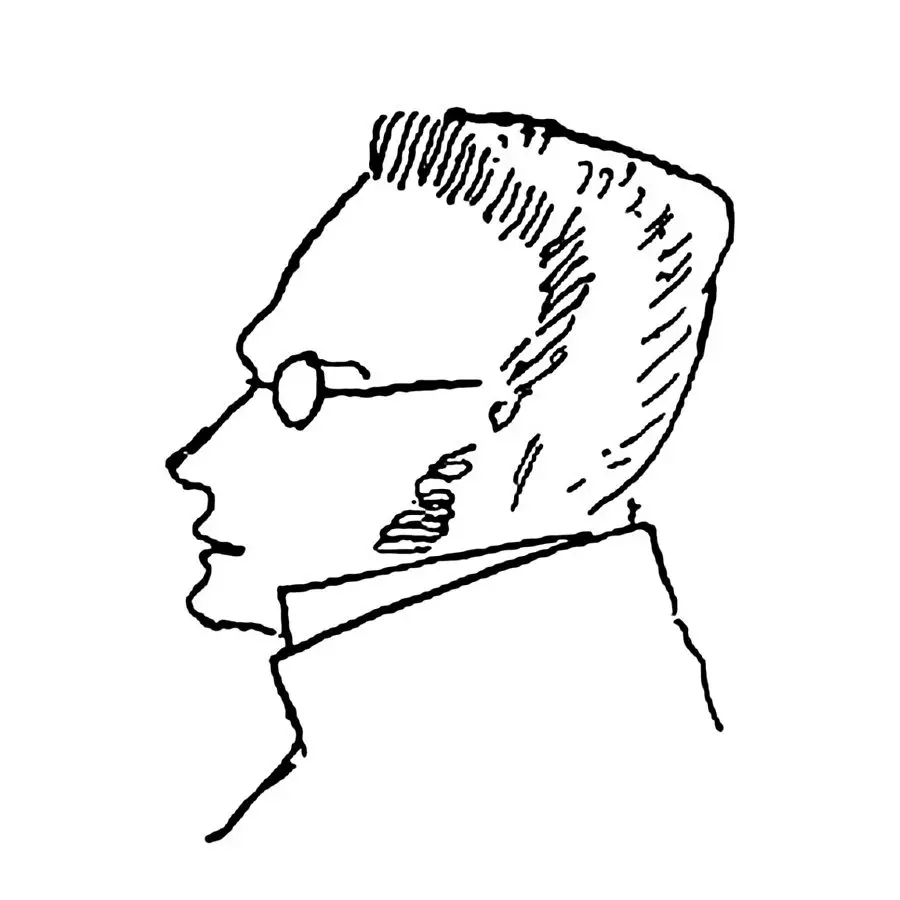
 

(Who) is a philosopher?

Trinity asked:

Can we consider Joseph Campbell to be a philosopher? I’ve read on your website that you have to study philosophy to be a philosopher, but does the fact that he taught philosophy make him a philosopher even if he didn’t formally study the topic. He did spend 5 years in the woods reading.

Answer by Geoffrey Klempner

I don’t know a lot about Joseph Campbell but I’m going to attempt an answer to your question anyway. That’s one of the things philosophers do. We’re not interested in investigating facts (the historical origins of myths, for example) but rather what can be reasoned out and proved without appeal to empirical data.

Philosophy is the ‘art of reason’ (according to Jonathan Barnes, author of The Presocratic Philosophers Routledge 1982). This is a nice definition because it combines two ideas that one doesn’t normally put together: art and reason.

Consider the art of drawing. To be master of this art, it is not enough to be able to draw a good likeness. You need to have mastered the different techniques and media (charcoal, pencil, conte, graphite stick etc.), know how to create different effects (e.g. shading or cross hatching), understand the laws of perspective, and have a good knowledge of human anatomy. To master the art of reason, it is not enough to be able to argue logically. Most persons can do that. Reason is much more than logic. The Presocratic philosophers invented new principles of reasoning that no-one had even considered before. The pushed forward our understanding of the nature of reason and the reasoning process.

Take the two (arguably) most fundamental problems of philosophy: the nature of Being and the nature of Consciousness. These questions can be found in Eastern and Western Philosophy. These are questions that move me, even though — despite all that i have learned — I doubt that I will ever solve them. However, it’s what you do in response to questions like these that defines the kind of thinker that you are. What I’ve tried to do, over the years, is reason these questions out. Maybe they are simply immune to reasoning, recalcitrant. insoluble.

Joseph Campbell had a different approach, as I understand it. Recognizing the limits of reason, he looked to the experience of the transcendent or numinous — the way of mysticism. Does that mean he is not a philosopher?

Let’s consider other great thinkers: Is Richard Feynmann a philosopher? Is Samuel Beckett a philosopher? is Mahatma Gandhi a philosopher? Put any of these men in a room with a philosophy professor and odds on the professor will look intellectually puny by comparison. All three produced ideas that changed the way we look at the world. The philosophical implications of their work are immense. No doubt there are many who would say the same about Joseph Campbell.

Speaking personally, philosophy has taken me to the point where I wonder whether, in fact, I am a philosopher. I am too keenly aware of the limits of reason (although it could just be my limits that are in question, not reason as such). So now I’ve taken to calling myself a philosophizer. It’s just a word. You can be a philosophizer — someone who takes a keen interest in the questions of philosophy — without undertaking the stringent commitment to rely on the art of reason alone.

In these terms, Campbell was undoubtedly a philosophizer. The case I’ve sought to make here is that it is not really interesting or relevant to ask whether, in addition, he was a ‘philosopher’.


After the EU Referendum

Ruth asked:

Is it fair to draw a parallel between the British policy of Appeasement prior to the outbreak of the Second World War, and the Remain campaign in the UK European Union Referendum?

Answer by Geoffrey Klempner

There are parallels — the question is whether these are instructive or not. You decide:

When the British Prime Minister Neville Chamberlain returned from Munich in 1939 with a letter from Adolf Hitler promising that Germany’s territorial ambitions did not extend any further than the foreign lands that Germany had already occupied, many in Britain breathed a sigh of relief. Memories of the carnage of the First World War which had ended just a couple of decades earlier were still vivid in people’s minds.

Then, as now, there was vigorous debate between the Appeasers and those who were sceptical of Hitler’s promises. Yet behind the scenes, preparations were already underway for War and Britain made the best use of the breathing space.

Today, ‘Appeasement’ is a word loaded with egregious overtones. Chamberlain was duped, the historians say. And yet the Appeasers were proved right: if there was to be a war, they warned, millions would die. Many more millions died than anyone could have foreseen in their worst nightmares.

The consensus of opinion is that the Remainers are right that there will be adverse economic consequences (maybe worse than the most pessimistic forecast) in the wake of the EU vote. And yet the Leavers are adamant that this break had to happen — before it was too late.

There was outrage in the press and media when Leave campaigner Boris Johnson compared the EU’s ambitions for an European superstate with Hitler. We all know, don’t we, that the EU’s motives are benevolent,  not malevolent. There will be no death camps. Social ills of  every kind will be overcome through the tireless work of EU mandarins striving to make Europe better for all its citizens.

The response from Leavers is that we want to make these decisions for ourselves. Let other countries decide what is in their best interests, including the creation of an European Army and merging together to form a United States of Europe.

The EU is extremely unhappy about the outcome of the Referendum. (I overheard the funny remark that EU politicians are ‘behaving like a psycho ex-girlfriend’. Some are pleading, ‘You can’t leave us!’ while others warn, ‘We’ll get you for this!’) The war, when it comes, will not be waged with armies and airplanes, guns and tanks. It will be an economic war undertaken to protect the EU from further breakup. Everyone knows this, both the Remainers and the Leavers. The time has come to stop endlessly debating the outcome of the vote and prepare ourselves for the coming storm.


British EU Membership Referendum (continued)

Frank asked:

What would be a philosopher’s take on the British EU Membership Referendum?

Answer by Gideon Smith-Jones

Graham Hackett, writing before the EU Referendum vote on 23rd June, has given an exemplary answer to Frank’s question, focusing on the supposed ‘moral duty’ to vote, and whether — and the extent to which — this duty also requires ‘careful deliberation’ and ‘due diligence’.

Like Graham, I am not arguing for a view about either side in the Referendum debate. In yesterday’s Issue 202 of Philosophy Pathways, in a news item on a new book European Identity and Citizenship by Sanja Ivic, a member of the Board of the International Society for Philosophers, it states, ‘The ISFP has no political affiliations and no view — official or otherwise — on [the] rights or wrongs of European Union membership.’

— We don’t want to alienate any of our readers, do we?!

In order to gain a better context for the debate (still on-going, despite the result) the classic book to read is Hobbes Leviathan (1651, 1668) or to give the full title, Leviathan or The Matter, Forme and Power of a Common Wealth Ecclesiasticall and Civil. I’m not going to try to summarize this great book, but a central theme is the definition of ‘sovereign power’ and the case for there being just one such sovereign (per state). The short argument is, if you have two or more rulers, then you have not overcome the ‘original position’ where issues are decided not by the rule of law but by force. How issues or disagreements are resolved between states is a different matter.

Although the book was originally intended to defend the case for an absolute Monarch, contemporary political philosophers have seen the concept of sovereignty as applicable with tweaks to a liberal democracy. In the UK, Parliament is the sovereign power. ‘Devolution’ of power to Wales, Scotland and Northern Ireland is ultimately subject to decisions made at Westminster. The devolved assemblies/ parliaments have the power to debate proposals and act on what they decide, but in principle such decisions can always be overruled by central government.

Parliament can, theoretically, pass a motion today stating that the United Kingdom hereby repeals all legislation deriving from the EU. There are a number of practical reasons why this is not going to happen, although some have argued that it is ultimately the best game plan. Just brazen it out — and then deal with the consequences.

Let’s now look at the EU. In an interview on the BBC ‘Outside Source’ News program yesterday, a member of Angela Merkel’s party, the Christian Democratic Union of Germany, stated his view that the ‘majority’ of Germans would like to see ever-closer union and the formation of a EU state (some have used the term ‘superstate’). It would not be unfair to assert that such aims are shared by many in the EU governing hierarchy. Could the EU ever become the sovereign power over the 27 (or whatever number it is when the UK leaves) member countries?

To be the sovereign, as Hobbes understood, you need the power to exercise that sovereignty. If a country rebels against the ‘Union’ (as the South did in the American Civil War) then ultimately only force can decide the outcome. The Confederacy could have thought about their situation and decided that, all things considered, it might be best to remain with the Union and avoid bloodshed. Whether the threat is exercised through military or economic means, the result is identical. Once you have made the decision to stay, the same threat hovers over any future ambition to leave.

Arguably, this is the situation that the UK faces today. Even though the EU state does not yet exist in its fully-fledged form, the same economic threat applies now and in all future scenarios. ‘Leave us, and you face financial ruin.’ If you think the answer is to leave and to hell with the consequences, are you not in the same position as the Confederates (if only they had had access to a crystal ball)?

For those who are not immediately affected by the outcome, one way or another, this is a classic lesson in political philosophy. It is the essence of what a state is, or what has the ambition to be a state, that it has the potential to exercise the necessary power to rule. Those who wish for whatever reasons to rebel against the ‘Leviathan’ have to be prepared to respond with equal or greater force. The game is on.