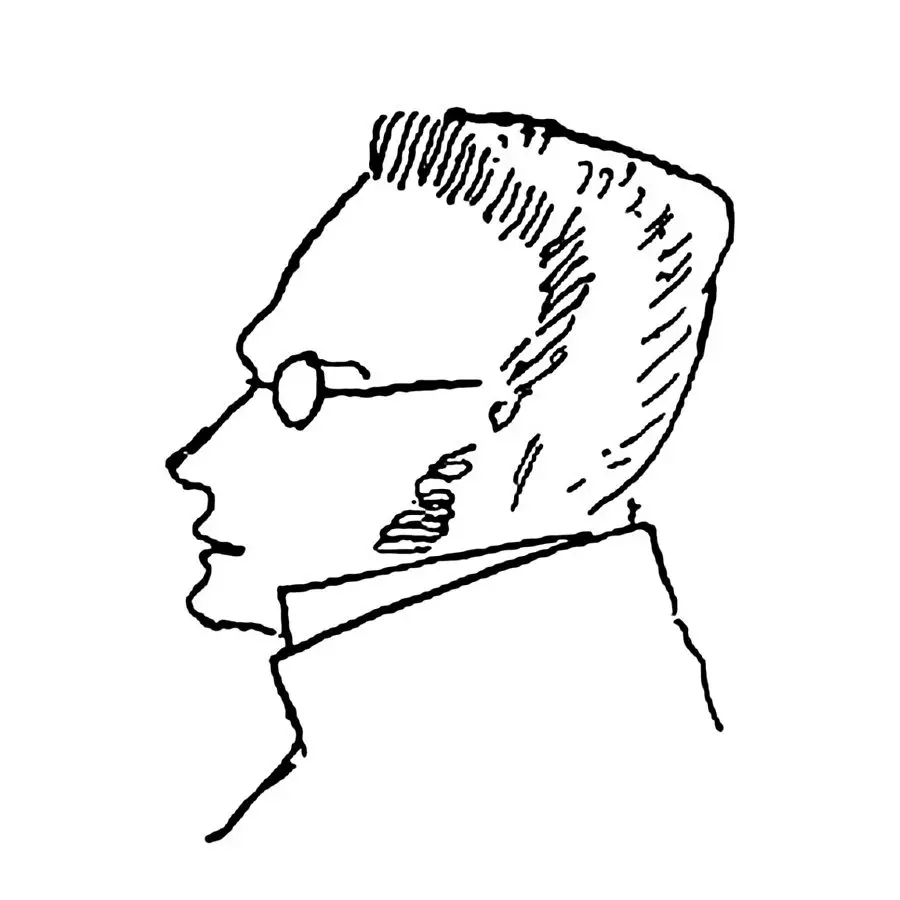
I dreamt I was a brain in a vat

Stein asked:

Reminiscent of BIV…

I dreamt that only I am a brain in a vat and that I was chosen (due to some action of mine or thinking (of mine), perhaps, or perhaps only randomly).

Now, when I reflect on this, I cannot really say that my dream was just a dream, or that I dreamt at all. Perhaps I hit my head and am unconscious or whatever…

So, either I am a brain in a vat (perhaps in a museum for others to see and inspect) or I am not.

A very depressing thought. It’s like saying, either life has meaning or it has not.

What is the correct way to respond to this, to untangle the entangled or remove the nonsensical (to use Wittgensteinian Words). I mean, is the only option not to think about it, or can you be sceptical, where sceptical means that for all propositions p, we cannot know p (or not-p, for if you knew not-p, you would know the truth value of p), or… argh :-)

What is a proper philosophical answer to this problem, how can I easy my mind :-)

Answer by Geoffrey Klempner

You said you dreamt you were a brain in a vat. What is the experience of ‘being a brain in a vat’? The point of the BIV hypothesis is that it is impossible to tell whether you are a brain in a vat or not!

Well, suppose Morpheus comes to your front door and tells you, ‘Hey, guess what, Stein, did you know you’re really a brain in a vat?’ What has he got to do to convince you? How would you go about tricking someone into thinking they are a brain in a vat? Wouldn’t they have to be a bit gullible? (Maybe, maybe not.)

In the Philosophical Investigations, in response to the question, ‘Are you not shutting your eyes to doubt?’ Wittgenstein replies, ‘They are shut’ (PI II, p.224). The point being that doubt, like any other propositional attitude requires reasons. You doubt whether you really have a physical body because… what? simply because you can imagine that you might be a brain in a vat? (Imagining ‘being a brain in a vat’ is harder, for the reason I gave, that by hypothesis your experiences are the same either way, whether you are a BIV or not.)

There are persons who doubt, purely on the basis of things they imagine, and for no other reason at all. These doubts can be tragic or comic, depending on the circumstances. But such doubts are irrational. In the normal course of events, your eyes are shut to that kind of doubt. It doesn’t arise. That’s a pretty strong argument against global inductive scepticism, in my view.

However, the situation would be vastly different if you and I saw on the TV News that a successful BIV experiment had been carried out. More so, if body donation became feasible and there were unscrupulous operators around, kidnapping people and putting the victims’ brains in vats. Whoah!

So… do you and I know that we are not BIVs? If doubt on the question is irrational (barring the TV news announcement) then surely our belief that we are not BIVs counts as knowledge?

This is a trickier question because of contextual considerations. (I’m thinking of David Lewis’s contextual view of knowledge, see my Answer to Demetreus.) Normally, one wouldn’t talk of ‘knowing’ that P when the question whether P or not P doesn’t arise. On the other hand, if circumstances came about where it was necessary to reassure someone that you are not a BIV (say, in a telephone conversation, in the world of our imaginary TV News announcement) you might reasonably say, ‘Look, I know I’m not a BIV because I’ve taken precautions against body-snatching kidnappers!’

You could still be wrong…


How to apply the Categorical Imperative?

John asked:

How ‘universalizable’ does the categorical imperative need to be, i.e. what counts as a relevantly similar circumstance?

Let’s imagine a woman who is in the middle of her Ph.D. and waist-deep in student debt. She discovers she’s pregnant and wants an abortion. The first categorical imperative seems to forbid this, since if every rational agent had an abortion every time, the human species would go extinct. But I’ve heard and read the first categorical imperative articulated such that it takes into account ‘relevantly similar circumstances,’ entailing, I assume, that we only need to universalize this rule to all rational agents who are in such-and-such a financial/ educational situation.

But how fine-grained should we get about this, given that no two situations are 100% identical? The extreme of this would mean that ‘rules’ would be ‘universalized’ only to particular people in particular places at particular times, e.g. ‘All rational agents with X DNA code at Y location at Z time should commit X action.’ Since this would entail cutthroat self-interest, we’d obviously want to disregard circumstances like these, but on what grounds?

So I guess my question really amounts to: how can one identify relevant circumstances, and thereby determine how general or specific the categorical imperative must be, and can one do this within the categorical imperative (i.e. without resorting to consequentialism, etc.)?

Answer by Geoffrey Klempner

I’ll stay with your example. Kant’s Categorical Imperative in its first formulation states, ‘Act only in accordance with that maxim through which you can at the same time will that it become a universal law.’ In this form it appears identical to the Universalizability Principle (see the previous post The ethics of immigration raids).

However, Kant interprets the Categorical Imperative in a much stronger way, as one can see from later formulations leading up to, ‘Act as a lawmaking member of the Kingdom of Ends’ which makes explicit a strong teleological element that is missing from the first formulation. As this is more controversial, let’s put this on one side for the moment and concentrate on the first formulation.

An error often made with the Categorical Imperative is thinking that it can be applied in the same way as a litmus test (pink for acid, blue for alkali). Just plug in your proposed course of action and see whether it is ‘universalizable’. As you point out, everything turns on what words you use to describe what you intend to do.

Kant talks about the ‘maxim’ of one’s action. It is important that your maxim includes the motive for your proposed action, and not simply a description of the action itself. So, for example, ‘I need an abortion because I don’t want to ruin my figure’, is a different motive from, ‘I need an abortion because I am waist-deep in debt and want to finish my PhD.’

Maybe both of these actions are right, or maybe both wrong. Or maybe one is right and one is wrong — how do we decide?

It is possible to make further distinctions within these two examples, but the point is that each increase in ‘fineness of grain’ has to be linked to a plausible reason. ‘I need an abortion because I want one and its Tuesday,’ will not do, nor will, ‘I need an abortion because I want one and my social security number is 12344321.’ Kant doesn’t state this explicitly, but there is a question of onus involved. You need to give a reason for undertaking the proposed action that is recognizable as a reason, and not just some arbitrary fact like the day of the week or your social security number.

Now we’ve got something to work with. I have no comment to make regarding whether ‘preserving one’s figure’ or ‘finishing my PhD’ are good reasons or not. I don’t recall any place where Kant explicitly discusses abortion but I believe it is quite likely that Kant would have viewed it in the same way as he views telling a lie: it is unjustified in any circumstances whatsoever.

The general point, however, is that rather than applying a litmus test we are challenging the agent, putting the onus on them to give a reason for the proposed action that is defensible as such. Kant was a supporter of the death penalty. So ‘I propose to take a life,’ is an action that is defensible if you are an executioner and the life belongs to a convicted murderer, because it’s your job. On the other hand, ‘I propose to take a life,’ is an action that is indefensible if you are pregnant and the life belongs to your unborn child.

Is that a reasonable view? On the face of it, a ‘defensible reason’ is in the eye of the beholder. What is the purpose of human life? Why are we here? Kant has an answer: we are rational beings and rationality is an end in itself. This leads to the final, teleological formulation of the Categorical Imperative in terms of the ‘Kingdom of Ends’. Without this further element, the Categorical Imperative is toothless on the abortion question.


Michael Dummett’s ‘Truth’

Buddy asked:

Hi there, do you have any advice in understanding Michael Dummett’s “truth” from 1959?  I’m struggling to understand it in a class I have.

Answer by Geoffrey Klempner

Dummett’s ‘Truth’ is a seminal article in analytic philosophy. There’s a revised version in his collection Truth and Other Enigmas (1978) plus lots more on his view about the realism/ anti-realism debate.

Most students come across this article in George Pitcher’s collection Truth (Prentice Hall 1964). This is from a time when the standard way of discussing truth was in terms of ‘correspondence theory of truth’ versus ‘coherence theory of truth’ versus… whatever. Back in 1959, Dummett was way ahead of the game. He saw that the traditional disputes were not the most illuminating way to approach the question of truth. The problem is that instructors still routinely use this book leaving students totally unprepared for Dummett’s contribution.

I would be prepared to lay a bet that a significant proportion of those same instructors would struggle to give a coherent synopsis of Dummett’s argument. At the time when it was written, not many professional philosophers did ‘get’ what Dummett was on about. His argument could easily be expanded into a book. (As well as Truth and Other Enigmas you can look at his Frege Philosophy of Language which appeared in 1973.)

You’re not going to be able to follow the article unless you have already looked at and have some grasp of the Strawson-Russell debate over the analysis of definite descriptions. (It wasn’t really a ‘debate’, Strawson wrote his article 50 years after Russell’s ‘On Denoting’ appeared. I’ve reviewed more than one student essay where the writer was blissfully unaware of that fact.)

It will also help if you understand what the clash between Intuitionist versus Classical mathematics was (or still is) all about. Mathematical Intuitionism is Dummett’s model for his ‘anti-realist’ account of truth and meaning. (Wrongly, in my view: see my Amazon eBook, originally my D.Phil thesis, ‘The Metaphysics of Meaning’ https://amazon.com/dp/B01JUS7G68.)

Here’s a very brief sketch:

Dummett’s ultimate purpose is to raise a question about our notion of truths that lie beyond the range of human knowledge. To do that he first has to combat the idea that truth value gaps, as proposed by P.F. Strawson in ‘On Referring’, are acceptable in semantics. It is part of the concept of truth that truth is something we aim at. Hence, he argues, reference failure should be seen — as in Bertrand Russell’s theory of descriptions — as a way of being false rather than ‘neither true nor false’.

However, there are other truth value gaps that are more problematic, e.g. ‘Either Jones (who never saw combat) was brave or not.’ Is there a  truth (maybe a truth about the structure of Jones’s brain, or a truth about other possible worlds) that we can never know? All Dummett does in the article is raise the question. He ends with a description of an alternative anti-realist way of viewing reality as ‘something that comes into existence as we probe’.

In his later writings, Dummett developed an alternative account to the realist view of truth and meaning, developed from the later Wittgenstein’s views about language. Propositions are not ‘arrows’ which we aim at reality (at a target which might be so far away that we will never know whether we actually scored a hit or not) but rather instruments that we use according to rules. One can still talk of ‘truth’ provided one doesn’t lapse into a realist (arrow and target) view. We make moves in the language game, some of which are ‘correct’ and some of which are ‘incorrect’ according to rules that we are able to apply to any given case. There’s no ‘recording angel’ up in heaven keeping the score.

— I spent years of my life pondering this question. If you want to know more read my book The Metaphysics of Meaning.


Puzzle about objects and identity

Inger asked:

The perdurantist solution to Lump and Goliath is OK. But suppose the lump and the statue are brought into existence at the same moment, and later also destroyed at the same time. What would the perdurantist say to this? And would it reinstate the appeal of the Two Object View of Wiggins?

Answer by Geoffrey Klempner

For the past half-hour I have been trying to think of a way to explain the problem to someone who has not studied analytic philosophy. I’m afraid that many of the people reading this will think that it is just silly, that philosophy students have just been brainwashed into thinking otherwise. (No comment.)

What is the problem? We live in a world which contains lots of ‘objects’. By that I mean things you can name, or recognize, or describe, or (sometimes) pick up, or own, or etc. If you had to describe your current situation, wherever you are, you could talk about the things you can see around you, where they are placed, and so on. I’m sitting at a thing called a ‘desk’, typing on a thing called a ‘keyboard’, looking at a thing called a ‘monitor’, and so on and so forth.

What I’ve just done is state the obvious. But it’s surprising how (seeming) philosophical problems can arise out of stating the obvious.

‘Goliath’ in your example is the name of a statue (of Goliath, although it could be a statue of Donald Trump, you can call the statue whatever you like). And although no sane person would normally do this, ‘Lump’ is the name of the stuff that Goliath is made of. Let’s say bronze.

(Maybe I am the owner of Lump and I lent it to a sculptor for a specified time to make a statue out of. The statue is subsequently sold. What happens when I ask for Lump back would make an interesting legal case.)

The logical problem starts when you realize that although you seem to be pointing to the ‘same thing’ when you point to Goliath, or to Lump, this leads to a contradiction. Because there were times when Lump existed and Goliath didn’t exist, and after Goliath is melted down and made into a different statute there will be times when Lump still exists and Goliath no longer exists. A thing can’t both exist and not exist at the same time!

So Lump and Goliath can’t simply be the ‘same object’. How do you describe the situation in a way that doesn’t lead to a contradiction? Surprise, surprise, there’s more than one way.

The view of David Wiggins (distinguished British philosopher) is that there are ‘really’ two objects, even though for some of the time they occupy the same space. (Oooh! I can hear you gasp.) The history of the object called ‘Lump’ is different from the history of the object called ‘Goliath’ even though for some of that time, the two histories run side by side. Goliath stands in your front hall way and so does Lump, in exactly the same place. No two objects could be closer!

Rubbish, says the perdurantist. What the example shows is that we have to consider existence as something that pertains to a ‘temporal part’ of an object. Lump is made up of temporal parts (Lump at 2.15pm on 16th February, Lump at 2.16pm on the 16th February and so on — you can cut this as finely as you like) and so is Goliath. While the temporal parts coincide they are simply parts of Lump-Goliath. You don’t have to distinguish between the Lump aspect and the Goliath aspect of a given temporal part. However, before Lump was made into Goliath, there were Lump temporal parts which were not Goliath parts. And similarly for after Lump is made into another statue.

So what? Why can’t we simply say what we like so long as we don’t get into a logical contradiction and so long as no factual information is lost? Some ways of talking are more cumbersome than others. Going back to your original situation when you are describing the things around you, it is natural to use the language of ‘objects that persist through time’ (Wiggins), and very unnatural (to say the least) to use the perdurantist language of ‘temporally extended object parts’. Then again, there might be more complex situations (like the Large Hadron Collider?) where it was more convenient to let go of the idea that we are talking about persisting objects because it gets too messy.

Actually, I think more could be said here, along the lines P.F. Strawson describes in his book Individuals: An essay in descriptive metaphysics (1959). The building blocks of our ‘conceptual scheme’ as Strawson calls it are ordinary spatio-temporal objects or ‘individuals’. We couldn’t even get started describing ‘temporally extended object parts’ if we weren’t first able to identify and re-identify these ordinary objects. Well, then, maybe it is a case of ‘bootstrapping’, where you start with a particular conceptual scheme and use it as a bootstrap to construct a better one (for some purpose, presumably scientific).

Your suggestion (finally) is that if Lump and Goliath are brought into existence and destroyed at the same time then… what, exactly? Let’s say you pour molten copper and tin into a Goliath mould. Then Lump and Goliath come into existence at the same time. Before the bronze existed, Lump didn’t exist, although its constituents did (you can make a problem about that if you want). If you dissolve Lump/ Goliath in acid then ‘they’ go out of existence at the same time (more or less). Well, then. In that case, the perdurantist (the one who said we should talk of ‘temporal parts’) has nothing to explain. Nor does Wiggins.

Then again, you might think that even though in your scenario Lump and Goliath have exactly the same history, there are counterfactual (contrary to fact) statements about what might have happened to Lump or to Goliath, by virtue of which we are still required to distinguish them. — If you insist. Honestly, I really don’t think it matters in the grand scheme of things.


Could an AI ever be a philosopher?

Hubertus asked:

Could an AI ever be a Philosopher?

Answer by Geoffrey Klempner

One might think that there is something rather strange about this question. An AI — an artificial intelligence — is by definition intelligent, and if any creature is intelligent, surely it can understand and grapple with the questions of philosophy, leaving aside the question whether it would want to.

Let’s first deal with the question of AI. There are basically two routes one can take. The first, which is at present the only subject of research, is to construct ever more complex programs — or alternatively connectionist networks — which approach ever more closely to the kind of verbal output that is indistinguishable by the Turing Test from a human being.

There are questions here about whether mimicry or simulation could ever be as good as the ‘real thing’ — to which the best answer (in my view) is that you need to give your AI ‘arms and legs’ (or the equivalent). A creature that has intelligence necessarily has desires as well as beliefs, and in order to have desires a great deal of physical structure is presupposed besides mere possession of a ‘computing organ’.

On this reading, maybe the first ‘genuine’ AI will have wheels instead of legs, maybe it will look more like Dr Who’s Daleks than a human being. But it will want things. It will have an agenda. When we talk to it, it will talk back because it wants to (because it is interested in us and what we have to say, even if only as a pleasant game to pass the time).

What could we talk about? Well, that’s the problem. This creature (I won’t call it a machine) has ‘desires’ that are largely incomprehensible to us. Perhaps we share intellectual curiosity, perhaps that’s enough for scientific collaboration or something similar. But that’s as far as it goes.

How about joining a Philosophy Department? Our AI would be a whizz at formal logic. However, my view, for what it is worth, is that to be motivated to philosophize one needs specifically human failings. (There’s some truth in the old joke: ‘My son is a Doctor of Philosophy.’ ‘What sort of illness is philosophy?!’)

Maybe, our AI would turn out to have some or all of these ‘failings’ too, maybe not. There’s no way to be sure, because we are so far from getting to the bottom of the source of the philosophical impulse that it is really impossible to say. To philosophize, you need to find, in Neo’s words, ‘something wrong with the world’. There is something wrong with the world because there is something wrong with us. That’s what the struggle to philosophize is ultimately about.

I said before that there were two possible routes to AI. The second hasn’t been tried yet, but I can’t see any logical objection to it. You start by replacing a single brain cell by a silicon substitute with identical input-output functions. I don’t want to minimize the monumental difficulty of this task, which is far beyond what present science can achieve. However, if this could be done, in principle, then by repeating the process you could create a substitute brain (and body too, with a human-like nervous system).

Why go to all the trouble? Biology is the best method we know of growing a human being but maybe in future human-like AIs could just be manufactured on a production line. Various materials go in at one end, and human replicants come out the other, just like automobiles. What would these human replicants lack? A human life. A childhood.

In principle, these could be built in too, by duplicating not just the function of the brain cells but their actual state at a given time. Then a replicant would walk away thinking that it was you, or me. In that case, your question is answered.

But I guess that’s not the answer you expected.


Descartes and the resurrection of the body

Joe asked:

Hi, I was wondering what Descartes view of the body is after death? Does he believe in resurrection of the body as in the Christian doctrine?

Answer by Geoffrey Klempner

What did Descartes believe? who knows? Threatened with torture by the Inquisition, Galileo was forced to recant the Copernican doctrine ‘the Earth moves’. It was a lesson not lost on Descartes, writing just a few years later. In the seventeenth century, it was no easy thing to be a man of science — a seeker after truth — and a ‘true believer’.

We can get a clue to Descartes’ religious beliefs from his enthusiastic young follower Spinoza, who wrote his first book on the Principles of Cartesian Philosophy (1663). In the spirit of Cartesian rationalism, Spinoza actively challenged the accepted Jewish view of God that had come down from the Torah and through centuries of Rabbinic commentary, arguing instead for a religion based on reason alone. He was rewarded with solemn excommunication from the Jewish community of Amsterdam.

The subtitle to Descartes’ Meditations on First Philosophy is ‘In which the existence of God and the real distinction between the soul and the body of man are demonstrated.’ That would have been enough to placate Inquisitors who didn’t think too hard about what it meant to possess a Cartesian soul. Perhaps they did not realize that the older, Aristotelian view of the soul as the ‘form’ of a living body is far more conducive to the Christian doctrine of Resurrection (a point noted by David Wiggins in his book Sameness and Substance 1980).

For Aristotle, the notion of a soul (in Greek psuche or ‘breath’) existing apart from a living body is unintelligible. For Descartes, on the other hand, although needing a body in order to perform physical actions, the soul is a non-physical substance in its own right. The more philosophical Inquisitors might well have reasoned (perhaps some did) that this could be considered the basis for a charge of heresy. As the idea wasn’t taken further, the point is moot.

Why insist on resurrection? Because without a body, the notion of ‘reward’ or ‘punishment’ is all but meaningless. If there is no reward or punishment, in any real sense, then the idea that God has ordered the world ‘for the best’ is no longer believable. The guilty who escape punishment in this world must be made to pay for their sins. The innocents who suffer will be compensated by a blissful afterlife. Meanwhile, the majority who have sinned but not sufficiently for eternal damnation, can look forward to a few hundred or thousand years in Purgatory examining in detail each and every time they strayed from the path of Christian virtue before they are finally released.

As an atheist, I value the philosophy of Descartes for the questions it raises our conception of the mind and its relation to the physical world. This isn’t about belief but about logical argument. It remains the case that the Cartesian view of the soul is compatible with resurrection of the body, so if you are a Catholic then you do not have to feel that your beliefs have been challenged at the root. That was perhaps enough to save Descartes from the grasp of the Inquisitors.