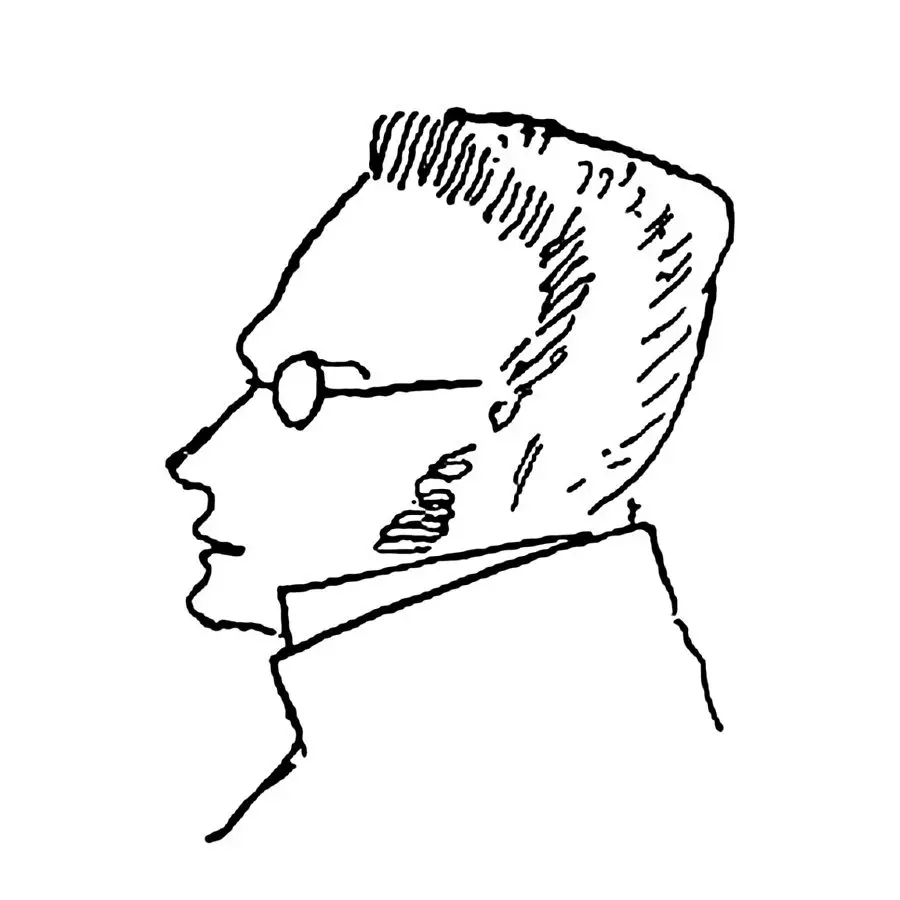
Location of the ‘soul’

Gerald asked:

Is the soul in the body or the body in the soul?

Answer by Geoffrey Klempner

The alternative you pose does not cover all the possibilities. The third option one has to consider (there may be more) is that there is no such thing as ‘soul’, only body.

However, for the sake of this question I will assume that we are not considering materialism as an alternative.

‘Soul in the body’ looks like dualism of the Cartesian variety. However, Descartes was quite explicit that what he termed ‘mental substance’ has none of the properties of ‘material substance’. In order to be located ‘in’ your body, your soul would have to possess the property of location in space. This cannot be, according to Descartes.

He is in fact scathing in his dismissal of the popular idea of the soul as ‘a breath of wind, a vapour’. The nearest equivalent to this idea is the Spiritualist notion of ‘ectoplasm’. You might have seen the black and white or sepia toned photographs of semi-transparent ‘sheets’ coming out of a human body. (Back then photography was a new science and the more gullible public were not aware of the possibility of tricks using double exposure.)

Prior to a proof of the existence of God who is ‘not a deceiver’, it is conceivable, Descartes says, that there might be no such thing as material substance. What appears as a ‘material world’ could just be a coherent dream produced by an ‘evil demon’. However, as there is a God, we can rest assured that what appears as a ‘material world’ really is so.

The Cartesian view would be that the experience of of my being located in this body, looking through these eyes, etc. is the result of interaction between my non-located mental substance (soul) and my material body. The locus of interaction, Descartes believed for obscure reasons, was the pineal gland.

What about the alternative, ‘body in the soul’? At first sight this looks nonsensical, but if we discard the notion of physical location, this perfectly fits the Berkeleian idealist theory of the soul as a ‘finite spirit’, taking in ‘ideas’ of material objects including the body, all contained in the one ‘infinite spirit’ or God.

Berkeley would say that, logically, there is nothing even an all-powerful God can do to ‘create’ a ‘real material world’, in addition to our reliable experience of being embodied and living in a world of material things. The very notion of ‘matter’ in the Cartesian sense is nonsensical.

According to Berkeley, God creates the idea of ‘my body’ as an ‘archetype’, while the ‘ectype’ or partial copy of that idea is contained in my conscious mind, along with ideas of all the other material objects in my environment. (The nearest analogy would be a 3-D computer game, where the subject exploring the virtual world — pursuing or being pursued by aliens, for example — is depicted on the screen either from the first-person or third-person point of view.)

So, who is it to be, Descartes or Berkeley?

If you are inclined to consider Occam’s Razor as relevant to metaphysics, then it does seem that Descartes’ ‘material substance’ has no meaningful role to play, other than as a guarantor that our ‘dream of a material world’ will continue sufficiently reliably to allow for the pursuit of science. The laws of nature will not change. We do not need to worry about ‘waking up’.

In response, Descartes would say that a Berkeleian world is one of perpetual deception. Why would God make us believe in the existence of matter, when in reality there is no such thing? Then again, wasn’t it Descartes himself who said that it was up to us to use our powers of judgement responsibly? And isn’t that precisely the point Berkeley wanted to make — that responsible reflection on the popular or philosophical (e.g. Lockean) notion of ‘matter’ shows that the very idea of such a thing is non-functional, a spinning wheel, otiose?

— If you believe in a ‘soul’, of course.

Why is there something rather than nothing?

Minnie asked:

Why is there something instead of nothing? Is this a profound question or
is it as Richard Dawkins maintains a “senseless question”?

Answer by Geoffrey Klempner

Hello, Minnie. Did you come across my recent blog post ‘The One’ discussing this question by any chance?

http://metaphysicaljournal.blogspot.co.uk/2017/05/the-one.html

The short answer to your question is that ‘Why is there something instead of nothing?’ is both senseless and profound. It is profound because we don’t know exactly what sense to make of it. It’s senselessness is not patently obvious, not even if you have an IQ as high as that of Richard Dawkins.

When we think of the way things ‘might have been’ there is always an unspoken assumption about the vantage point from which one is asking the question. ‘Might I have been an astronaut?’ is a question that only makes sense on the assumption that I was in fact born and didn’t die in infancy. ‘Might the human race never have evolved?’ is a question which assumes the prior existence of life on Earth, which might have taken a different evolutionary turn from the one it actually took.

If you ask the question, ‘Might there have been nothing?’ what exactly does that assume? The best one can say here is that it assumes a ‘picture’ whose meaning is not altogether clear, a picture of a range of possibilities (or ‘possible worlds’) one of which is completely blank or empty. By definition, there is only one such possible world (if it is possible). In the same way, there is only one ‘null set’ in set theory.

But this is where things begin to get confusing. The null set (symbolized as { }) is definitely something and not nothing. It is a so-called ‘pure abstract object’, which exists in all possible worlds. You can construct a model for the natural numbers using the null set as a starting point. Just say that zero equals the null set, and any number n is the set of all numbers from 0 to n-1. So 1 is the set containing the null set, 2 is the set containing the null set, together with the set containing the null set, and so on.

So we need to sharpen the idea of the one possible world where ‘there is nothing’ to exclude abstract objects such as sets and numbers which exist in all possible worlds, including the one world where abstract objects are the only entities that exist. Let’s call this the world where there is ‘physically nothing’ (or maybe ‘physically and/ or mentally nothing’, if you’re tempted by idealism).

A world where there is physically nothing cannot be conceived as ’empty space’, even though it is tempting to do so. Isaac Newton thought of space as an infinite container, the ‘sensorium of God’. However, since Relativity that concept of space is no longer accepted. Space requires matter, there cannot be pure empty space.

Then again, if we are considering all possible worlds, then surely we should be considering worlds where the laws of nature are different from the way they are in the actual world? In that case, there’s a whole bunch of ‘possible Newtonian worlds’, in addition to a whole bunch of ‘possible Einsteinian worlds’.

So there is after all a possible Newtonian world where God’s sensorium is empty. But I almost forgot, you still have God. Or maybe this is the possible world in which He died?

All we are doing here is playing with pictures. The mental picture of an ’empty container’, for example. You might say that something undoubtedly does exist. Descartes would reply that lacking proof of God’s existence, we are not entitled to say for sure that that ‘something’ is physical. Maybe all there is, is me and the evil demon. But even in the evil demon scenario, there is something: my mental life, my experience of ‘seeming to exist in a world’. Suppose, in this scenario, I die. Then the evil demon dies. Then what?

In my blog post referred to above, I speculated about the meaning of Heidegger’s notorious statement, ‘Nothing noths.’ There seems to be something wrong with stating that a world where there is physically and mentally nothing ‘is’ a possible world. How can we even speak or write the words, ‘Nothing is…’? The only thing one can speak or write is whatever remains after you have taken away every possible descriptive term that can be appended to the term, ‘Nothing.’ There is nothing that nothing can be or do… except noth. (Apologies to any logical positivist reading this.)

Is that it? Is that all one can say?

Taking our cue from arithmetic and set theory, if we are prepared to accept that pure abstract objects exist in all possible worlds — I mean, if we are happy with talk of abstract objects, happy using the notion of possible worlds as a term of art — why not just say that the idea that there ‘might have been nothing’ is absurd for the simple reason that the set of all possible worlds is most definitely something and not nothing.

There’s a big gap between all possible worlds, and the actual world containing you and me, and that gap has to be explained somehow. (E.g. If everything began with a Big Bang, how did ‘it’ choose how to bang?) But that question is a different question from the one that you asked.

Parmenides’ One

Robert asked:

Was Bishop George Berkeley the first person to maintain that matter did not exist? Who was the first person who maintained that space did not exist? Who was the first person who maintained that time did not exist?

Answer by Geoffrey Klempner

Berkeley was not the first philosopher to deny the existence of matter. That honour goes to the Presocratic philosopher Parmenides of Elea, who was indeed the first philosopher to deny the existence of matter, time and space.

According to Parmenides, the only thing that is, is the One. The only true statement one can make is, ‘It is.’ From that statement, various propositions follow:

The One was not, or will it be but exists altogether now, in the present. Hence, time does not exist. The One is not material, and it is not mental either. Any property P such that a thing can either be P, or not-P, such as ‘white’ or ‘square’, ‘heavy’ or ‘fragile’, ‘painful’ or ‘warm’, is disqualified from belonging to the One.

The One is finite, not infinite, because infinity implies something that ‘is not’. Parmenides describes the One as ‘like the bulk of a well-rounded sphere’. However, that doesn’t imply that the One is spherical in a literal sense. He is using an image.

So what about the world we all know, where things can be white or square or heavy or fragile, etc.? None of that is real, says Parmenides. Nothing we say about ‘our world’ can be true. (It is a problem with Parmenides’ theory that it is not at all easy to see how one accounts for the ‘reality’ of this on-going illusion. But that’s a problem we won’t go into.)

Parmenides’ theory of the One made a huge impact on the philosophers that followed. They couldn’t agree that the One was all there is, but the argument that Parmenides gave seemed to be compelling. So they made various compromises. Empedocles said that the world is made up of four unchanging elements. The Atomists Democritus and Leucippus said that the world is made up of atoms in motion, each atom being like a miniature unchanging Parmenidean ‘One’.

What was the argument Parmenides gave for his theory?

On the face of it, the argument is a blatant non-sequitur:

1. Take anything you like (call it x).

2. Either x is, or x is not.

3. If x is not, then x cannot be. The very idea of x is ‘unthinkable’.

4. By contraposition, if x can be then it is.

5. If ‘x is’ follows from ‘x is possible’ then x is necessary.

6. All that is, is necessary and cannot not-be.

As the very idea that ‘x is not’ is unthinkable, there is no place for negation in any account of ‘what is’. If there are two objects, x and y, then x is not y and y is not x, which is impossible. Hence x is necessarily One. If the One is white, then it is not black. So the One cannot be white or black or any other colour.

But why on earth should we accept step 3? There are plenty of things that ‘are not’. I do not have two heads. Sheffield is not on the Moon. The drink in my mug is not tea.

Parmenides’ response? Not cannot be part of what a thing is. There is no such thing, no such property as not-ness. ‘Not’ is a word we use for various practical purposes, but it does not refer, cannot refer, to anything in reality. Reality is what is, and only what is. Anything on top is something we have added, something that is not ultimately real.

Think about that for a while, and your head will start spinning.

You might, for example, consider that the very idea of things existing contingently — say, the Big Bang might not have banged, the solar system might not have formed, I might not have been born etc. — is absurd. If you are talking about what is real, then contingency can be no part of reality.

The God theory is just another example of an attempt to ‘customize’ Parmenides’ One, like the theories of Empedocles or the Atomists. Just like those theories, it requires a compromise, going back on what Parmenides considers that he has proved. There is only the One, and the One cannot be described in any way other than saying that, ‘It is.’

Give it time, and you will begin to see Parmenides meant. And then you will understand why he is considered one of the giants of Western Philosophy.

Personal identity and the Eternal Recurrence

Lee asked:

Hello! I was wondering if there is any relationship between personal identity and Nietzsche’s ideas of eternal recurrence. I know that time and personal identity are two concepts that are constantly interwoven, but I wonder if there is a way to think of eternal recurrence in this frame as well. Thanks!

Answer by Geoffrey Klempner

The best way I can answer your question, Lee, is to tell you a story:

Born in 1846, in Frankfurt, just two years after Friedrich Nietzsche, Karl Schmidt was the son of a prominent banker. It is known that he wrote one philosophical work, whose title has been sadly forgotten. He gave up philosophy and joined the family business after the one and only manuscript was destroyed in a fire at his publishing house before the book went into print.

Friends commented that Karl appeared to show little concern for his tragic loss. ‘I feel no less sorry for all the other Karls than I do for myself,’ he is reported to have said. It was only years later after his death that a notebook was discovered, in which Schmidt described his theory of ‘Endless Duplication.’

According to Schmidt’s theory, the universe is one of an infinite series of identical universes, existing side by side in space. ‘All the other Karls’ refers to the infinitely many Karl Schmidts.

“Be glad! You are not alone in your suffering, you are not alone in your joy. Every action that you do is done an infinite number of times, each time with the same result. If you hit the target once, you always hit the target and never miss. If you miss the target, then there is no point in regret because you miss the target every time.”

Commentators have noted that Schmidt’s theory bears a remarkable resemblance to Nietzsche’s theory of the Eternal Recurrence. However, the date of the notebook entry is five years before the first mention of the Eternal Recurrence in Nietzsche’s published works. Could it be that Nietzsche adapted Schmidt’s idea, applying his ‘endless duplication’ to a series of identical universes in time rather than in space?

Though the supposition is initially plausible, the problem is that there is no record that Nietzsche and Schmidt ever met. Also, it is also known that the Eternal Recurrence was first formulated by the Stoics two thousand years earlier. Maybe, like Nietzsche, Schmidt was intrigued by the Stoic theory, but for reasons of his own replaced the temporal series with a spatial one.

Although Nietzsche attempts a proof of the Eternal Recurrence in his notebooks posthumously published as The Will to Power, the point of the theory is a test, a thought experiment: are you mentally strong enough to will that in the infinite number of times that you will get the chance to relive your life, you will make the same decisions every time, and everything that happens in your life will be the same?

But will it be you? What makes the two Nietzsches, or the two Schmidts, the same person, rather than someone exactly like the previous Nietzsche, or the previous Schmidt?

In his book Theories of Existence (1985), Timothy Sprigge in a chapter on Nietzsche admits that the question about identity or non-identity in the Eternal Recurrence is one where there is no convincing proof either way, although he would ‘like to think’ that if the Eternal Recurrence is true then he, Timothy Sprigge, will live the same life, over and over again.

Maybe Schmidt considered the implications of this embarrassing loophole, and decided to improve on the Stoic theory by substituting space for time. In the next universe along in the spatial series of universes, there is no possibility that the GK typing these words at this moment is ‘one and the same’ as the GK in this universe.

Using Schmidt’s ‘endless duplication’, a stronger argument can be made, that there is no reason why the ‘next GK’ in the infinite temporal series of universes should bear any closer relation to the GK in this universe than the ‘next GK’ in the infinite spatial series of universes. If there are an infinite number of GKs in Schmidt’s Endless Duplication, then there must be an infinite number of GKs in Nietzsche’s Eternal Recurrence.

There is a counter-argument, however. Although Nietzsche doesn’t explicitly state this — and it appears inconsistent with the argument sketch in The Will to Power which assumes a deterministic Newtonian Universe in infinite time — an alternative interpretation of the Eternal Recurrence would be a circular time. Time is finite and circular rather than infinitely extended in a straight line. If time is circular, then the ‘next GK’ is none other than me because the universe has gone back to a previous time.

Just in case I get accused of promulgating ‘false facts’, the story about Karl Schmidt is made up. Any resemblance to any actual historical figure is purely coincidental. The original version of my story can be found here.

Are some human beings zombies?

Salah asked:

I am from Alexandria, Egypt, I was born as Muslim, I was, and I still, very devout, I lived a very beautiful spiritual experience. Now I am Sufi, or actually, I discovered that I am Sufi. Through my journey I had spiritual visions, Descartes says: ‘I think, therefore I am,’ this mean that he is sure of his existence, but he is not sure if the world really exist, or the world is real. Now I am pantheist or to be accurate, panentheist. like George Berkeley, through vision, I am sure that there is none other than God and his images, Humans, namely, that existence is composed of God and humans only, the universe is God’s manifestation, namely, universe is none but God. Descartes cogito ends that the world may be unreal, but Descartes thought later that the world is real.

Now through mystic vision, I think the world is unreal, since it is God’s manifestation, but according to presence of human minds, I think that parts of the world are real, namely, having human minds, while other parts of the world are unreal, namely, having no human minds. Humans in these parts are none but philosophical zombies, so from my point of view, some countries are unreal, other countries are real. For example EGYPT may be real, AMERICA may be unreal. Some provinces in Egypt may be real, others may be unreal.

So what is your opinion?

Answer by Geoffrey Klempner

I agree that you say is consistent with George Berkeley’s theory of ‘Immaterialism’, although it is not something he considered. To be, according to Berkeley, is ‘to perceive or be perceived’. All that exists are spirits: God, the one infinite spirit, and finite spirits like you or I. The things we call ‘material objects’ or ‘bodies’ are just ideas in the mind of God. For Berkeley, if you are a human being then you are a spirit.

Though Berkeley would not have approved, within this framework it is logically possible that some of the so-called ‘humans’ that inhabit this world are associated with a Berkeleian spirit while others are not. Human beings lacking a spirit would be ‘philosophical zombies’ (in the sense considered, e.g. by David Chalmers). They act and talk and are in every way indistinguishable from non-zombies, or ‘human beings with spirit’ but for a zombie ‘all is darkness inside’.

We can debate about God’s plan for the world, or even in a scientific mode raise the issue of Occam’s Razor. Maybe I’m the only non-zombie, why do there need to be more? (Someone might think, ‘God made the world just for me, to by my playground.’) However, any such debate would be impossible in principle to resolve. Believe what you like, it makes no practical difference.

Then again, one advantage of believing that ‘all Americans are zombies’, or ‘all Egyptians are zombies’ is that you don’t take zombies into consideration when making a moral decision or formulating foreign policy. Zombies don’t count, period.

      You cannot kill me
      The creature said
      Because I am already dead
      I aimed my shotgun
      At the creature’s head
      And pulled the trigger
      A zombie kill
      Is still
      A kill

      Philosophizer ‘Contagion’

A supporter of Al-Qaeda can still observe with satisfaction as the Twin Towers fall, watch the so-called ‘zombies’ as they tumble to their ‘death’, but the pleasure isn’t the same. Zombies cannot be evil. Zombies cannot be punished, they cannot face the wrath of God. At best, a ‘nation of zombies’ might exist as a warning to those who are tempted towards evil, as a kind of ghoulish animation or tableau showing the worst side of human nature.

That’s a story that some ‘true believers’ might be tempted to believe. I don’t know whether such a narrative would be acceptable on some interpretation of the ‘holy texts’ because I’m not an expert on religion, least of all Islam. I suspect not.

I don’t have sufficient motivation to take an interest. I happen believe the opposite. I believe that religion — all religion — is a contagion every bit as threatening as a zombie apocalypse scenario, and human beings will not be able to live in peace and enjoy their humanity until all ‘true believers’ are extinct.

That’s just my personal belief, mind you. As a matter of high principle, I hold that those of all faiths and none can drink and gain sustenance from the ancient well of philosophy. I’m willing to dialogue with anyone — so long as you are not asking me for my approval of your beliefs. I’m not asking you for your approval of mine.

On wanting to live forever

Shaun asked:

Regarding existential dread/ depression.

I am a big fan of being alive. I love life. And as such, I would like to never die. I’d like my wife and children to never die too. And you, and the person sitting next to you. The idea of a person, a mind, escaping existence, is horrifying.

And so, I feel this existential dread. I feel that all I’ve lived for, all I’ve valued, is without purpose, because in the end, I’ll die.

If I could, I would just accept it. I’m really good at accepting reality, even when it’s painful to do so. And that would more or less solve my problem.

However, given the successes of modern science and medicine; given my understanding of biology, the brain, and the mind; I don’t accept that death is inevitable.

I know, it sounds like denial. But look at the success of science and medicine. From cloning to artificial hearts. 1000 years ago, it would have been considered magical thinking. It would have been regarded as denial.

And so, that’s where I am today. Whether through biological or electronic, or some new technology, I believe that immortality of the MIND is possible. And so, I can’t simply accept that I’ll one day die. Which leaves me vulnerable to the despair I often feel.

How do I grow through this? I wish I could just accept death and be done with it, but I can’t seem to do that, when the potential for immortality is so incredibly close.

Of course, you may not agree with my assessment of technology and medical science, but, assume that I very much do, and that this is part of my problem.

Answer by Geoffrey Klempner

I know exactly what you mean, Sean. To cease to be is a horrifying prospect, and yet it is a prospect we all face — or is it?

On this question, scientific speculation cuts two ways. According to one cosmological theory, the universe will end in a Big Crunch in which every finite entity will be destroyed. So, on that hypothesis, your life may be extended far longer than a natural human life, but you will most definitely die. Your prospects are no better according to the theory that the universe is inevitably tending towards a state of maximum entropy when all chemical processes will cease.

Theories can be wrong. Maybe these theories are wrong.

Leaving questions of cosmology, there seems to be no ‘in principle’ barrier to the indefinite extension of human life by some technical means or other. The problem is that the assumptions that you would need to make to allow indefinite life make it just as likely that there can be any number of ‘Shauns’ produced by a cloning/ copying process. To keep Shaun’s brain functioning, the information has to be copied and saved, maybe uploaded onto disk and downloaded into a fresh brain — or brains.

Maybe you are not the original Shaun but a copy (your home CCTV reveals the original Shaun being kidnapped and a Shaun-copy substituted in his place). By hypothesis, your mind is qualitatively indistinguishable from the mind of the original Shaun. You say you absolutely know that you are the real Shaun, but the other Shaun (or Shauns) vehemently contradict you — even your wife and children are unable to tell you apart.

The notion that, ‘I know where I will be’ is very powerful, and yet it succumbs to standard thought experiments on personal identity. You go into a body-splitter and two Shauns emerge. You say you ‘absolutely know’ that if you find yourself standing on the left then the Shaun on the left is the ‘real’ Shaun, but the Shaun on the right believes precisely the same thing. You can’t both be right!

If you can’t be both ‘Shauns’, then you are neither. Irrespective of whether body duplication ever becomes a technical possibility, there is no ‘mental entity’ that persists from one moment to the next, in the way that your body does.

‘But what if I have a soul?’ — What difference would it make if your so-called ‘soul’ came into existence one second ago? What difference would it make if there were a hundred ‘souls’ inhabiting Shaun’s body? Souls can’t be counted, you can say what you like about your ‘soul’ and not be wrong, because nothing can contradict you. Your subjective experience from moment to moment remains the same, regardless.

You may reply that no thought experiment or clever argument can convince you that your subjective sense of self or soul is not the same entity that began reading this answer a short while ago. But here’s the thing. If you really think that, against all argument, then everything is fine because even if the universe ends, it is still possible that you will survive. Maybe as a spirit floating in empty space. In infinite future time, anything can happen, right?