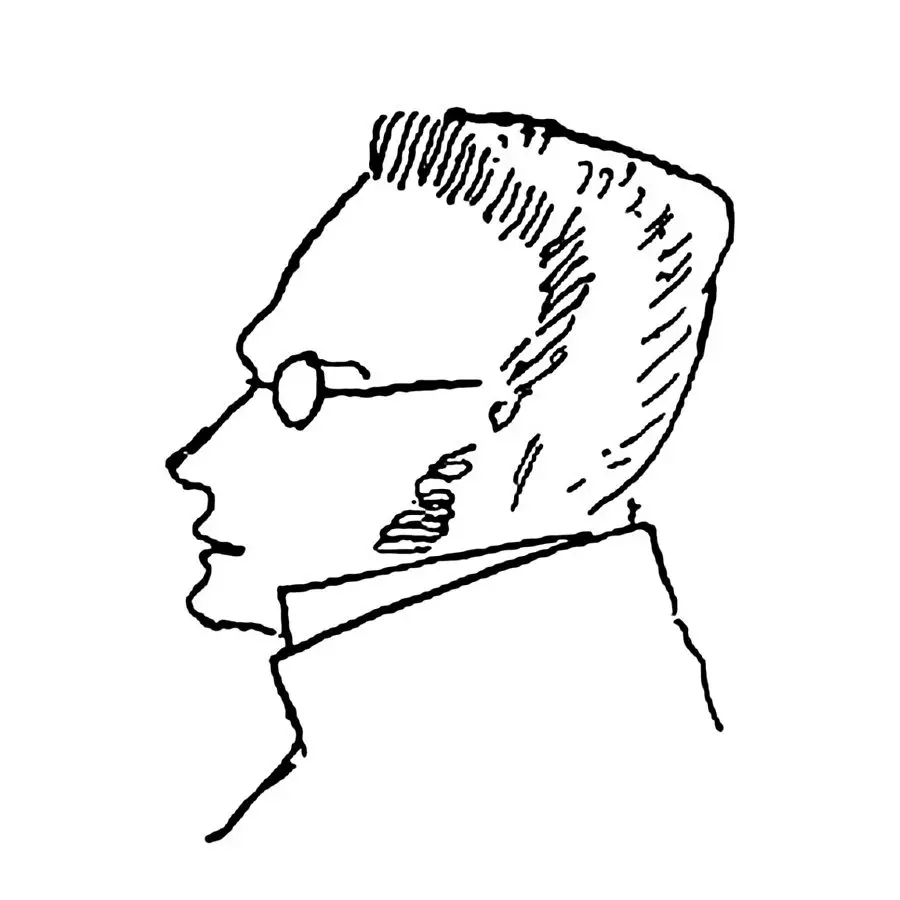
Plato and the criteria of knowledge

Jordan asked:

How do Socrates and Plato arrive at the requirements for what we have well-founded knowledge of, as opposed to what we merely assume or are convinced of?

I know they came to an “agreement” in Plato’s Theaetetus, that knowledge is “justified true belief.” But I have a difficulty in understanding how they came to those requirements.

Answer by Jürgen Lawrenz

Your difficulty stems from the very different attitude to knowledge bred in our scientific civilisation; and so it is difficult to ‘unthink’ what is evident to us, for the sake of understanding thinkers who were trying to smoothe a path that we tread without much effort. For example, the ‘agreement’ between Sokrates and Theaetetus is not quite so comfy as you seem to believe. It is constrained by what we today would call “hard knowledge”; but they also come to the conclusion that a description is not a necessary adjunct, as a person may well entertain a “justified true belief” without being able to give an account of it. Thus a surgeon may be in complete command of his skills, yet find himself unable to articulate this knowledge with a view to teaching it. Sokrates himself takes pride in his talent for “midwifery of the truth”, while relying on others (or pretending to) to arrive at the correct conclusions. Thus the criteria of their agreement are similar to those of Gilbert Ryle’s classification of “Knowing that” and “Knowing how”.

Their enquiry therefore concentrates on eliminating from consideration all those forms of knowledge acquisition which can be identified as dubious, i.e. those which rely on (a) sensory perception; (b) the relativism promoted by the ‘homomensura’ argument of Protagoras; (c) the ambiguities arising from the theory of flux of Herakleitos; (d) issues where different people may have different opinions based on their experience (the ‘alladoxia’ problem); and (e) contingent knowledge (i.e. the ‘cold wind argument’) that can be true or false depending on conditions. These are some of the main criteria, though by no means all. In any case, a reader can gain further insight into these aspects from the divisions of the soul (“the divided line”) which Plato expounds in the Republic Although the theory of forms is hardly broached in the Theaetitus, it is presupposed as the ultimately relevant reference. The dialogue therefore seems to enlarge the scope of the earlier debate to make it serve as a detailed ‘case study’.

Philosophy of procreation?

Adrian asked:

What prompts all living things to procreate?

Answer by Jürgen Lawrenz

I’m going to take your question literally — that it is not about love and sex, but the urge to perpetuate life which infects every thing that lives. Yet I’m going to allow one metaphysical principle, because I must, as otherwise there is no answer at all.

Let’s start with biology and acknowledge that organisms collecting their surplus nutrients in a seed is a good way of ensuring that an organism will not die completely, but can gift its life to an offspring. Evidently different life forms evolved different ways of implementing this strategy; and sometime down the track they also contrived a means of encapsulating the information required for the offspring to make good any deficit from its own resources — a device we call ‘genes’.

Now you should take particular note of the word ‘strategy’, as it indicates the intrusion of the aforesaid metaphysical principle. To explain this I will bring up a dictum of Anaximander, one of the very first philosophers, who said that existence is a tremendous privilege. Evidently even more so for living things, which bring some form of consciousness of their existence with them, no matter how crude or primitive. And so it transpires, that in the animate partition of existence, even the most rudimentary bearers of life show signs of intentionality, and an indefeasible desire to cling to life, for whose endurance they will sacrifice everything to keep that tiny flame burning a little longer. Self-reproduction seems indeed to have been initiated from the very moment that the first microbes succeeded in stabilising their form of existence. And so it is this desire, the single most powerful spur on every specimen of fauna and flora, which engendered the immense variety of procreative strategies we meet, wherever we look.

I’m prepared for the two objections nearest to hand. The first, concerning consciousness as a default condition of life, doesn’t trouble me. To deny it, is merely unexamined prejudice. No-one can convince me that e.g. creatures ‘playing dead’ in order to fool predators, are enacting a purely mechanochemical response. Moreover evidence (let alone proof) for such assertions there is none. The other, concerning the animate partition, is harder to nail down. But I can easily conceive of 3D space accommodating (under certain ambient conditions) a constant analogous to gravitation that precipitates the potential of carbonaceous structures towards the emergence of intentionality. It is certainly a more plausible version of evolution than presupposing that a piece of dead crystal emerged accidentally with a data base capable of evolving chemical machines that behave as if they were conscious.

But this I shall leave in your court — whether you prefer a plausible metaphysical supposition with billion-fold probability behind it or the actualisation of billion-fold improbabilities.

The story of sex

Adrian asked:

What prompts all living things to procreate?

Answer by Geoffrey Klempner

Oh, Adrian. Before I get into answering your question, I want to say that I totally sympathize with where (I think, I could be wrong) your question is coming from.

You are sitting at your desk, as I am right now. And you have things to do, important things you should be thinking about and getting on with. But all you can think about as you gaze out of the window at the clouds going by is, ‘What to do about my lonely situation? How am I ever going to win a woman?’

And when you’ve plucked up the courage, and your plan succeeds, and finally, trembling with anticipation and excitement, you have the object of your desire in your grasp, after so much much stress and effort, all you want to do is…

What? Why?! What an absurd thing! You want to stick this bit in there and move it around. Really? Is that it? If some joker had sat down and planned out a universe, they couldn’t have thought of a more ridiculous arrangement.

First off, it isn’t true that all living things want to procreate. I don’t want to procreate. (And I believe I am alive.) I mean, I did once, and I succeeded (three times) but I’m past that now. These days, when I look at a beautiful woman all I see is a plant pot. You plant a seed, and nine months later a baby sprouts up. That’s the total story of sex so far as I am concerned.

And this is the thing about being a human being. The literal answer to your question is that, if you accept the possibility that Darwin’s theory of evolution by natural selection might, in some manner or other, be true, then the entire history of sexual (and asexual) reproduction traces back to natural random genetic variations leading to organisms having a greater or lesser impulse to reproduce. On average, those organisms with a lesser impulse to reproduce are less likely in fact to do so, and so over time the impulse to reproduce increases in the gene pool.

This is, of course, an extremely crude explanation and all sorts of variations on this theme need to be accounted for. Details aren’t that important. You get the gist. For example, there’s the question of what possible evolutionary role being gay might play but I will put that on one side. I read somewhere that it has been observed that when the male mallard duck population in Regent’s Park London exceeds the female by a certain amount… well, let’s get into the gory details.

But, the thing is, Adrian, being human, we are not condemned to act out the pre-programmed behaviour of our genes. We do things for reasons. And one reason (rather strong, in my view) for a human male not allowing your genes to rule your life is that there are more important things to do. Ever since Socrates in his death cell mused on the notion of his body as the ‘prison house for a soul’ (read Plato’s Phaedo) philosophers have sought with greater or lesser success to liberate themselves from their human all-too-human sexual cravings.

It’s not really helpful, however, to say to a young man, ‘It gets easier as you grow older,’ because that is a long time to wait!

The best advice I can give is, ‘Just give in.’ And accept the consequences. You are a human being and there’s no pretending otherwise. Accept sex as part of human life. That doesn’t mean it has to rule your life. It can be quite enjoyable to indulge in, and as a bonus you may have something more than just ideas out of your head to contribute to future generations.

Keeping and breaking promises

Sebastian asked:

What did Thomas Hobbes meant when he wrote “Just words, if they are of the time to come, and contain a bare promise, are an insufficient sign of a free-gift and therefore are not obligatory. For if they are about the time to come, as ‘tomorrow I will give,’ they are a sign I have not given yet. And consequently that my right has not been transferred, but it remains until I transfer it by some other act.”?

Why exactly am I relieved from the responsibility of a promise if that promise happens to be the giving of a free gift? Yes, it is true that I would be talking about a future time, but If were to make that assertion, how am I not bound to make sure that the next day I actually give the other person the thing I was talking about?

Answer by Jürgen Lawrenz

This is not as difficult as you seem to believe. The passage echoes an old dictum, “You are what you do, not what you say.” It reflects the unfortunate fact that we humans are inveterate babblers and may well babble out promises at any time which we either can’t keep, or have no intention of keeping, or find impossible to keep when it comes to the crunch. Hobbes’ point is therefore, that a promise is in the final analysis merely a bundle of words, and words are not acts. But the execution of a promise is an act; and until this is performed, judgement must be suspended on the degree of force or validity behind a promise.

Accordingly there are three sides to this issue, the moral, the legal and the pragmatic. In the moral domain, especially politics, promises are broken galore, as you well know. “Circumstances alter cases” is one common excuse; another is that the person is simply dishonest and one has to live with that (i.e. never believe them again or perhaps retaliate?). Here Kant’s categorical imperative is a tough guideline; but in essence it says a promise must be kept, as the phrase “I give my word” is supposed to carry that person’s honour. That’s fine for philosophers, as well as feudal lords and vassals, but babblers don’t have much honour to protect. And therefore for Kant to say: Always behave in such a manner that a legislator following your footsteps could convert your decision into a law, is a stiff demand which most average people could never aspire to.

Which brings us to the legal side, which differs in that society may have conventions in place that make the breaking of certain kinds of promises legally punishable. Among them are such as marriage promises, payment by cheque, things pawned or borrowed, contracts and many other kinds of commitment. These are matters where responsibility is ultimately taken out of individual hands and lodged with the law.

Hobbes’ remarks can also be interpreted in the light of pragmatism. Promises can be of two kinds: casually spoken and bindingly spoken. If there are no witnesses to the former, the intended receiver has no recourse, in part because legally he/she cannot go and take the thing promised without being accused of theft. Conversely the intended receiver cannot sue to promiser for theft, if the gift was withheld. Whereas binding promises are usually made in front of witnesses, or in form of a signed declaration, which is an altogether different matter, because the giver can then indeed be sued. We can see the crucial difference here, that the identical memory of at least two person carries much weight; but the most weight is carried by a signature, because when the gift is not given, the signature can deputise for the act and the giver be forced to surrender it or make appropriate compensation.

Where the Platonic forms live

Emran asked:

I have a question regarding Plato’s Ideas or Forms. I wanted to understand where Plato believes the existence of these forms are. So I’m looking for their location for the lack of a better term.

And regarding morality, I’m assuming “good” and “evil” are real forms/ideas according to Plato. Would this be an accurate statement? If they’re not, where would they exist?

My hypothesis is because they espouse Emanationism, the ideas or Forms originated involuntarily from the Divine along with the cosmos, in which case they would be a part of the cosmos.

Any help would be greatly appreciated. Any reading material would also be helpful. Thank you.

Answer by Jürgen Lawrenz

We have to be careful here, with over 2000 years of Platonic interpretation squatting on our shoulders. My answer can serve as only one perspective on the matter, although I hope of course it might be useful to you for a clearer understanding.

One item should be settled first — the forms have nothing to do with emanationism; in fact, this is precisely the wrong approach which gets us nowhere. The culprit in this context is the term “methexis” which insinuates something flowing out of a universal and impregnating a particular. Nice piece of imagery, and usually rendered “participation” in English; but the nature of this participation is highly ambiguous, impossible to define and therefore confusing. Accordingly some scholars reject this notion altogether, because whatever is meant by this flow, must inevitably bring two locations into the picture. But the result is a self-contradiction, in that a universal which exists only idealiter is brought into direct communication with a particular that exists realiter. Compare the phrase we often use in conversation, “I can read your mind”, which points to a form of recognition, but can hardly mean literally what it says, as if the interrogator is looking through a peeping hole into the other person’s brain. And now, in an analogous way, the notion of “methexis” is much more appropriately understood as a relation of universal to particular. If I may oversimplify for a moment to emphasise this point: the universal may be regarded as the single concept underlying a multiplicity of instantiations, where the latter exhibit inessential imperfections in detail without departing from the recognisable identity of the perfect form.

E.g. you can draw a circle, as rough or precise as you wish. But it is physically impossible for you to draw a perfect circle. Nevertheless you can easily frame a conception of a perfect circle. This conception is the Platonic form.

Thus we have incidentally answered another part of your question. While every particular is situated in a specifiable location in space, universals qua concepts are not spatial items. Existing idealiter, their location is idealiter as well.

Concerning the other two items, I can’t conceive where you got them from, certainly not from Plato. “The Good” is not an adjective, whereas “evil” is. Hence there can be no form of Evil. Concerning the “involuntary” adjuncts of divine creation, it sounds as if you are proposing the spontaneous co-emergence of the Divine + Platonic Forms, presumably ex nihilo; but I can’t make sense of it and it seems to suggest the autogenesis of the Divine without rhyme or reason. In any case, the Timaeus leaves us in no doubt that the creation of the cosmos postdates the Divine. You might wish to look at it again and ask yourself if this is what you really wanted to say.

Definition of ‘bigot’

Frank asked:

How would a philosopher define ‘bigotry’?

Answer by Geoffrey Klempner

That’s a good question, Frank. Everyone thinks they know a bigot when they see or hear one. The problem is that one person’s bigot is another person’s ‘true believer’.

I am going to make this personal, something I rarely do. My wife was June a devout traditionalist Catholic and had strong negative opinions about homosexuality. One day, I had the misfortune to walk in to a row between June and my sister’s lesbian girlfriend. I can’t actually remember the girlfriend’s name but let’s call her Sue. Sue was shouting, over and over, ‘Bigot! bigot! bigot!’.

I didn’t hesitate to come to my wife’s defence. I punched Sue in the face a couple of times and she stopped in sheer surprise. The punches weren’t that hard. My fist sunk in to her cheek. As I reflected afterwards, it felt a bit like slapping a supermarket chicken.

Afterwords, and in the light of further events, I concluded sadly that June was indeed a religious bigot, Big time. From then onward, I managed her condition by avoiding sensitive topics. But as they say in chess, ‘a threat is more powerful than its execution’. Time and again, I held back for fear of sparking a painful row.

Bigotry of all kinds is despicable. My view, which I argued for in my article ‘Philosophy, Ethics and Dialogue’ (Journal of Dialogue Studies 2014) is that there really isn’t any difference between a true believer and a bigot. They are one and the same.

Religious bigotry is one form of the vice and by far the easiest to call out. But — without naming names — there is also such a thing as political bigotry. Political bigots feel passionately about the cause they have espoused, to the extent that they are completely deaf to objections or opposing arguments. They are what J.S. Mill in his essay On Liberty 1859 considered the bane of social and political discourse.

It would be too easy to end there, however. Think about Germany in the years following Hitler’s rise to Chancellor in 1933. The only sane and justifiable response (as we would say) was heroic, self-sacrificing opposition — which is easy enough to say, harder to carry out in reality. Without the courage of conviction of those who oppose it, all manners of evil can prosper.

But when does passionate conviction in politics shade into bigotry? That is the question.

I propose the following simple test, of which J.S. Mill would have heartily approved. If you are passionately for Party X and against Party Y, then as a mental exercise play Devil’s Advocate. Make a determined and sincere attempt to defend Party Y against the objections you have raised. Having done that, you may well conclude that your original view is unchanged but at least you will have a better understanding of the opposition you are up against.

On the other hand, if you find the exercise absurd and impossible, then I’m afraid to say you are indeed a bigot.