Should children have the right to vote?

Didi asked:

The question would be how to summarize the argument or arguments and evaluate them?

There is a gaping inconsistency in the logic of our democracy in denying children this fundamental democratic right. Many argue that children haven’t the intelligence and experience to vote in a meaningful way. This argument was used years ago as a reason for denying non-male, non-white people the right to participate in elections. Nobody’s intelligence or experience is of more value than someone else’s. We all bring our own attributes to the ballot box when we select a candidate.

Others may say that children don’t work and thus don’t really contribute to society and therefore shouldn’t vote. Well, School is work. And with a double digit unemployment rate and people on social assistance, this rationale is also absurd. Would we deny the unemployed the right to vote?

Answer by Shaun Williamson

There is no inconsistency here. The usual way of denying the vote to non white people was to say that they were like children and therefore not capable of understanding. The same argument was also used to justify slavery, black people were childlike and needed some big white slave owner to look after them.

Everyone has always agreed that children are not capable of understanding things in the same way that adults do. That is why we do not have the same rules of criminal responsibility for children. That is why we don’t judge them morally in the same way as we do other adults.

Can two year old children understand democracy, can one year old children vote in any meaningful way? At what age do you suggest democratic rights should start?

The idea that no one’s intelligence or experience is of more value than someone else’s is absurd and should certainly not be applied in the design of nuclear power stations. Perhaps we should give children the opportunity to design nuclear power stations.

In our system of democracy we give a vote to all adults (with some exceptions). That is the best system we have been able to devise so far. One of our definition of a child is someone who is too young to understand the responsibilities of being a voting citizen. In some democratic countries not voting is illegal and could result in a jail sentence. Do you want to see children go to jail?

Do the objects of philosophical inquiry change with time?

Amit asked:

‘If the things in our world changed their size randomly, we would have no interest in rulers or in measuring things.’

It is the answer given for one of the question.

I got answer that Philosophy is the study of general and fundamental problems, such as those connected with existence, knowledge, values, reason, mind, and language.

These things also changes with time and place so why do we have interest in philosophy?

Answer by Shaun Williamson

You assume that these things change with time and place but you don’t know that, not without investigation. I don’t agree that knowledge, values, reason, mind and language change with time and place in a way that effects philosophical truth.

Philosophy is about truth and truth isn’t relative to time or place. Belief may be relative to time and place but belief isn’t the same as truth.

Am I a sceptic about the external world?

Shabbir asked:

Am I or am I not a skeptic of the external world?

For my philosophy class I must write a paper in which I have to choose

(1) Why I am a skeptic about the external world

or,

(2) Why I am not a skeptic about the external world.

I have to give my explanation based on the Philosophers Renee Descartes and David Hume.

I am having trouble understanding both sides of the argument. I have a superficial understanding that Descartes used rationalism while Hume used empiricism.

Can somebody please help me develop some ideas based on Descartes and Hume?

Answer by Craig Skinner

I see you may be a skeptic (USA), whereas I may be a sceptic (UK).

Clearly you’re not – you think there are other people with computers who can email you advice. And you are right – here I am. And you think real examiners will mark your essay. Nobody is a sceptic in ordinary life – we all believe the external world exists and act accordingly.

The question is can we justify that belief.

The answer, I think, is that the existence of the external world cannot be proved either by reason or by observation, but we all believe it true, and it probably is.

Berkeley famously denied that there was such a thing as matter, and said the external world was composed of ideas in God’s mind, which are also sometimes in our minds. But mostly people think the external world is composed of matter (whatever that is exactly) and I will take this to be what we mean by external world (a material world).

Yes, Descartes was a rationalist, Hume an empiricist. Descartes thought he could prove (by reason, a priori) the external world exists. Hume took a dim view of reason, thought it could prove far less than we sometimes think, certainly not the existence of an external world. And he felt that the latter couldn’t be empirically proven (by experience and observation) either.

Descartes was no sceptic about the external world. Indeed he made important contributions to physics, and his whole philosophy is intended to provide a method of ‘rightly conducting reason and reaching truth in the sciences’. In that philosophy, notably in his Meditations, he intends to sweep away the old mediaeval speculations and start from the beginning, accepting only what he can be absolutely sure about and reasoning from there to see where it gets us. This is his Method of Doubt. As a ploy, he pretends to be a sceptic, doubting the existence of an external world including his body (at any moment, he cant be sure he’s not dreaming), doubting even that 2+2 makes 4 (an evil demon could be manipulating his mind), for the purpose of his arguments. He is a Methodological Sceptic. Famously, he says that if he is doubting, then he must exist, and this is his foundation – ‘I think therefore I am’. Fair enough. But his argument after that is dodgy. He says he has a clear and distinct idea of God; that this idea includes necessary existence, so God exists; and God is no deceiver so if Descartes clearly and distinctly perceives something it will be correct; he has such perceptions of an external world, including his body, and other people; lo and behold the external world exists. To mention just one flaw: his argument is circular – he knows God exists only by clear and distinct perception. But he can only rely on clear and distinct perception because God (a non deceiver) guarantees it.

Anyway, although his arguments convince few people, his scepticism is famous. But note he is only a Methodological Sceptic. Not a Philosophical one – on the contrary he thought he could show the existence of the external world (and much else) by reason.

Hume was a Philosophical Sceptic. He felt reason tells us much less than we sometimes think. We often think it ‘stands to reason’ that there is an external world, that I have a ‘self’, that I see cause and effect in the world. But all of this says Hume is just habits of the mind. We don’t, for example, really see cause and effect. All we see is one thing following another time after time, and our mind comes to expect the second thing if we see the first. We don’t actually see any connection between the two. Similarly if we ‘look inward’ we never catch an unattended self, just sensations and feelings (a bundle of perceptions). As for the external world, he simply says that he attempts no explanation as to what causes our impressions and ideas. We just cant help believing in an external world, a self, cause and effect. That’s the kind of creatures we are. We all do, he says, in everyday life – when we leave our philosophical reflections behind in the study and enter the hurly burly of ordinary life, these sceptical arguments seem weak and strained ad have no grip on us. So Hume is a Philosophical Sceptic (about the external world and much else).

For completeness, note Pyrrhonian scepticism (after Pyrrho, ca 300 BCE), not scepticism as method, nor as a philosophical stance, but as a way of life – be agnostic about everything, committing yourself to nothing, arguing neither for nor against any position (all are uncertain), supporting no cause, party or movement etc. A view with few takers.

So, you can choose:

1. I’m no sceptic. There definitely is an external world – it’s made of ideas (Berkeley’s idealism)

2. I’m no sceptic. There definitely is an external world – it’s made of matter (everyday view)

3. I’m no sceptic. There definitely isn’t an external world – it’s all in my mind (Solipsism)

4. I’m a philosophical sceptic. We cant prove the external world exists (but in ordinary life I assume it does, and am pretty sure I’m correct)

5. I’m a methodological sceptic, it’s a good ploy in philosophical arguments. Of course, we cant prove the external world exists (unless we accept Descartes’ argument),
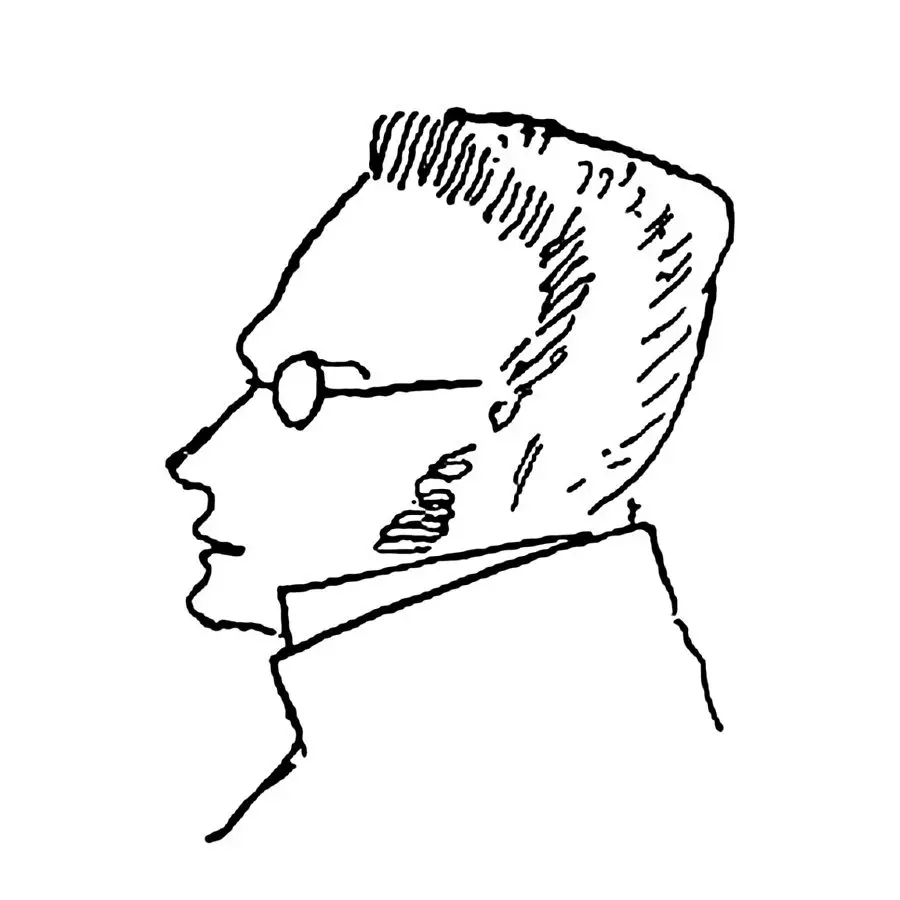
Philosophers question answers

Prisca asked:

Philosophers do not produce answers, they question answers. Discuss.

Answer by David Robjant

To love wisdom you do not have to be wise. The particular passion for wisdom that humans have is, after all, partly an acknowledgement of their foolishness. On the other hand I think some humans are more foolish than others. So when Socrates says that he knows only that he knows nothing, I take it that he is a more knowledgeable and wise individual on account of his ignorance. In that way, ignorance and questioning is itself the production of an answer.

Appearance and reality in the 21st century

Monica asked:

What is the philosophy problem of appearance and reality and how is the problem relevant to people of the 21st century?

Answer by Helier Robinson

Appearance is what we perceive around us; it is sometimes known as the empirical, which means known through the senses. Reality is most commonly defined as all that exists regardless of whether it is perceived or not; in other words, it exists independently of anyone’s perception. According to common sense appearance IS reality: objects that we perceive around us continue to exist when no one is perceiving them; this is known as realism. But there are two difficulties with this. One is that everything that we perceive is illusory to some extent, and illusions are unreal. If you doubt this, try to point to something that you perceive which is wholly free from illusion, and explain how you know it to be so. Furthermore, there is only one reasonable explanation of illusions: namely, that they are misrepresentations of reality, in which case they are images of reality, not reality itself. The second difficulty is that everything we perceive around us is composed of sensations: colours, sounds, tactile sensations such as various degrees of hard and soft, hot and cold, rough and smooth, solid and liquid, and forces such as weights, inertia, and electromagnetic forces, as well as tastes and smells. These are what philosophers call secondary qualities and they are manufactured in the brain as a result of real data stimulating the sense organs. But if everything empirical is made out of secondary qualities it must be inside the perceiver’s head, private, and mental; while it is a fact that everything we perceive is outside our heads, public, and material. So that is the problem: are appearance and reality one and the same, or are they quite different things?

There is a solution, which is logically easy but psychologically difficult. If all appearances are images of reality rather than reality itself (because of being somewhat illusory and composed of sensations) then your own body, which is also an appearance, is an image of your real body. This means that beyond the apparent blue sky on a sunny day is the inside surface of your real skull.

The relevance of this for people of the 21st century (or for any other century) is that common sense is wrong about realism, just as it was wrong about a flat Earth, geocentrism, and evolution. If you are a genuine seeker after truth you must not be complacent about common sense. Common sense is wonderful for everyday living but not for philosophy or science.

When did the big bang happen?

Martin asked:

If the Big Bang was a reality, where exactly did it happen?

We are led to believe that the Big Bang took place between 10 and 20 billion years ago a humongous explosion at a point in the universe, resulting in the expanding state that we recognize today. For this to be true there must be an ever-increasing ‘dead zone’ centred around the point where the Big Bang took place, void of everything as all the exploding arisings race away from the original point so this would mean the universe is hollow and have we found the dead zone?

Answer by Craig Skinner

Your error is to think of the BB as starting at a point in the universe, proceeding like an explosion with things flying apart through space producing, as you say, a central hollow. The ‘point’ at which the BB began was the whole universe, and it is this which has expanded, not things exploding outward but space itself expanding. So, wherever you stand in the universe, the other galaxy clusters all recede from you giving you the impression you are at the centre. Everything recedes from everything else, there is no centre, hollow or otherwise. The usual 2-D model to aid understanding is a balloon on which you paint dots, each representing a galaxy cluster. Blow up the balloon and as it stretches the dots all move away from each other. Note that I say galaxy clusters recede from each other. Within galaxies and clusters, gravity counteracts spatial expansion, so that, since you started reading this, the distance between you and the door hasn’t expanded, or the distance to the sun or to Andromeda. Where you are right is that continued expansion does mean galaxy clusters all get farther and farther apart from one another, eventually beyond each other’s horizons so that we could never see them, or them us.