Are we all victims of cause and effect?

Antwan asked:

Are we all victims of cause and effect?

Answer by Shaun Williamson

In ‘Philosophical Investigations’ Wittgenstein poses the question ‘What is the difference between raising my arm in the air and my arm going up in the air?’ He also suggests as an answer to this question: ‘The absence of surprise’.

If my arm goes up in the air just by itself then I would be surprised and if this happened repeatedly I would also be disturbed and would probably consult a doctor and a neurologist to find out why this was happening. I would certainly regard myself as a victim of cause and effect.

However if my arm only goes up in the air when I raise my arm in the air then I am not disturbed and I do not regard myself as being a slave to causality.

Humans use this ordinary way of classifying their actions as either voluntary or involuntary or coerced (if someone is holding a gun to our head) and they find this way of classifying actions useful and essential to human life.

Humans are physical material beings composed of atoms etc. So they are subject to the same laws of causality as any other physical thing but this doesn’t make them a slave to causality.

In the same way we expect certain actions such as breathing to be automatic and involuntary. If we we had to make a conscious effort to breathe then again we would soon be consulting the doctor and the neurologist.

It is only in Philosophy that we are tempted to think that because all human actions are subject to the laws of cause and effect that this means we must all be slaves to cause and effect.

Trying to explain personal identity

Isaiah asked:

How well can we explain our personal identities? Consider identity at time, identity over time, and memory.

Answer by Caterina Pangallo

It is difficult to explain personal identity well!

We often speak of one’s personal identity as what makes one person one.

One basic concept of personal persistence over time is simply to have continuous bodily existence. This is irrespective of the fact that about every 10 years every cell in our body has been replaced.

This is called the ‘forensic’ identity. What this means is, that the law will take your body as your personal identity. E.g. if you commit a murder and then forget, you are still considered the murderer, if the evidence is conclusive.

But most of us agree with Locke, that personal identity is based on consciousness. We are the same person to the extent that we are conscious of our past and future thoughts and actions in the same way as we are conscious of our present thoughts and actions.

This is the philosophical position.

But now there is a problem. Suppose you go into a coma. When you awake all your memories are gone. This means you can have no consciousness of your older self any more.

This question has been asked many times by philosophers because they assume that every person is a person. And that nothing is in fact a person that could possible exist without being a person.

But I think there is a way around this.

Not having memories is a not an identity problem, but a problem of access.

It returns us to the forensic definition.

Every person’s experiences are laid down in their memories. When brains are disabled, their self-consciousness can cease, or it might change.

They may acquire new memories after trauma, without access to the old ones. Or they may, as sometimes happens, not be able to hold any memories at all.

There is a famous case of Phineas Gage, a man who lost his memory as well as the ability to remember from day to day.

He remained the personal identity, however.

People who knew him before knew he was the same person, but were of course compelled to acknowledge that he did not remember them. This included new acquaintances which he could not remember the next day.

So I think the solution to your question is:

1. Personal identity is tied to your body, which remains the same despite a complete turnover of all its cells every 10 years or so.

2. Personal identity is tied to your consciousness of self, which under normal circumstances remains with you until you die.

3. Personal identity is tied to your memories, which are always accessible in principle, even if you cannot remember some things when you try. (In any case, memories can change in quality as you get older).

Therefore:
Loss of body is impossible.
Loss of consciousness or loss of memories does not change or destroy personal identity as long as there are witnesses who can testify to the forensic identity of that person.

A person who is stranded on a desert island might have loss of identity and memory. But in this case you have to ask, what difference does it make?

Personal identity is essentially a social construct.

If there’s only one person in the world, the idea of identity is useless.

Same with the desert island person. If that person cannot make contact with persons elsewhere, then personal identity is a superfluous concept.
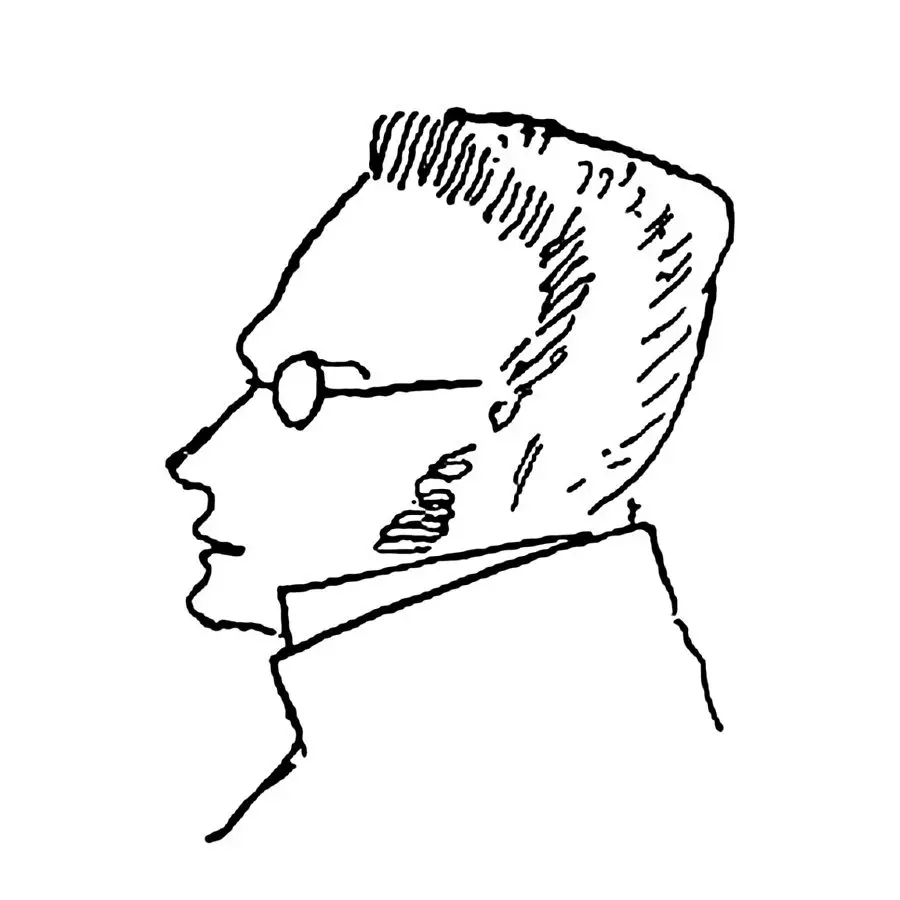
Prejudices that prevent you from finding the truth

Candisha asked:

What prejudices, habits, and desires might prevent you from finding truth?

Peter Jones

Any and all of our prejudices, habits and desires might stand in our way in the search for truth. Thomas Kuhn famously argues that to some extent physics can only progress because physicists eventually die, taking with them to the grave all their prejudices, habits and desires. If the search for truth is conducted by the more personal method of Socrates, the Buddha, the Oracle at Delphi, and perhaps this is more what you had in mind, then the problem becomes even more immediate, for we would stop making progress entirely when we die, and nobody else can pick up the baton.

As to which of them might be most likely to prevent us finding truth, I doubt there can be a definite answer. It would depend on what sort of truth we are looking for and where we are looking for it. The general solution for prejudices would be to adopt what meditators call ‘beginner’s mind’. For habits the solution is unfortunately a lot less obvious.

It may be that desire is the real issue, for at the very root of things it seems to be desire that sustains our prejudices and habits. Unyielding prejudices and habits may no longer be possible once desire is conquered. At any rate, for Buddhist practitioners the overcoming or transcendence of desire is a central goal. Not this or that desire, but all desires that are not useful and that might create prejudices and habits that cloud our view of truth. Prejudices and habits will wither away without the support of desire, so they say, allowing to see the world as it really is. So the question of which particular prejudices, habits and desires might prevent us finding truth would not really arise. It would be desire itself that is the problem, or our lack of control of it.

Of course, all this is theoretical. It would be wonderful if the problem of prejudices, habits and desires could be solved theoretically.

Understanding Ryle’s ‘Concept of Mind’

Abu asked:

Sir, I have been reading trying to understand ‘the concept of mind’ by Gilbert Ryle, but I can’t understand it,, so if you can please help me giving me some brief and basic idea on this topic.

Answer by Caterina Pangallo

The Concept of Mind by Gilbert Ryle is a rebuttal of Descartes ‘res cogitans’, which he calls the ‘The Ghost in the Machine’.

Descartes believed we have such a ‘thinking thing’ in our head. Gilbert says that’s impossible; it has never been found and never will, because it is a ghost.

Instead he refers to our inner private experiences that should be seen as dispositions to behave in a certain way. Ryle took a philosophical view that mental states must always translate into physical actions.

The only way we know what people have on their minds is because they behave in a certain way. In that sense, the ‘mind’ is nothing other than the dispositions of people to behave according to what they know, how they feel, what they desire and so on.

Ryle shows that this view of the mind depends on understanding words in a certain way as well. words such as ‘knowing’ reflect a disposition to learn and then to use knowledge for your purposes-which you do by behaving in an appropriate way.

So the mind’s operations are just as visible and just as evident as jumping, skipping, etc. knowing, and believing are dispositions in this sense; Knowing and believing influence the way people act. But this is not a secret operation of a hidden ghost.

Ryle concludes that mind is not separate from the body. Mind is just the sum of all our dispositions, and we know about it because of the way people behave.

He gives a good illustration. Take a visitor to Oxford and show him all the colleges, labs, libraries, galleries, sporting arenas and administration offices.

The visitor may now ask, ‘But where is the University?’ This is like asking, ‘where is the mind?’ All those colleges etc ARE the university. And so all our dispositions to know, believe, feel and act ARE what we call the ‘The Mind’.

Is it more ethical to let the starving die?

Nathan asked:

In a world of increasing demand on resources (e.g. food, water, medicine), is it ethical to support charities which save human life or prevent death by natural means, if the effect of extending human life is to place more burden upon resources and therefore risk even more lives in the future through sparsity of resources or cause death and suffering through conflict arising as a result of resource shortages?

This arises from a question asked to me by a charity recently, as to whether I would like to sponsor their initiative to provide ‘First Responders’ to preempt arrival of Paramedics and increase the chance of saving lives. Initially it seemed like a good scheme, but subsequent thought on the matter prompted this question, which applies to many other charitable endeavours (e.g. aid to victims of drought, starvation etc).

Answer by Jürgen Lawrenz

Your question has no ethical dimension at all, but turns on an issue of practical morality. In ethical terms the question is answered by the imperative of humanity towards all humans point blank. If people miss out, are exploited or exposed to man-made perils, then ethics is non-negotiable you must help and do what you can.

Once you start arguing the way you do, your attention should be directed elsewhere. Not to the people who are suffering, but to those who create the conditions under which suffering is created. I will put it to you not in philosophical, but crassly materialistic terms. If just a tiny fraction of the earth’s resources which the developed world is squandering on its luxury pursuits were devoted to greening the planet’s huge deserts, then we would not have a starvation problem. If just a tiny fraction of the military budgets of the world’s nations were devoted to ridding the world of the most common evil of humanity, fratricide, then a great deal of the suffering would also cease. So the real answer to your question does not involve any putative ethics of charity, but the morality of greed and evil.

From the point of view of practical morality, therefore, your decision should not be influenced by furphys like ‘should medicine allow nature to rid the world of poor, starving, decrepit, diseased people?’ Consider that in 1348-50, the Black Death claimed 70% of Europe’s population. You would not be around to write to Pathways if people had not, after that event, begun to question the wisdom of letting God decide such matters.

To sum up:

(1) You may feel that helping or not helping is much the same, because the situation is hopeless. But if this is how you feel, then in fact you argue yourself into helping, because once you’ve made yourself aware of it, the other choice is unethical.

(2) If your concern is for the survival of the lucky ones who do not suffer from disease, malnutrition, exploitation etc., but may in future suffer from diminishing resources, such as less motor cars, more expensive food and pharmaceuticals etc., then (as explained above) you have no question.

Much else could be said, but the important issue, I think, was to stress what seems to me an inapplicable pseudo-ethics at the bottom of your question.

Nagel’s notion of ‘what it is like to be a…’

Kyle asked:

Nagel says that ‘an organism has conscious mental states if and only if there is something that it is like to be that organism, something it is like for the organism.’ Can you explain what Nagel means by this?

Answer by Peter Jones

As far as I understand him, Nagel means that if someone were to ask an organism with conscious mental states whether it is ‘like’ anything to have those states it would reply ‘yes’. Here ‘like’ should not imply a comparison, as if mental states must always be to like this or like that. They can be like anything at all just as long as they are like something. Is there something it is like to be you? If so, then you are an organism with mental states.

It is a slightly confusing way of using words and it has attracted some criticism in consciousness studies, the phrase ‘something it is like’, but consciousness is a difficult phenomenon to talk about. If we change it to ‘something it feels like’ then this makes more immediate sense, since many philosophers would take feeling as sufficient evidence for consciousness, the latter being necessary for the former. To be consciousness would be to know what it feels like to be conscious. Exactly what it feels like would not matter.