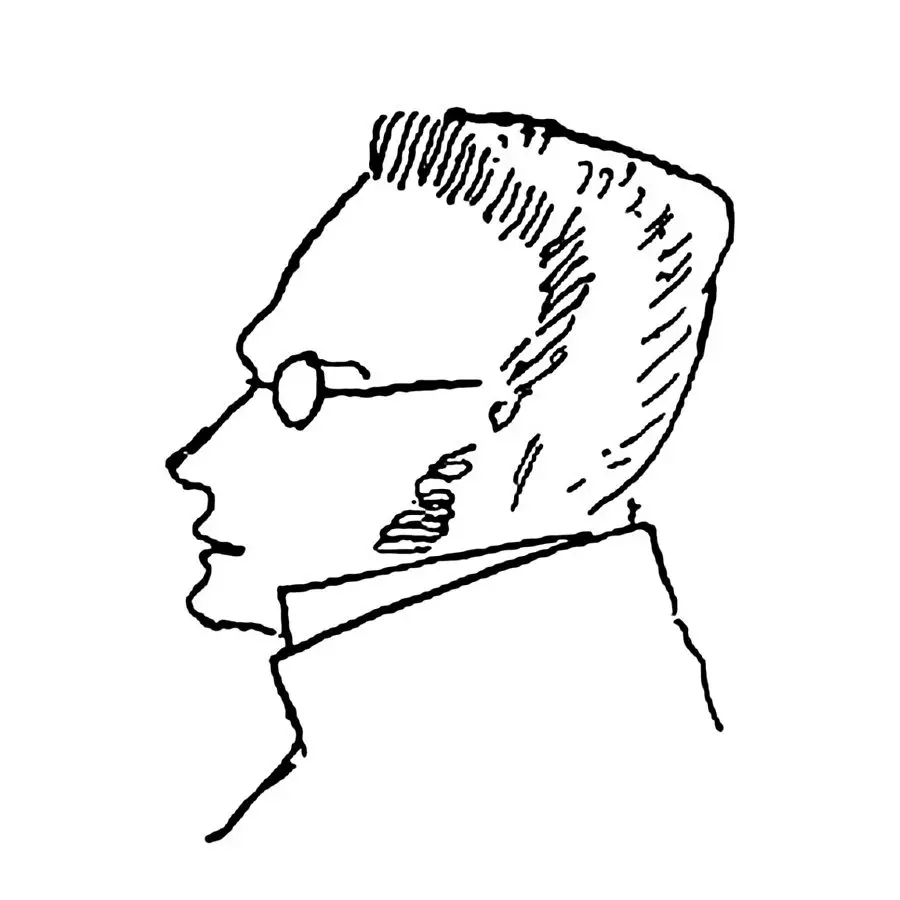
A Theory of Justice by John Rawls

Kathy asked:

Hi! I took a philosophy course years ago. One that we studied talked about looking at ethics from an interesting standpoint and I would like to study it further but I cannot remember the name of the philosopher. The standpoint was this: imagine you and a group of people are creating the world. This committee must make up all of the rules, but none of the committee members will know his/her standing in the community. Do you know the philosopher and/or branch of study this idea is in.

Answer by Tony Fahey

Hi Kathy, the person your question refers to is, I’m pretty certain, the American moral and political Philosopher John Rawls. In his book A Theory of Justice (1971), Rawls sets out to discover the principles which any society must embrace if it is to be just. In so doing he hoped to present an alternative to utilitarianism, which he regarded as the dominant moral philosophy, and to revive the social contract tradition in political theory.

However, before giving a synopsis of Rawls’ social theory let me give you some brief insight into the type of person Rawls was (he died in 2002). Like many people, philosophers included, the Second World War had a profound and life-changing effect on Rawls. A somewhat humble man, when, in 1990, he was asked by photographer Stephen Pyke to summarise his idea of what philosophy meant to him he answered:

"From the beginning of my study in philosophy in my late teens I have been concerned with moral questions and the religious and philosophical basis on which they might be answered. Three years spent in the US army in World War Two led me to be concerned with political questions. Around 1950 I started a book on justice, which I eventually completed."

The name of the book to which Rawls alludes is, of course, his A Theory of Justice. Rawls’ conception of justice as fairness, and his vision of a legitimate society as an overlapping consensus of peoples with different conceptions of good within a framework of basic rights and liberties, exerted a powerful effect on liberal and social democratic politicians in the 1980s and ’90s. This culminated in Rawls being awarded the Medal of Freedom by President Clinton in 1999.

As mentioned above, in his A Theory of Justice, Rawls is concerned with discovering the principles which any society must have to be just. What sets Rawls theory apart from other such theories is his concept of ‘a veil of ignorance’. Rawls begins by inviting us to imagine not only a hypothetical ‘original position’, but one in which we are all ignorant of our own particular abilities or prospects, both financially and structurally. That is, ignorant of the status we would have, in a future society. Rawls calls this state of unknowing ‘the veil of ignorance’. In such a state, ignorant of our own potential, dispositions and talents, we are all equal: each at the same starting point.

From such a position we will each be anxious to ensure that each member of society is guaranteed a level of protection, financially, socially, and physically, below which we cannot fall. From such a position, argues Rawls, we are more likely to establish principles of justice which guarantee equal liberties and equal access to the conditions of well-being.

For Rawls then, a just society is one which embraces two fundamental principles of ‘justice as fairness’: The First Principle: Each person is to have an equal right to the most extensive total system of equal liberties compatible with a similar system of liberty for all. The Second Principle: Social and economic inequalities are to be arranged so that they are both: (i) to be of greatest benefit of the least advantaged, consistent with the just savings principle; and (ii) attached to offices and positions open to all under fair equality of opportunity.

The reference to the ‘just savings principle’, refers to the fact that, in addition to the liberty principle and the equality of opportunity, Rawls argues that the welfare of future generations is also an important consideration: what a society saves, and what burdens it thereby imposes, are also matters of justice.

Recommendations for an introductory book on philosophy

Helena asked:

Hi! I’ve studied fairly in depth history and English literature. I have a keen interest in philosophy, but I don’t really know where to start in terms of reading, and I don’t really want to read one of those ‘beginner’s philosophy’ books. Can you advise me on something accessible, interesting and of a beginner’s level? Thank you.

Answer by Craig Skinner

As befits a would-be philosopher you already skirt with paradox. You don’t want a ‘beginner’s philosophy’ book, but do want something ‘accessible, interesting and of a beginner’s level’ which is a fair description of a beginner’s philosophy book. I have the answer. Noting your study of history and English literature, I suggest a book on the history of Western Philosophy by an author with a Nobel Prize for literature. May I present A History of Western Philosophy by Bertrand Russell (nobellist, mathematician, philosopher, essayist, social activist and occasional jailbird). It is definitely accessible and interesting. Also big, witty, opinionated, partial, and wont confuse you. First published in 1946, it starts with the Presocratics and ends with James and Dewey. But this doesn’t matter, you can read something else if you want to know about the last 100 years (recall that modern philosophy is merely ‘footnotes to Plato’ as Russell’s colleague, Whitehead, memorably, and probably unfairly, put it.

Answer by Tony Fahey

Hi Helena, this a question that often arises on this forum. For younger students coming to philosophy for the first time, I usually I suggest a book called Sophie’s World by Jostein Gaarder. Although written as a fiction, starting with the pre-Socratics, it concerns the story of a young girl being introduced to major philosophical concepts by a somewhat mysterious mentor. However, since you do not seem to want something that is aimed specifically at beginners, it seems to me that Bryan Magee’s The Story of Philosophy or Bertrand Russell’s History of Western Philosophy may be more to your liking. D.W. Hamlyn’s The Penguin History of Western Philosophy is also a book worth considering.

Answer by Shaun Williamson

Asking for something at a beginner’s level in philosophy is like asking for a beginners introduction to higher mathematics. Not all subjects have a beginner’s level. Since you have studied history you could start with Bertrand Russell’s one volume History of Western Philosophy or if your have lots of time and enjoy reading try F. Copleston’s multi volume History of Philosophy. Both these books will give you some idea of the sorts of things philosophers have thought about. Of course being history books they both contain the bias of their authors but both are well written.

Why are we so scared of death?

Paul asked:

Why are we so scared of death?

Answer by Julian Plumley

Dear Paul, that is a good question, and one that I have not thought about for a long time. I am not sure I can give you a really satisfying answer, but I hope I can make a few points that make sense.

Firstly, there is an empirical question. When people fear death, what exactly are they fearing? It is unlikely to be the same for each and every person. One way to find out would be to interview a representative group of people. (Or maybe a death focus group!) But I don’t have time to do this, so the next best thing is to scan the web and find out what people say when they talk about their fear of death. This is not hard to do – for example, there are several discussion threads in yahoo answers which are very helpful.

The results are fascinating. There are many ways in which people are scared of death. I have tried to pull these into categories, so that we can think about them better. Here they are with some rough notes to get across the feelings associated with each category. (This is not meant to be exhaustive – there are probably more categories I did not find yet.)

Fear of the unknown: death is the ultimate unknown; it is impossible to understand or grasp; fear of the dark, of caves and tunnels; fear of the new, the untested.

Fear of being lost: rootless, with no foundation, no reference.

Fear of separation/ exile/ isolation: death separates me from people and things I like; I have to go, to leave my place; I will be separated from everyone else.

Fear of reality: being found out, revealed; facing up to things I don’t want to.

No control/ deadline: I am not in control; I don’t know when it’s going to happen; there is no defence; I am forced to go; there is no appeal; death is the ultimate deadline; time is up, I can’t change anything anymore; like an exam, or not wanting a holiday to end.

Non-existence: horror at the idea of non-existence; the idea of being gone, forgotten; perspective of our short existence vs. eternity.

The state of being dead: the thought of not being able to breathe is scary; not having any experiences.

What happens next: heaven, hell… oh dear!; not enough faith in afterlife; fear of an afterlife; what will happen to others when I am gone.

Game over: there is no more life; I am going to miss life and things in it, people I love, etc.; I am loving life and I don’t want it to end.

Fear of regret: regret for things left undone and unsaid, for life not well lived; regret for dying early.

Rationalised answers: our instinct for survival makes us fear death; if we did not fear death, we would have died out.

Process of death: fear of painful death; particular kinds of death e.g. drowning.

So what can we make of this? A lot of these categories are basic fears we have while living our lives, but projected onto death: fear of the dark; of being lost; of isolation; of being found out; of being out of control. Other categories are more specific to death itself: fear of non-existence; of how it is to be dead; of what happens next; of the end of the game. The rationalised answers are not fears at all. Lastly, there is the fear of pain before death.

As philosophers, having clarified the facts to some extent, we should ask: is it rational to fear death? Those fears that we project onto death seem to be irrational. We do not have enough information about death to justify them. But most of us know what this kind of fear is like from situations in our lives. It takes an effort of will to suppress these fears, but people can manage to do this.

The fears that are specific to death are more interesting. Probably each of these deserves an essay, so I will just discuss one of them briefly: fear of non-existence. I have seen people try to argue that this is unjustified on the basis that we do not exist before we are born, but that thought is not fearful for us, so there is no reason why the thought of non-existence after death should be scary. Does this argument work?

It doesn’t. I had a vivid counter-example when my daughter (about 7 or 8 at the time) asked me: ‘Where was I before I was born?’ When I told her she wasn’t anywhere, she was horrified. I could see that it was exactly the same fear as that of non-existence after death (which I am acquainted with). There is something peculiarly inexpressible about this fear, which makes it a horrible perspective to experience. Often children ask the best philosophical questions – the ones the adults have forgotten. I don’t think we can rationalise this fear away so easily. Is it a basic part of having a subjective viewpoint, or is it merely a psychological defect?

Fear of pain before death, and of the way we die, is entirely reasonable. We are all acquainted with pain and it is something we justly fear. But this is really a fear we attach to a part of our lives, the final part, not to death itself.

I am painfully aware that this answer is inadequate as it stands – it leaves more questions than answers. For a start, it would benefit from having input from some professionals who are used to dealing with death and with fear: nurses, psychologists and priests, for example. There is a lot more to say about each of these fears and I will keep pondering this. Thank you for raising the question.

How can earth and water produce a live frog?

Pauline asked:

How can earth and water produce a live frog?

Answer by Craig Skinner

Up to the late 19th century, some educated people believed that frogs could arise directly from earth and water, rats from mud, and flies from compost – so called spontaneous generation. But not many thought that, and very few do nowadays.

Instead we think earth and water produce frogs through the intermediary of parent frogs mating, egg laying, and hatching of tadpoles which become new frogs. Normally we think of the frogs as doing it using earth and water, rather than earth and water doing it using pre-existing frogs, but it’s a matter of perspective and your views about causality and agency.

So there’s your answer.

Of course, the question arises as to how the first frogs arose. Before 1859, there was no convincing natural explanation, and the popular view was that the first members of each species had been specially created by God. Then Darwin and Wallace suggested evolution by natural selection: starting with a single, simple, life form, some descendants show heritable variations, and variants most fitted to their environment leave more descendants, driving the gradual appearance of variety and complexity.

Not only is this a great explanation for the varied biosphere, it is (I think) the only possible natural explanation. But there again, although the idea is obvious once you’ve thought about it, it eluded minds as great as Aristotle, Kant or Hume, and it could be that another explanation currently eludes all of us.

A brief aside: of course, once intelligent life emerges, it could itself create life, e.g. Venter labs produced the first bacterial cell fully controlled by a synthetic genome in 2010. Or you and I, and everybody else, may exist in a vast computer simulation run by superior intelligences or even by 26th century humans.

The chronology of life on Earth is well-documented now. Frogwise, the branching into amphibians (later including frogs) and amniotes (later becoming reptiles, dinosaurs, birds and mammals including humans) occurred 340 million years, and frogs have been producing other frogs, without much thought, for 300 million years.

How did the first life-form arise on Earth (probably only one because all life forms share the same genetic code)? Nobody knows. The when is about 3.5 billion years ago, but there is debate as to where and how.

As to where, popular suggestions include warm ponds with sunlight as the energy source; deep sea vents with superheated water providing the energy; clay surfaces providing a structure for chemicals to organize on; and more way out ideas such as arrival in meteorites knocked off Mars (then life-bearing) or from outer space in cosmic dust.

As to how, there is debate as to whether bare replicators came first (probably RNA) and protective coats (cells) evolved later, or whether dividing globules (cells) came first, and were later invaded by replicators (RNA) that divided with the cells, and came to control cell function. Either way, RNA was largely superseded by DNA as the genetic material.

Finally, as to whether frogs can sometimes become handsome princes, I have an opinion on that as well, but will let you make up your own mind.

Does the verification principle fail by its own criterion?

Emmanuel asked:

My question is based on the refutation that the Verification principle of the logical positivists cannot verify itself, but I feel personally that for the verification principle to verify a proposition empirically, it is verifying itself. Therefore I see verification principle being verified. And I term it self-demonstrable. What’s your own say on this?

Answer by Shaun Williamson

No I’m sorry but I don’t see any sense in your answer. The Verification Principle says ‘A factual proposition (statement) is meaningful if it can be empirically (directly or indirectly) verified by empirical observations.’

The Verification Principle is a proposition but there are no observations we can make that would verify it so therefore either the Principle is meaningless or it is an arbitrary assumption or it is a metaphysical truth or it is a truth of logic or mathematics. It doesn’t seem to be any of these things except maybe an arbitrary assumption.

The Verification Principle does not allow for self verification whatever that might mean.

The Logical Positivists recognised only two sorts of statements, those that don’t need verification (definitions, truths of logic and mathematics etc.) because they don’t make assertions about the world and those that do need verification.

Answer by Geoffrey Klempner

What Emmanuel is suggesting is a pragmatic justification of the Verification principle. Every time we use the Verification principle ‘successfully’ (whatever that means) we pragmatically verify its efficacy. I think some Verification theorists might be tempted to say this, but this doesn’t meet the objection.

Consider the principle, called the Humour principle, according to which the only propositions which are meaningful are those which are funny, i.e. those which actually make us laugh. If it doesn’t make you laugh, then the proposition has no meaning. No-one has seriously suggested this, or maybe they have, I wouldn’t know :-)

Is the Humour principle humorous? Suppose we tried it out on a sufficiently large sample of philosophers, and sufficiently many were provoked to laughter. Then that would be sufficient proof that the Humour principle is meaningful, at least by its own criterion.

In other words, the Verification principle fails a test which the Humour principle passes, or at least could in principle pass. The reason that the Verification principle fails is the interesting part. It fails because it is, in fact, an example of the very thing that the Verification principle was designed to guard against: ‘metaphysical’, or non-empirically verifiable propositions.

Thomas Nagel on why life is absurd

Kim asked:

Nagel considers the prospect that life is just absurd. What does it mean to say that life is absurd? Are there good reasons to believe that life is absurd? What does Nagel think, and why?

Answer by Jürgen Lawrenz

Last item first: I don’t know what Nagel thinks; all I know is what he wrote. What he thinks might be reconstructed circumstantially from his writings. But sometimes I wonder, and maybe you should too. Philosophers sometimes just want to rouse their readers from complacency about all the ‘facts’ we worship. Bear that in mind.

Life can be absurd in two very different meanings of the word. The first is, that life is pretty meaningless. All plants and animals exert themselves for a bit of fun for a few moments and then they die. Worse: most suffer as a result of being alive, because ‘the bit of fun’ tends on the whole to be very difficult to hang on to, especially if others want to deprive you of it. So either you live like a worm, or you live like a human. The problem with us is, that we have a mind and understand. Many of us feel that the problems of life are just so great, and insoluble, that maybe a worm’s life is better, after all.

The other sense of absurd is ‘irrational’, like an irrational number in mathematics. It doesn’t seem to make sense. The universe is so immense, and we are so small, how come we are alive when the rest of the universe is dead? Thus, life is felt to be anomaly to the norm of material existence.

I don’t remember (or care) if Nagel was aware of, or bothered to mention, the fallacy in both those arguments. And I certainly don’t have the space here to embroider the issue for you. But I’ll suggest that you think about it in another light, namely, What can be more absurd than a totally dead universe?

So many trillion and quadrillion tonnes of stuff in every planet or star that add up to nothing! What is that supposed to be all about? Does it mean anything? So at least, on this puny planet of ours, there are a few people who think and find that there is value in all this gargantuan waste: namely the little candle of life that we represent. Not perfect, but precious, despite all its defects. So yes, sometimes we need someone to remind us that we shouldn’t take it for granted – but not, of course, to put it down or wipe it away as not worth a crumb. Without us to wonder about it, the universe would not be worth a crumb. Bear that in mind!